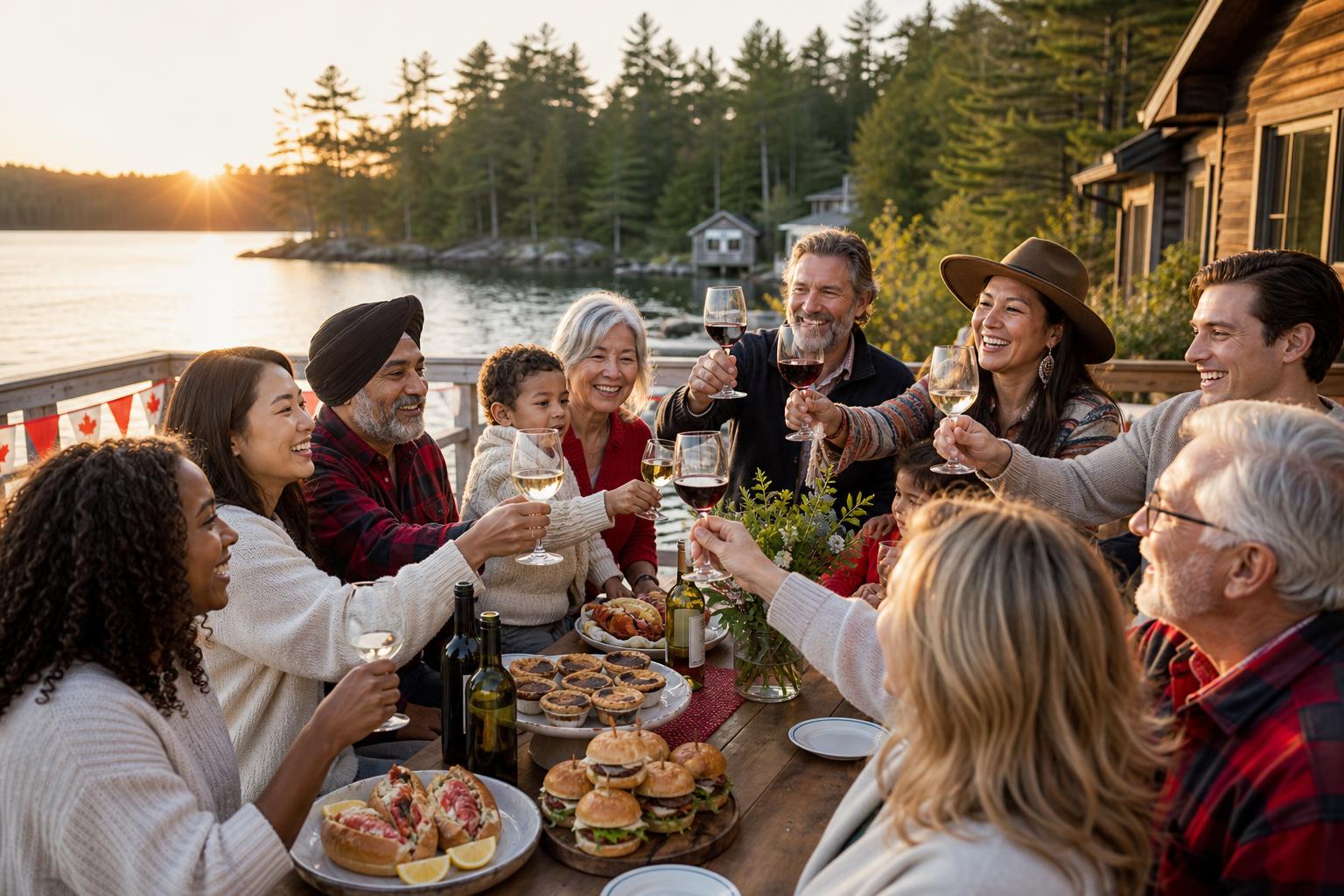
Canada Day 2026: A Cross-Country Wine Journey
Seven wine provinces, fourteen producers and the full Canada Day table.
Canada Day is a country measured by a six-hour time zone spread, a national park system that touches three oceans, and a wine map that finally deserves the front of your fridge. On July 1, your table should taste like that. Here is a coast-to-coast pour list, seven wine provinces deep, with two verified producers in each region and a Canada Day menu built around them.
Why Canadian Wine, Right Now
Twenty years ago, the honest answer to "what do you drink on Canada Day?" was a domestic lager. That has changed. The 2024 and 2025 vintages from Niagara, the Okanagan and Prince Edward County are some of the strongest in Canadian history. Climate change is rewriting the country's growing season, English and French sparkling wines from Nova Scotia and Quebec are landing on serious lists, and Indigenous-owned wineries are reshaping the industry from the inside.
The trick to building a great Canada Day pour is to treat the country the way Canadians treat the country: with respect for the regions. Do not stack the table with Niagara alone. Pull a Tidal Bay from Nova Scotia next to an Okanagan Syrah. Open a Vidal Icewine next to a Quebec orange wine. The contrast is the point.
Niagara, Ontario
The country's largest wine region, and still the gateway. The Niagara Escarpment and the Twenty Mile Bench produce some of the most age-worthy Riesling and Cabernet Franc in the New World. Henry of Pelham, a fifth-generation Speck family estate in Short Hills Bench, makes a Speck Family Reserve Riesling that is the benchmark Canadian dry Riesling. Their Baco Noir is the Canada Day red for skeptics. Tawse Winery, biodynamic and certified organic in the Vinemount Ridge, pours one of the best Canadian Chardonnay programs in the country and a Pinot Noir that tastes like Burgundy with a maple finish.
Pair Niagara Riesling with peameal bacon sliders. Pair Cabernet Franc with grilled flank steak and chimichurri. Pair Tawse Chardonnay with smoked trout.
Prince Edward County, Ontario
Two hours east of Toronto, on a limestone shelf jutting into Lake Ontario, PEC has become the country's most exciting cool-climate region. Norman Hardie Winery in Wellington pours the most cult-followed Pinot Noir and Chardonnay in Canada. The County Chardonnay is salty, mineral and unmistakably Ontario. The unfiltered Pinot is the Canada Day red for the wine nerd at the table. Closson Chase Vineyards, in the original Closson Road cluster, has been making serious Burgundian whites since 2001. The South Clos Chardonnay is the bottle to age.
Pair PEC Pinot Noir with cedar-plank salmon. Pair PEC Chardonnay with butter-poached lobster.
Okanagan Valley, British Columbia
The Okanagan is the country's hot-climate region: glacial lakes, desert soils, and the longest growing season in Canada. Mission Hill Family Estate in West Kelowna built one of the most architecturally serious wineries in North America and matched it with a Quatrain red blend and an Oculus Bordeaux blend that compete with Napa at the price. Quails' Gate Winery in West Kelowna pours a Stewart Family Reserve Pinot Noir that travels well to a Canada Day picnic, plus a benchmark Okanagan Chenin Blanc.
Pair Okanagan Syrah with Alberta bison burgers. Pair Okanagan Chenin with smoked salmon and bagels.
Vancouver Island & Cowichan Valley, British Columbia
The Cowichan Valley earned Canada's first sub-appellation outside the Okanagan and Niagara, and the wines coming out of it are the country's best-kept secret. Blue Grouse Estate Winery in Duncan makes a Quill Pinot Noir and an Ortega white that taste like nowhere else in Canada. Unsworth Vineyards in Mill Bay pours a Charme de l'Île sparkling rosé that is the right Canada Day welcome pour if you are anywhere west of Calgary.
Pair Cowichan sparkling with Pacific oysters on the half shell. Pair Ortega with Dungeness crab cakes.
Nova Scotia: Tidal Bay & Atlantic Sparkling
Nova Scotia is the country's coolest serious wine region and the home of Tidal Bay, the official Nova Scotia appellation: a crisp, low-alcohol white wine designed specifically to pair with Maritime seafood. Benjamin Bridge in the Gaspereau Valley produces a Méthode Classique Brut sparkling that competes with Champagne at the price, plus the most highly regarded Tidal Bay in the country. Lightfoot & Wolfville, certified biodynamic, pours an Ancienne Chardonnay and a Bowater sparkling that belong on serious wine lists across Canada.
Pair Nova Scotia Tidal Bay with Halifax lobster rolls. Pair Benjamin Bridge Brut with chips and malt vinegar — yes, really.
Quebec: IGP Vin du Québec
Quebec quietly became one of the most interesting cold-climate wine regions in North America, with the IGP Vin du Québec appellation now covering more than 150 producers. Vignoble de l'Orpailleur in Dunham, one of the founders of Quebec wine, pours a hybrid white and a Vendange Tardive that are the right answer for sugar-pie season. Domaine Les Brome on Lac Brome makes a Cuvée Charlotte sparkling and a Réserve Saint-Pépin that taste of the Eastern Townships.
Pair Quebec hybrid whites with poutine — the sharpness cuts through the gravy. Pair Vendange Tardive with tarte au sucre.
Emerging Ontario Sub-Appellations
Niagara is no longer one region. Twenty Mile Bench, Beamsville Bench, Lincoln Lakeshore and Vinemount Ridge are each producing distinct wines, and the best producers now name the sub-appellation on the front label. Look for Hidden Bench in Beamsville Bench (a Locust Lane Pinot Noir worth tracking), Stratus in Niagara-on-the-Lake (the original Bordeaux-blend program), and Cave Spring in Beamsville Bench (the CSV Riesling is a national treasure). The next decade of Ontario wine will be written by these bench-level distinctions.
Indigenous & BIPOC Spotlight
Nk'Mip Cellars in Osoyoos, owned by the Osoyoos Indian Band, was the first Indigenous-owned and operated winery in North America when it opened in 2002. The Talon Bordeaux blend, the Qwam Qwmt Syrah and the Mer'r'iym red are all serious wines built on more than two decades of estate fruit. The tasting room overlooks Osoyoos Lake and the Nk'Mip Desert Cultural Centre next door is part of the visit.
Indigenous World Winery on Westbank First Nation lands in West Kelowna pours a Hee-Hee-Tel-Kin red and a Simo white that belong on every Canada Day table. Phantom Creek Estates on the Black Sage Bench, owned by the Bai family, has invested heavily in the south Okanagan and pours a Bordeaux-style Cuvée that competes with anything in North America at the price. Buying from these estates this July 1 is the most direct way to support the next decade of Canadian wine.
The Canada Day Menu
Build the menu like the country: regional, generous and not in a hurry. Every dish below has three Canadian pairings, ordered from everyday to special-occasion.
- Welcome pour: Benjamin Bridge Brut (Nova Scotia), Unsworth Charme de l'Île sparkling (Vancouver Island), or Henry of Pelham Cuvée Catharine sparkling (Niagara).
- Nova Scotia lobster rolls: Benjamin Bridge Tidal Bay, Lightfoot & Wolfville Ancienne Chardonnay, Quails' Gate Chenin Blanc.
- Peameal bacon sliders: Henry of Pelham Speck Family Reserve Riesling, Cave Spring CSV Riesling, Tawse Sketches Riesling.
- Montreal smoked meat on rye: Tawse Cabernet Franc, Vignoble de l'Orpailleur Cuvée Spéciale, Henry of Pelham Baco Noir.
- Cedar-plank salmon: Norman Hardie County Pinot Noir, Blue Grouse Quill Pinot Noir, Closson Chase South Clos Chardonnay.
- Alberta bison burger: Mission Hill Quatrain, Phantom Creek Cuvée, Nk'Mip Cellars Talon.
- Poutine (the late-night plate): Domaine Les Brome Réserve Saint-Pépin, Henry of Pelham Baco Noir served slightly cool, Niagara Gamay.
- Tourtière: Closson Chase Pinot Noir, Tawse Pinot Noir Quarry Road, Indigenous World Winery Hee-Hee-Tel-Kin.
- Saskatoon berry pie & butter tarts: Tawse Riesling Cane Cut, Inniskillin Vidal Icewine, Domaine Les Brome Vendange Tardive.
How to Serve, How to Buy
Tidal Bay and Niagara Riesling drink best at fridge temperature, around 8 to 10°C. Ontario and Cowichan Pinot Noir wants a thirty-minute chill, around 14°C, which makes them dock-friendly on a warm afternoon. Okanagan reds and Bordeaux blends want a standard 16 to 18°C, which means a cellar or a brief chill on the hottest July 1 days. Sparkling wines belong in a proper ice bath — six bottles in a galvanized tub with one bag of ice and a half-bag of rock salt drops the temperature inside ten minutes.
Where to buy depends on the province. Vintages at the LCBO carries most of the Niagara and PEC bottles above. BC Liquor Stores cover the Okanagan and Vancouver Island catalogue. NSLC carries Benjamin Bridge and Lightfoot & Wolfville. SAQ in Quebec stocks Orpailleur, Brome and a deep IGP Vin du Québec catalogue. For the harder-to-find Indigenous-owned bottles, order directly from the winery websites and pay the shipping. It is worth it.
Non-Alcoholic Canada Day
Canada Day is a family holiday. Pour the non-drinkers and the kids with the same intention. Sparkling Saskatoon berry juice, Canadian cider-style Granny Smith pressé, and the Canadian non-alcoholic wine producers in our NA collection all earn a seat. Quebec's Domaine Pinnacle non-alcoholic ice cider is the best dessert pour for guests off the booze.
Pair your Canada Day table with iQ
Tell the iQ Sommelier your Canada Day menu and how many people are at the table. Get a full coast-to-coast pour list in seconds, with dietary filters built in.