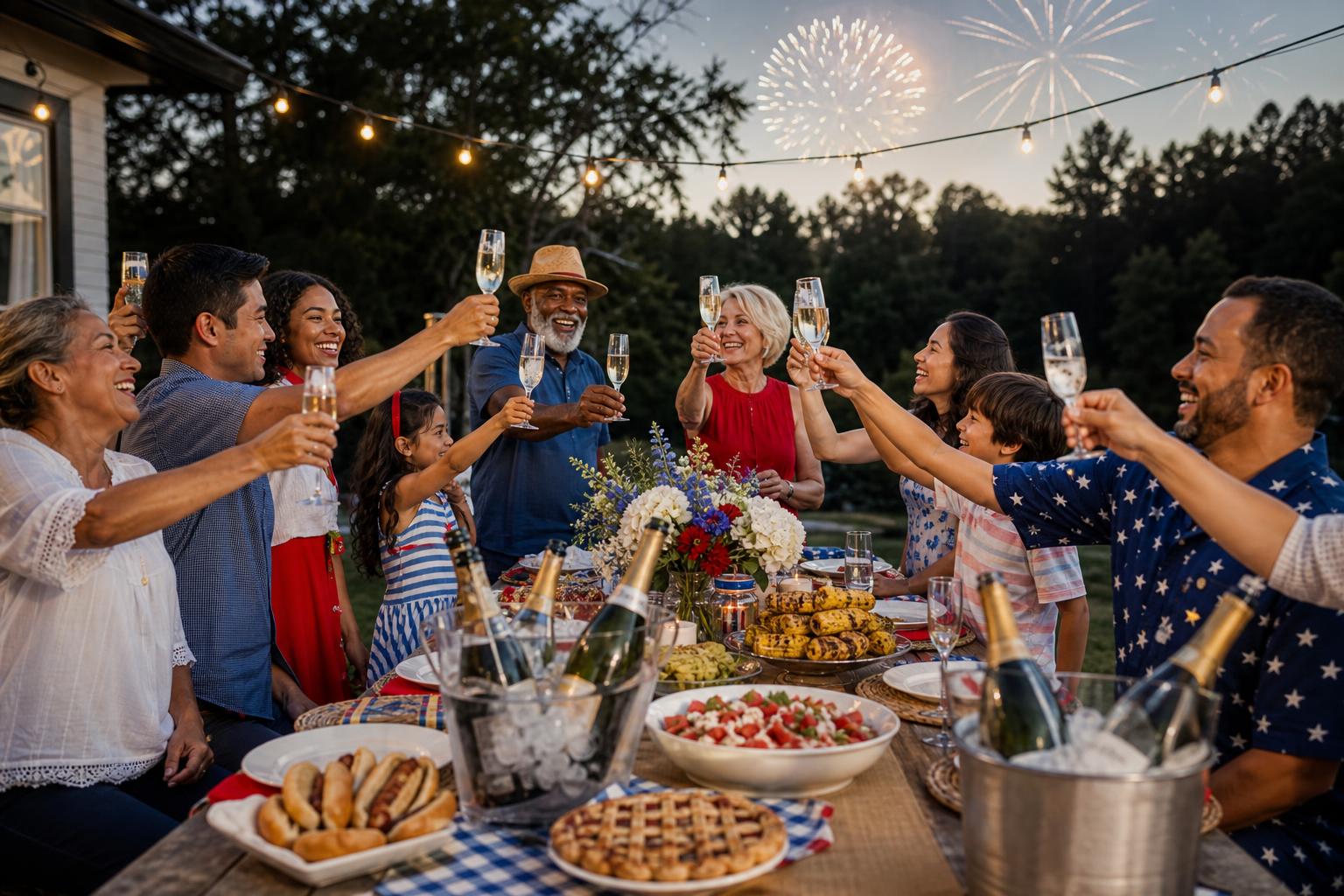
4th of July 2026: Fireworks, Sparkling & American Classics
Eight American sparkling wines and the classic July 4 plate, paired bottle by bottle.
Independence Day deserves a real toast. Not a warm light beer in a foam koozie. A flute of American sparkling wine, cold enough to fog the glass, popped exactly as the first shell goes up over the treeline. This is the focused July 4 pour list: eight American bubbles, the regions and the families behind them, and the classic American plate they were built for.
Why Sparkling on July 4
American sparkling wine deserves more attention than it gets on its own national holiday. The category is older than most drinkers realize. Korbel has been making méthode champenoise sparkling in Sonoma since 1882. Schramsberg, founded in Napa in 1862 and revived in 1965, was the first American wine ever served at a White House state dinner. Gruet in New Mexico, founded in 1984 by the Champenoise Gruet family, proved that American sparkling at scale could be world class for under thirty dollars.
The plate also rewards bubbles. American grilled and griddled food — hot dogs, smashburgers, grilled corn with butter — is fatty, salty and high in surface char. High-acid sparkling wine cuts the fat, resets the palate, and keeps you eating the next bite. Still wine cannot do this job at the same scale on July 4 because the day is long, the heat is high and the eating is constant. Bubbles are the right tool for the job.
If you want the broader cookout playbook — burgers, ribs, brisket and the magnums for the cooler — read the companion piece on the American Summer Cookout 2026. This guide stays focused on sparkling, on July 4, and on the producers worth flying the flag for.
Eight American Sparkling Wines
Schramsberg Blanc de Blancs (Napa Valley). The classic. 100% Chardonnay, méthode traditionnelle, aged on the lees in the original Diamond Mountain caves. This is the wine Richard Nixon served at the Toast to Peace with Zhou Enlai in 1972, and it remains a benchmark of American sparkling. Pour it as the first glass of the day with smoked salmon and bagels.
Iron Horse Russian Cuvée (Green Valley of Russian River, Sonoma). The Sterling family's Russian Cuvée was created at the request of the Reagan White House for the original US-USSR summits, and has been served at every American administration since. A touch of dosage gives it a creamy, brioche-driven palate that pairs beautifully with grilled corn on the cob and oysters.
Gruet Brut (New Mexico). The best value American sparkling under thirty dollars, full stop. The Gruet family brought méthode champenoise to high-altitude Truth or Consequences, New Mexico, and the elevation produces a crisp, mineral-driven Brut that drinks well above its price. The case-of-six for July 4 weekend is a smart move.
Argyle Brut (Willamette Valley, Oregon). Oregon's serious sparkling, made by the same team behind the cult Pinot Noir program. Pinot-driven, crisp, salmon-pink at the rim. A natural pairing with cedar-plank salmon and a Pacific Northwest plate.
Domaine Carneros Brut Rosé (Carneros, Napa). Founded by Champagne Taittinger and led for decades by the great Eileen Crane, Domaine Carneros makes the most ageworthy American sparkling rosé. A bottle is the right pour as the fireworks start.
Westport Rivers Brut Cuvée (Massachusetts). The Russell family on the south coast of Massachusetts proves that New England can make serious méthode champenoise. Cool ocean nights, granite soils and Chardonnay-Pinot Noir blends produce a Brut that is the right answer for a New England clambake.
Wölffer Summer in a Bottle Rosé Sparkling (Long Island). The Hamptons sparkling rosé that defined a generation of beach pours. Floral, dry and built for the cooler. The 250ml cans are the boat-and-beach format.
McBride Sisters Black Girl Magic Sparkling Rosé (California). The leading Black-owned American sparkling, made by Robin and Andréa McBride. Juicy, joyful and built for a crowd. Bring two bottles instead of one.
The Classic July 4 Plate, Paired
Every dish gets three sparkling pairings, ordered from everyday value to celebratory.
- All-beef hot dogs with yellow mustard: Gruet Brut, Schramsberg Blanc de Blancs, Iron Horse Russian Cuvée.
- Smashburgers with American cheese: Westport Rivers Brut Cuvée, McBride Sisters Black Girl Magic, Domaine Carneros Brut Rosé.
- Grilled corn with chili-lime butter: Argyle Brut, Gruet Blanc de Noirs, Iron Horse Wedding Cuvée.
- Watermelon-feta salad with mint: Wölffer Summer in a Bottle Rosé, Domaine Carneros Brut Rosé, McBride Sisters Black Girl Magic.
- BBQ chicken thighs: Schramsberg Mirabelle Brut Rosé, Iron Horse Russian Cuvée, Argyle Brut Rosé.
- Apple pie à la mode: Schramsberg Crémant Demi-Sec, Gruet Demi-Sec, or a half-pour of Hudson Valley ice wine if you want to switch gears.
- S'mores around the firepit: A Banyuls, a Maury, or a Quady Elysium — sparkling is finished by this point and a fortified red is the right move.
- Key lime pie: Schramsberg Mirabelle Demi-Sec, Domaine Carneros Le Rêve Blanc de Blancs, or a sparkling Vouvray as the crossover pour.
Magnums & Cans: Build for the Crowd
The magnum is the most underused format in American wine. A 1.5L bottle pours twelve flutes, ages more slowly than a standard bottle, and makes the table look like an event. Schramsberg, Domaine Carneros and Iron Horse all bottle their flagship sparkling in magnum, and the price-per-ounce is usually flat or slightly cheaper than two 750ml bottles. Buy one magnum of Schramsberg Blanc de Blancs for the toast and a case of Gruet for the rest of the afternoon.
Cans are the other answer. McBride Sisters She Can, Wölffer Summer in a Bottle cans, Underwood from Union Wine Co. in Oregon and House Wine bubbles all ship the real thing in 250ml aluminum. They survive a cooler, a pool deck and a beach better than any glass bottle ever will. One can equals a third of a bottle, so a six-pack feeds two people through the afternoon.
How to Serve in July Heat
Sparkling wine wants to be poured between 6 and 8°C. On a 90°F July 4 afternoon, a bottle hits that temperature in twenty minutes in an ice bath (half ice, half water, a handful of salt) versus three hours in a refrigerator. Build a galvanized tub at the start of the day, dump in a bag of ice, half a bag of rock salt and a gallon of water, and rotate bottles through it as you pour. Glasses should also come out of the freezer ten minutes before service.
Flutes are not mandatory. A standard white wine glass actually shows American sparkling better than a flute — more aromatic lift, more texture on the palate. Plastic stemless wine glasses for the kids' table and outdoor service are fine. Just keep the wine cold.
Non-Alcoholic July 4
French Bloom Le Rosé, Töst sparkling, and Wölffer No. 139 dry rosé cider all pour like real wine and earn a place at the table for the kids, the designated drivers and the sober guests. Our full non-alcoholic wine collection covers the rest of the field.
Pair your 4th of July menu with iQ
Tell the iQ Sommelier your July 4 menu and how many guests are coming. Get a sparkling-first pour list in seconds, with magnum, can and bottle options.