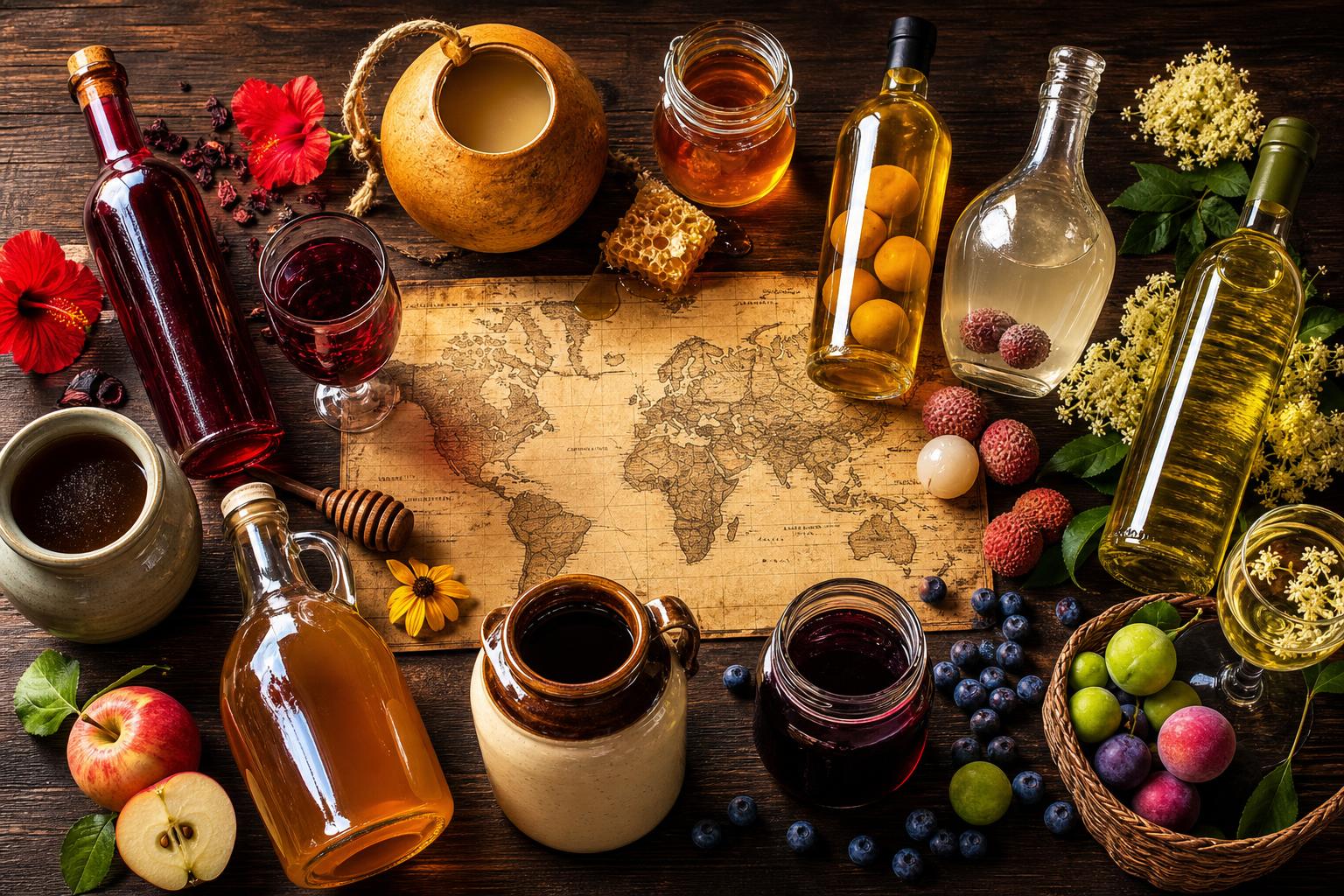
Non-Grape Wines of the World: A Global Guide
The fruit, flower, grain and root wines of five continents, paired with the food they were made for.
The grape is one fruit. The world fermented everything else too. From Caribbean sorrel to West African palm wine to Japanese plum wine to American apple wine, the global wine map is far wider than the European canon admits. This is a continent-by-continent guide, with the dishes each wine was built for. The Caribbean is the hero of this story — for the deep dive on sorrel, soursop, ginger, tamarind and the wider island cellar, read the Caribbean pillar piece first.
How Fruit, Flower & Grain Wines Differ
Wine is fermented sugar. The grape happens to be one of the most sugar-rich, acid-balanced fruits on earth, which is why Europe built its tradition around it. But honey ferments. Plums ferment. Hibiscus calyces ferment. Rice, with the addition of koji or other amylase enzymes to convert starch to sugar, ferments. Each base ingredient produces a wine with its own structural profile, and a serious sommelier learns to read them the same way they read a Bordeaux: acidity, body, sweetness, tannin or its analogue, finish.
The pairing logic also crosses over directly. Match the weight of the wine to the weight of the dish. Match the acid in the wine to the spice on the plate. Match the sweetness of the wine to the sweetness of the dish. The principles are the same whether the wine is a Sancerre or a soursop.
Caribbean: The Hero Region
The Caribbean wine cellar is built from hibiscus, ginger, soursop, tamarind, cashew fruit, guava, coconut and more. Sorrel wine — fermented from dried roselle calyces with cloves, ginger and orange peel — is the queen of the tradition, served at Christmas across Jamaica, Trinidad and the Eastern Caribbean. Tamarind wine drinks like a Caribbean Pedro Ximénez and pairs with curry. Ginger wine from Jamaica, in both the homemade and Stone's Original commercial forms, pairs with oxtail and pepper pot. For the full eight-wine deep dive, see the Caribbean non-grape wines pillar.
Signature pairings: Jerk Chicken with chilled sorrel; Curry Goat with tamarind wine; Oxtail Stew with Jamaican ginger wine.
Africa: Palm Wine, Marula & Tej
Palm wine is the most widely drunk fermented beverage across West and Central Africa. Tapped from the sap of the raffia or oil palm, it ferments naturally within hours of collection, producing a pale, lightly fizzy, low-alcohol wine that is sweet at sunrise and sharp by sunset. It is the ceremonial drink of countless West African cultures and is famously celebrated in Amos Tutuola's novel The Palm-Wine Drinkard. In the diaspora, look for bottled versions in West African groceries.
Marula wine from Southern Africa is fermented from the marula fruit, the same fruit that gives the world Amarula liqueur. Tej is the honey wine of Ethiopia and Eritrea, fermented with hops-like gesho leaves to balance the sweetness, and traditionally served in a round-bottomed flask called a berele. Tej is one of the oldest documented honey wines in the world and remains the celebratory drink of Ethiopian and Eritrean tables.
Signature pairings: Palm wine with Jollof Rice and Suya Skewers; tej with Ethiopian doro wat and injera; marula wine with grilled boerewors.
Asia: Plum, Lychee & Rice
Umeshu is the most exported Japanese fruit wine. Unripe ume plums are steeped in shochu or sake with rock sugar for several months, producing an amber, sweet-tart wine with notes of marzipan and honey. Choya is the global benchmark; Umenoyado and a generation of small craft producers are pushing the category. Serve chilled, on the rocks, or with sparkling water.
Lychee wine is widely produced across southern China and increasingly in Hawaii and California. Pale gold, intensely floral, drinks closer to a Gewürztraminer than to any other grape. Makgeolli is Korea's milky, lightly sparkling rice wine — 6 to 7% alcohol, served cold in a brass bowl. It is enjoying a global craft revival. Arrack, in its Sri Lankan and Indonesian forms, sits at the wine-spirit boundary and is included here for cultural completeness.
Signature pairings: Umeshu with sushi and sashimi; lychee wine with char siu pork; makgeolli with Korean fried chicken and seafood pancakes.
Europe: Elderflower, Mead & Cider
Europe's non-grape tradition is older than its grape tradition. Elderflower wine is a British and Scandinavian summer tradition — fresh elderflower heads, sugar, lemon and yeast, fermented for a few weeks into a pale, floral wine that drinks like a slightly sweet Sauvignon Blanc. Mead is the oldest fermented beverage in human history. The modern craft mead revival has produced serious estate meads in the US (Schramm's, B. Nektar), the UK (Lyme Bay, Gosnells) and Poland, where the half-mead and double-mead categories (półtorak and dwójniak) are protected EU designations.
Cider sits at the apple-wine boundary. French Normandy cidre, Spanish Asturian sidra, and English Herefordshire cider are all fermented apple juice with alcohol content between 4% and 9%. The serious estate ciders (Eric Bordelet in France, Eden in Vermont, Oliver's in Herefordshire) deserve a place on any wine list. The line between cider and apple wine is a labeling decision.
Signature pairings: Elderflower wine with grilled white fish and asparagus; mead with roast pork and crackling; serious cider with sea bass and Normandy mussels.
Americas: Apple, Blueberry & Beyond
Apple wine is the historic American non-grape wine. The New England states fermented apples long before they planted serious vinifera, and the modern revival is led by producers like Eden Specialty Ciders in Vermont, Aaron Burr Cider in New York and Tilted Shed in Sonoma. Blueberry wine from Maine and Michigan is a real category with serious producers (Bartlett Maine Estate Winery). Dandelion wine is the Midwest's homemade tradition, immortalized in Ray Bradbury's novel and still made every spring across the Great Plains.
Pulque is the pre-Columbian fermented sap of the maguey agave, central to ceremonial life across central Mexico for more than a thousand years. We include it here for cultural completeness — it is one of the oldest fermented beverages in the Americas and deserves recognition.
Signature pairings: American apple wine with maple-glazed ham and roast pork; blueberry wine with grilled steak and game; dandelion wine with spring vegetable risotto.
The Pairing Logic
Across every region above, the same four principles apply. Weight matches weight: a light umeshu drinks beautifully with sushi and would be crushed by a beef bourguignon. Acid cuts richness: sorrel and tej are high-acid wines that handle fatty, spicy food the way Champagne handles fried chicken. Sweetness matches sweetness: a sweeter umeshu or mead needs a dessert at least as sweet, or the wine will taste sour. Bitterness mirrors bitterness: tamarind wine, long-fermented mauby and gesho-bittered tej all pair with food that already carries a bitter edge — bitter melon, dark leafy greens, char.
The fastest way to learn is to taste side by side. Buy a Sancerre, a sorrel wine and an umeshu. Open all three with a plate of grilled white fish. The grape, the flower and the plum all do the same job, in three different accents. The world's wine vocabulary is bigger than most drinkers realize, and the food deserves the bigger vocabulary.
Where to Start
If you are buying your first three bottles outside the grape world, start here. Choya Umeshu from Japan, easy to find at most major liquor stores, paired with sushi. Stone's Original Green Ginger Wine, also widely available, paired with oxtail or a beef stir-fry. A craft American apple wine from Eden Specialty Ciders in Vermont, paired with roast pork. From there, follow your cuisine of interest. Caribbean groceries will lead you to sorrel and tamarind. Ethiopian restaurants will pour tej alongside the doro wat. West African groceries in the diaspora will sell bottled palm wine. The world is far wider than the European wine list suggests.
Pair non-grape wines with iQ
Tell the iQ Sommelier the dish on the plate and your region of interest. Get grape and non-grape pairings side by side, with dietary and lifestyle filters built in.