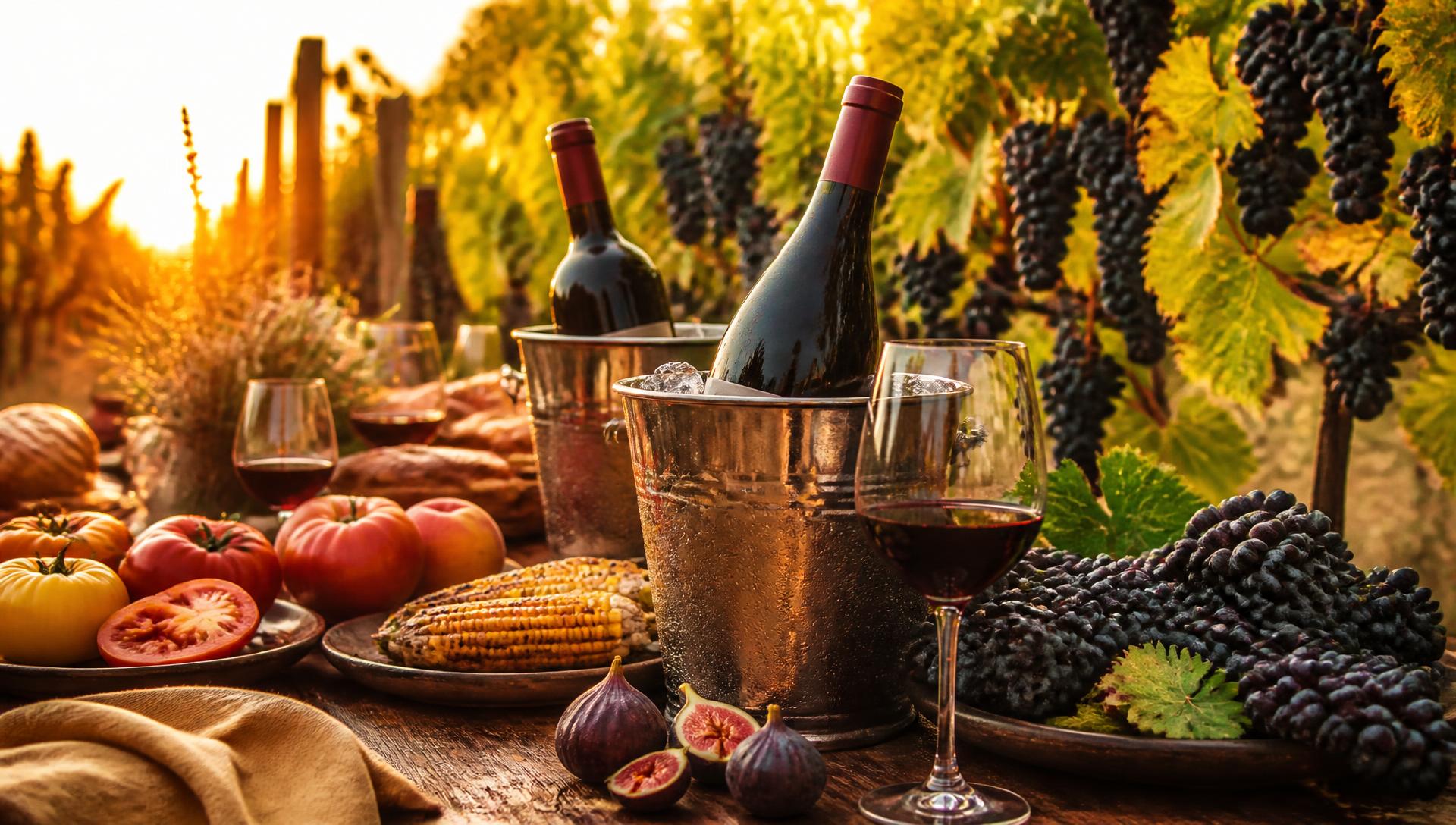
August 2026: The Late-Summer Table & Early Harvest
Peak tomatoes, peak heat, and the first grapes coming off the vine.
August is the most underrated month in wine. July is loud and rosé-soaked, September gets the harvest headlines, and August sits in between doing the actual work. The grapes are ripening fast. The tomatoes are finally worth eating. The heat is at its most stubborn. And the way you drink has to change to keep up with all three.
This is your month-long playbook: what is happening in the vineyard, what to put on the table, which bottles hold up when it is 33°C at eight in the evening, and how to land the two dated moments at the end of the month — Cabernet Day on August 27 and Labor Day weekend.
The Harvest Actually Starts Now
Most people assume harvest is a September event. It is not. Somewhere in the second week of August, the first pickers are already out in Champagne's warmer villages, in Franciacorta, in the Penedès for Cava base wine, and across California's Central Coast for sparkling. Sparkling base wine always comes in first, because it needs high acidity and low sugar — exactly what you get from a grape picked before full ripeness.
From there the calendar rolls downhill: aromatic whites through late August, Sauvignon Blanc and Pinot Grigio into early September, then the reds, and finally the late-picked sweet wines in October and November. If you have ever wanted to visit a winery during harvest, late August is the sweet spot — the energy has started, but the crews are not yet too exhausted to talk to you.
What this means for your glass is subtler. The wines arriving on shelves now are the previous year's whites and rosés, at the point where they are as expressive as they will ever be. A 2025 Provence rosé in August 2026 is at the very top of its curve. Drink it. Do not save it.
How August Heat Changes What You Should Pour
Heat does two things to wine. It amplifies alcohol on the nose, and it flattens the impression of acidity on the palate. That combination is why a wine you loved in April can taste heavy and sweet on an August evening. The fix is not to drink weaker wine — it is to drink wine that has more acidity and to serve everything colder than you think.
Practical rule for the month: subtract two degrees from every serving temperature you would normally use. Whites at 8–9°C, rosé at 9–10°C, light reds at 12–13°C, and even a serious Cabernet at 16°C rather than the 18°C you would pour in November. Keep an ice bucket on the table, not in the kitchen. A bottle poured at the right temperature and left standing in a hot garden is warm again inside fifteen minutes.
Six Whites Built for the Last of the Heat
1. Assyrtiko, Santorini. Volcanic, saline, ferociously acidic. The single best hot-weather white in the world. Pair with grilled octopus, tomato salad or anything with lemon on it.
2. Vermentino, Sardinia or Liguria. Bitter-almond finish, sea-breeze salinity. Made for pesto, fried zucchini blossoms and grilled sea bass.
3. Albariño, Rías Baixas. Stone fruit and citrus with a slight spritz in the best examples. Shellfish, ceviche, anything from the raw bar.
4. Muscadet Sèvre-et-Maine sur lie. The cheapest great wine on earth. Oysters, yes, but also fried chicken.
5. Grüner Veltliner, Kamptal. White pepper and green apple. The wine that handles hard-to-pair vegetables — asparagus, artichoke, green beans.
6. Txakoli, Basque Country. Poured from a height, lightly fizzy, 11% alcohol. The correct drink for a 34°C afternoon when you still have three hours of daylight ahead.
Reds, Still Chilled
August is not the month to abandon red wine — it is the month to keep it cold. Cru Beaujolais, Sicilian Frappato, Loire Cabernet Franc, Alto Adige Schiava and Jura Trousseau all drink beautifully at 12–13°C and pair with everything coming off a grill. Our full guide to hot-weather reds has the eight-bottle starting lineup and the temperature chart.
One late-August addition worth naming: Etna Rosso. As the evenings finally start cooling in the last week of the month, volcanic Nerello Mascalese at 14°C is the bridge wine between summer and autumn. It has the freshness of a summer red and the savoury, ash-and-herb depth that starts making sense once the light changes.
Tomato Season Is a Wine Problem
Peak tomatoes are the most difficult easy food there is. They are acidic, faintly sweet, and full of glutamates. Put them next to an oaked Chardonnay and the wine goes flabby. Put them next to a tannic Cabernet and the whole thing turns metallic.
What works is acid meeting acid. A caprese with burrata wants Vermentino or a bone-dry Provence rosé. A tomato and peach salad wants Assyrtiko. Slow-roasted tomatoes on toast want chilled Frappato. Gazpacho wants Fino sherry, served as cold as the soup — a pairing almost nobody tries and almost everybody loves.
The same logic runs through the rest of the August garden. Corn wants unoaked Chardonnay or Grüner. Peppers want rosé with some grip, Bandol or Tavel rather than the palest Provence. Stone fruit wants off-dry Riesling or a Moscato d'Asti at the end of the meal.
The Late-Summer Board
Cheese boards change in August. Heavy washed rinds are too much; the plate wants fresh and young. Burrata, young pecorino, ricotta drizzled with honey, a fresh chèvre, and one aged sheep's milk for depth. Add figs, which come into their own late in the month, plus melon, blistered almonds and a little cured ham. Our summer cheese board guide maps three wine pairings to each category, including a full vegan build.
Cabernet Day: Thursday, August 27
International Cabernet Day always lands on the Thursday before Labor Day, which puts it on August 27 in 2026. It is the one moment in this whole guide where a big, structured red is the right call — and it works because by the last week of August the evenings have finally cooled a few degrees.
Serve Cabernet at 16–17°C, not warmer. Open the bottle an hour ahead or decant it for thirty minutes. Pair with grilled ribeye, lamb chops with rosemary, portobello mushrooms if the table is vegetarian, or a wedge of three-year cheddar. If you want range beyond Napa, look to Coonawarra in Australia, Stellenbosch in South Africa, Colchagua in Chile and Bolgheri in Tuscany — four very different arguments for the same grape at four very different prices.
Running Into Labor Day Weekend
The last weekend of August is the setup, not the event. Buy for the cookout now, while shelves are still stocked with summer inventory and before the September price resets. Magnums of sparkling rosé, a case of chillable red, and one serious bottle for the Sunday table. The full plan lives in our Labor Day Weekend Cookout guide.
Three Cellar Jobs for August
- Check your storage temperature. August is when badly stored wine dies. Anything sitting above 21°C for weeks is ageing at double speed. Move it.
- Drink your 2025 rosé. All of it. Rosé does not improve, and by next spring it will taste tired.
- Pre-order autumn. Beaujolais Nouveau allocations, Barolo releases and Champagne for the holidays are all cheaper and easier to get in August than in November.
If You Are South of the Equator
August in Mendoza, Stellenbosch, Marlborough and the Barossa is midwinter. The vines are dormant and being pruned, and the drinking swings the other way: braises, roasts, and full-bodied reds served at proper cellar temperature. If that is your August, invert this whole guide — Malbec, Pinotage, Syrah and Cabernet at 17–18°C with slow-cooked food, and save the Assyrtiko for December.
Let iQ build your August table
Tell the iQ Sommelier what you are cooking and who is coming. Get the menu, the wines and the grocery list in about a minute — dietary needs included.