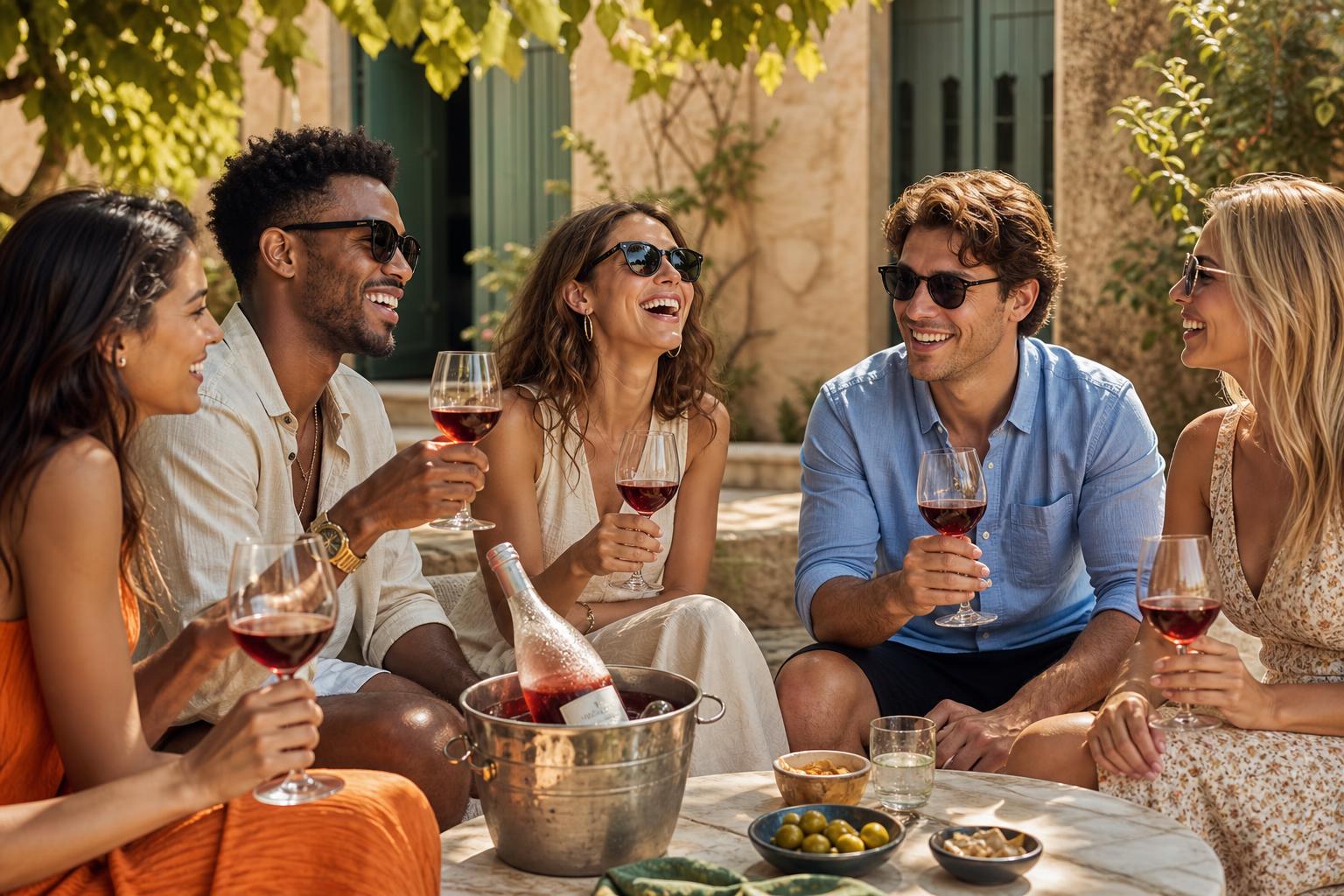
Hot-Weather Reds: The Light Bottles to Chill
The case for cold red wine, with eight bottles to start.
The old rule says red wine at room temperature. The old rule was written in a Bordeaux cellar in February. In a New York apartment in late June, room temperature is 26°C and your Cabernet tastes like cough syrup. The new rule is simple: when it is hot, chill the red.
Why Heat Ruins Big Reds
Two things happen as a wine warms. Alcohol becomes more aromatic, which means a 14% Cabernet smells like a 16% Cabernet at 24°C. And tannin loses its grip, which makes a structured red feel flabby and hot. The result is a wine that has lost its frame and gained a burn. Not a great summer drink.
Chilling fixes both. Lower temperature tucks the alcohol back into the wine, restores tannin definition and brightens fruit. The trick is to know which reds reward the chill — and which ones turn brittle in the cold.
Which Reds to Chill (and Which to Leave Alone)
Chill: Anything light-bodied, low-tannin and low-alcohol (under 13%). That covers Cru Beaujolais, village Burgundy and most Oregon Pinot Noir, Loire Cabernet Franc, Sicilian Frappato, Alto Adige Schiava, Jura Poulsard and Trousseau, Gamay from Loire or Switzerland, and most pet-nat reds.
Cool slightly: Etna Rosso, Côtes du Rhône Villages, lighter Tempranillo, Mencía, Zweigelt, Cabernet Franc from Saumur-Champigny. Take to 15°C — fifteen minutes in the fridge.
Leave at cellar temperature (16–18°C): Napa Cabernet, Brunello, Barolo, Châteauneuf-du-Pape, Australian Shiraz, big Malbec. These wines need their warmth to hold their shape.
How to Chill a Red Properly
The fridge works, but slowly. Twenty to thirty minutes for a room-temperature bottle. An ice bucket — half ice, half water, a generous pinch of salt — works faster: eight to ten minutes to perfect drinking temperature. A digital wine thermometer pays for itself in a single weekend.
Once on the table, keep the bottle in the bucket between pours. A 13°C wine in a 30°C garden hits 18°C within twenty minutes. Better to overshoot the chill by a degree and let the wine warm gently in the glass.
Eight Bottles to Start With
1. Marcel Lapierre Morgon, Beaujolais. The mascot of chillable red. Bright, juicy, almost weightless. Pair with charcuterie or a tuna nicoise.
2. Domaine de Bellivière "Hommage à Louis Derré" Pineau d'Aunis, Loire. Peppery, pale, low-alcohol. The thinking person's chilled red.
3. Bernard Baudry Chinon "Les Granges," Loire. Cabernet Franc in its crunchiest, most refreshing register. Pair with herb-roasted chicken or grilled salmon.
4. Arianna Occhipinti SP68 Rosso, Sicily. Frappato and Nero d'Avola, made naturally, bottled with energy. Pair with pizza margherita.
5. Tenuta delle Terre Nere Etna Rosso, Sicily. Volcanic Nerello Mascalese. Cool slightly. Pair with mushroom risotto or duck.
6. Elena Walch Schiava, Alto Adige. Featherlight cranberry and rose petals. Pair with prosciutto and melon.
7. Domaine de la Tournelle Trousseau, Jura. Pale, savoury and almost translucent. Pair with cured meats and a wedge of Comté.
8. Catena "Appellation" Malbec, Mendoza — the lighter cuvée. Catena's higher-altitude single-vineyard bottlings drink beautifully at 15°C. Pair with empanadas or a flank steak salad. See our deeper look at Catena Malbec.
Summer Pairings
- Grilled salmon: Bernard Baudry Chinon, 13°C.
- Sushi platter: Marcel Lapierre Morgon, 12°C.
- Pulled pork sliders: Frappato or Schiava, 13°C.
- Wood-fired pizza: Etna Rosso, 14°C.
- Herb-roasted chicken: Trousseau or village Burgundy, 13°C.
- Charcuterie board: Any of the above. This is the easy course.
Where to Buy
Most of these wines live at independent wine shops rather than supermarket chains. Ask for the "chillable red" section — it now exists at most serious bottle shops. Online, importers like Kermit Lynch (Beaujolais, Loire), Louis/Dressner (natural Loire and Italy) and Skurnik (Italy, Jura) are reliable signals. Pair these bottles with the food on our American Summer Cookout guide and you have a season covered.
How to Order a Chilled Red at a Restaurant
The script is easy. Tell the sommelier you want something light, low in alcohol, with the bottle chilled in an ice bucket. Most good wine programs in 2026 have at least three chillable reds on the list — they may be filed under Beaujolais, Loire, Jura or "Other Reds." If you want a benchmark to anchor the conversation, ask for a Morgon from Lapierre, Foillard or Burgaud, and let the sommelier suggest something in the same neighborhood. Do not let a server bring the bottle warm and call it correct. A wine that should be poured at 13°C and arrives at 22°C is a different wine, and you are entitled to ask for the ice bucket.
Five Myths About Chilled Reds
- "Chilling red wine ruins it." It ruins big tannic reds. It improves light, low-tannin reds.
- "Light red is not serious." Marcel Lapierre Morgon, Domaine Tempier Bandol and Hermann J. Wiemer Cabernet Franc are taken as seriously as any wine in the world.
- "Chillable reds are a trend." The French have been chilling Cru Beaujolais since the nineteenth century. The trend is American writers catching up.
- "Pinot Noir cannot be chilled." Village Burgundy and Oregon Willamette Valley Pinot drink beautifully at 13°C. Premier Cru and Grand Cru reward a slightly warmer pour.
- "You need a special wine fridge." An ice bucket, ten minutes and a digital thermometer beat a wine fridge for everyday chillable reds.
Build a Summer Mixed Case
A twelve-bottle case for a real summer of chilled red drinking. Four bottles of Cru Beaujolais (mix Morgon, Fleurie, Brouilly). Two bottles of Loire Cabernet Franc (Chinon or Saumur-Champigny). Two bottles of Sicilian Frappato or Etna Rosso. Two bottles of Schiava or Trousseau for the lightest end. Two bottles of a heavier crossover wine — village Burgundy or Oregon Pinot Noir — for the night that turns cool. Budget around $25 per bottle and you will eat well, drink well and never reach for the same wine twice.
The Climate Reality
Summer 2026 is forecast to be one of the warmest on record in Western Europe and the eastern United States. That is not an abstract climate point — it is a practical wine point. Higher temperatures push grapes toward higher sugar and higher alcohol, which means the next decade of wine drinking is going to favor cool-climate regions and earlier-picked styles. The producers in this guide were already there. Drinking chilled, light, low-alcohol red is also drinking the wine that climate change is going to give us more of. Treat your summer cellar accordingly.
Find your chillable red with iQ
Tell the iQ Sommelier the dish and the weather. Get a chillable red picked for the table, at the right temperature.