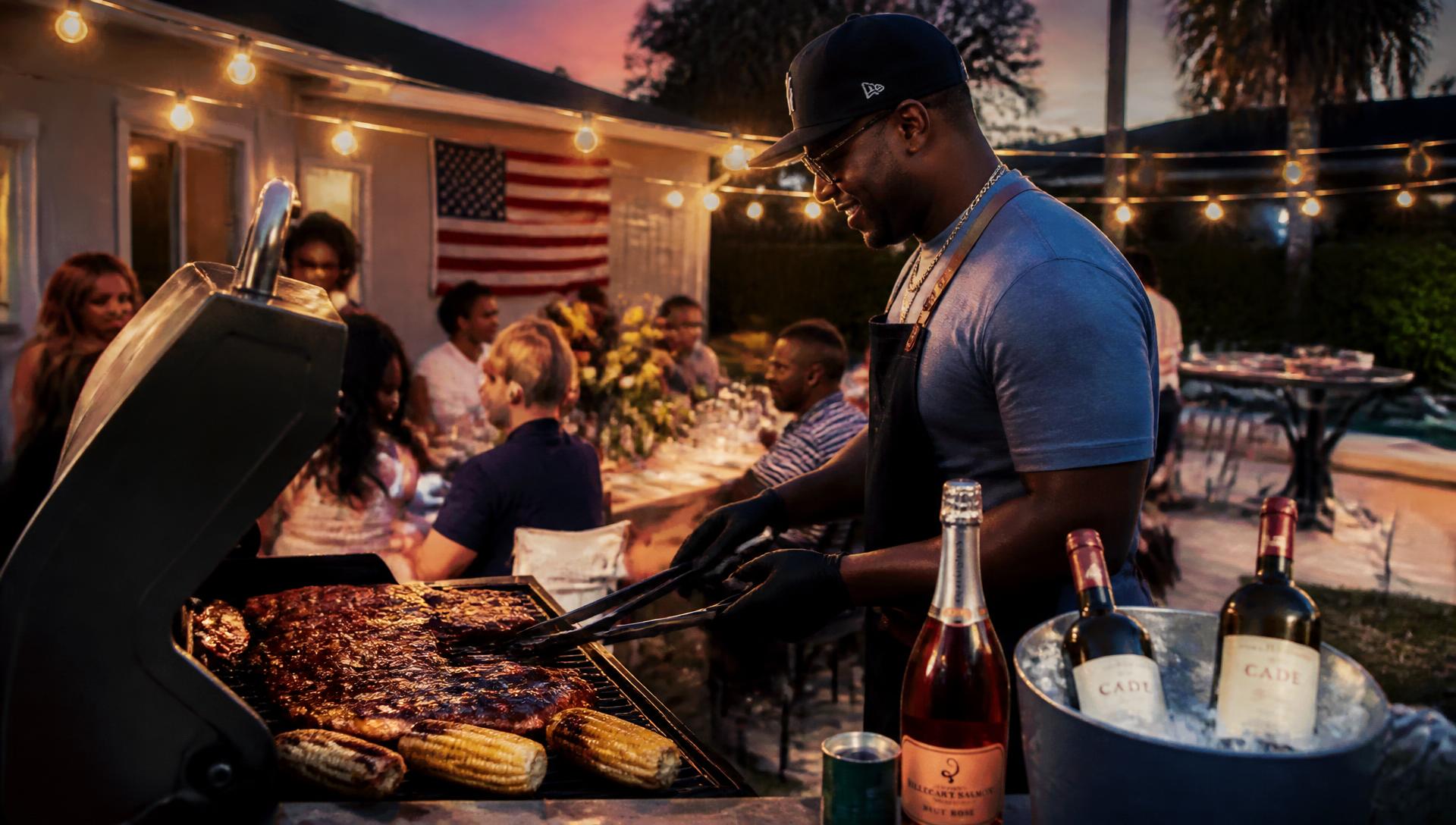
Labor Day Weekend Cookout 2026
The last big table of summer, paired course by course.
Labor Day 2026 lands on Monday, September 7. It is the last cookout that everyone shows up to, the last weekend the pool is worth opening, and the last time until Thanksgiving that you will feed twenty people outdoors. It deserves better than whatever was left in the fridge from July.
Here is the whole plan: how much to buy, what to pour with each dish on the grill, how to handle the guests who are not drinking, and the two bottles worth spending real money on.
Start With the Math
Under-buying is the classic Labor Day mistake, because the day runs longer than any other cookout of the year — people arrive at two and leave at nine. Budget half a bottle per drinking adult for a short afternoon, and a full bottle each if it goes into the evening. For twelve drinking guests over a long day, that is twelve bottles, which sounds like a lot until the sun goes down.
Split it roughly: 40 percent crisp white and rosé, 40 percent red (most of it chillable), 20 percent sparkling, plus one good non-alcoholic bottle for every two guests. Buy magnums where you can. A magnum is cheaper per glass, keeps its temperature far better in a cooler, and looks like an occasion on the table.
The Arrival Pour
People arrive hot. The first glass should be cold, low in alcohol and easy — not the wine you are proudest of. Sparkling rosé in magnum, a Spanish Cava Brut Nature, a Crémant de Loire, or a Portuguese Vinho Verde at 11 percent. Pour it before anyone asks and the whole afternoon starts on the right foot.
If you want one upgrade here, make it a grower Champagne or an English sparkling in magnum. It costs more than the Cava and it changes the register of the day.
Pairing the Grill, Dish by Dish
Smoked or sauced ribs. Sweet barbecue sauce needs fruit to meet it. Lodi Zinfandel, Barossa Shiraz or Mendoza Malbec, served at 15–16°C. Our American BBQ pairing guide breaks this down by regional sauce style.
Dry-rub ribs and pulled pork. Without the sugar of a sauce, go lighter and colder. Cru Beaujolais or Sicilian Frappato at 13°C cuts the fat without fighting the spice rub.
Burgers and smashburgers. Côtes du Rhône, Chianti Classico or a Washington Merlot. Enough acidity to handle the pickles, enough fruit for the char.
Brisket. The one dish that can take a serious red. Northern Rhône Syrah, a Bordeaux blend, or a good Cabernet if you are extending Cabernet Day.
Grilled chicken and spatchcock. Oregon Pinot Noir at 14°C, or an unoaked Chardonnay from Chablis or the Adelaide Hills if the marinade is lemon and herb.
Shrimp, lobster and the seafood boil. Albariño, Muscadet or a bone-dry Provence rosé. See the full breakdown in our seafood boil pairing guide.
Hot dogs and sausages. Lambrusco. Dry, fizzy, cold, faintly bitter — it is the single most underrated cookout wine there is.
Grilled vegetables, halloumi and plant-based mains. Rosé with structure — Bandol or Tavel — or a chilled Loire Cabernet Franc. Charred peppers and eggplant have real weight and need more than the palest pink wine.
Do Not Forget the Sides
The sides are what people actually keep eating. Potato salad, coleslaw and macaroni salad are all creamy and acidic at once, and they flatten most reds. Keep a high-acid white circulating specifically for the side table: Grüner Veltliner, Assyrtiko or a dry Riesling. Corn on the cob wants unoaked Chardonnay. Baked beans, which are sweet and smoky, actually go best with the same Zinfandel as the ribs.
Feeding Everyone at the Table
A twenty-person cookout in 2026 almost always includes guests who are vegan, halal, gluten-free, diabetic or simply not drinking, and the fix is planning rather than apology.
- Vegan guests: Many wines are fined with egg white, casein or isinglass. Check labels or use our vegan wine collection.
- Halal and non-drinking guests: Put real non-alcoholic bottles on the table, not just soda. De-alcoholised sparkling from Leitz or Noughty, plus a hibiscus shrub over ice, served in the same glassware as everyone else.
- Diabetic guests: Dry wines under 2g/L residual sugar. Our low-sugar collection lists specific bottles.
- Gluten-free guests: Wine is naturally gluten-free; the risk is the buns and the marinade, not the bottle.
Temperature Is the Whole Game
Nothing ruins a cookout wine faster than a September afternoon in the eighties. Set up two coolers: one at fridge-cold for whites, rosés and sparkling, and one with a shallower ice-and-water bath at around 13°C for the reds. Rotate bottles in and out rather than leaving them standing on the table. A wine poured at 13°C is at 19°C within twenty minutes in direct sun.
Skip stemware if the yard is grass. Good stemless glasses or the sturdier outdoor tumblers survive the day, and nobody enjoys sweeping up.
The End of the Night
Peach cobbler, watermelon and grilled stone fruit all want a wine that is sweeter than the dish or it will taste sour. Moscato d'Asti at 7°C is the crowd answer; a late-harvest Riesling or a chilled Sauternes is the serious one. If there is chocolate on the table, switch to a tawny Port served slightly cool.
Two Bottles Worth Spending On
Buy volume for the afternoon, then keep two bottles back for the moment the crowd thins and eight people are still sitting around the table at nine o'clock. One should be a serious red — a Northern Rhône Syrah, a Bolgheri blend, a Napa Cabernet. The other should be sparkling, opened last, cold, for no reason at all. That second bottle is what people remember about the end of summer.
Let iQ plan the whole cookout
Give iQ your headcount, your grill menu and any dietary needs. You get the full wine list, the bottle counts and a grocery list in about a minute.