Summer Wine & Cheese Board 2026: Fruits, Charcuterie & Veggie Pairings
Burrata to blue, Manchego to Miyoko's. The complete summer board, paired bottle by bottle.
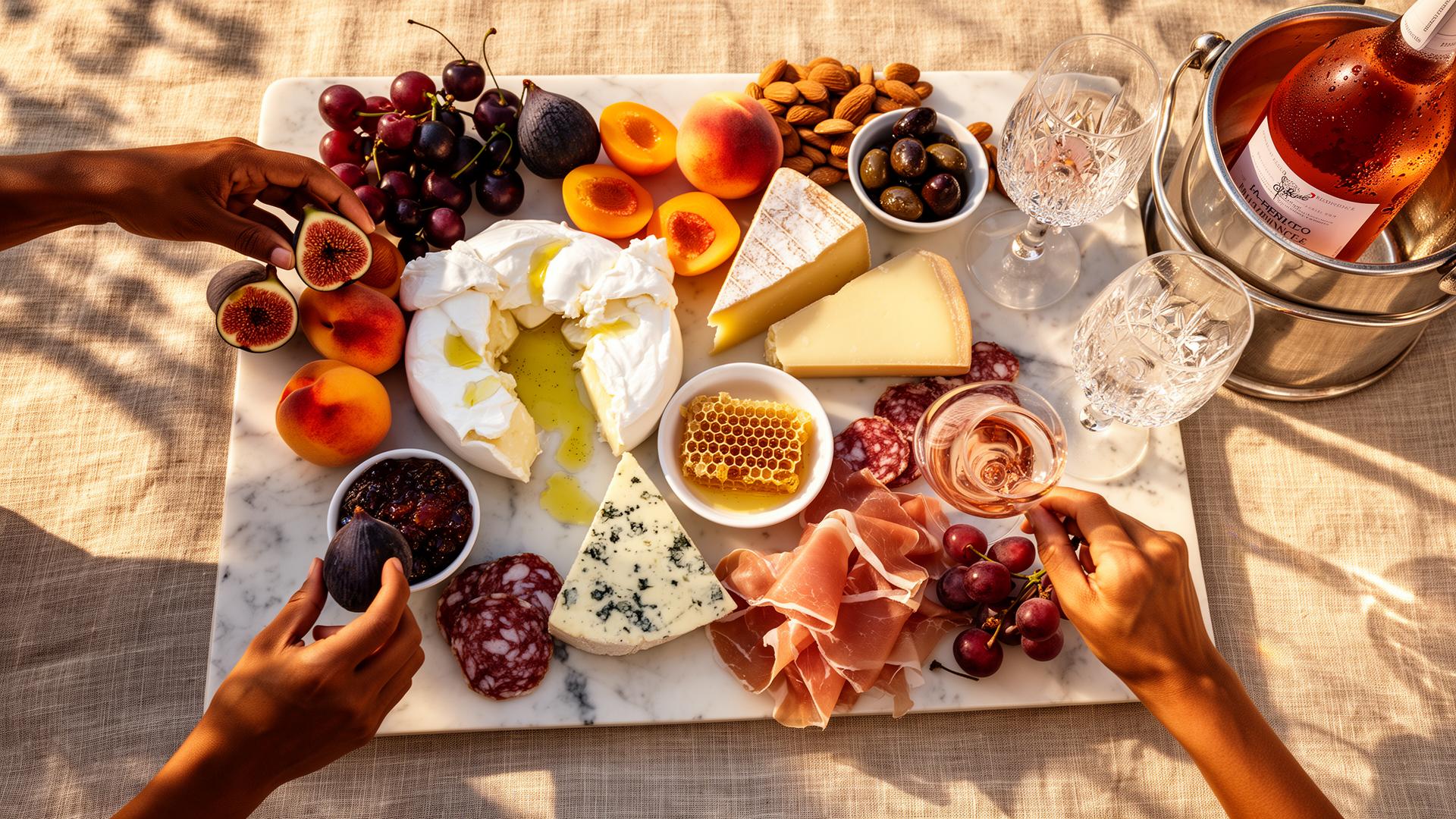
The summer cheese board is a ritual. A marble slab pulled from the fridge, a linen runner thrown across the outdoor table, a chilled bottle sweating in a silver bucket, and the long honey-coloured light of a July evening. This is the long-form playbook: five cheese categories, three wine pairings each, the fruit and charcuterie that make the board sing, a full vegetarian and vegan plate, three themed builds, the serving temperatures, the quantities, and the non-alcoholic pours for the table.
The Foundation: Five Summer Cheese Categories
A great summer board covers the full texture and intensity range without overwhelming the table. Five categories is the sweet spot — fresh and bloomy, soft-ripened, semi-firm, blue, and aged hard. Pick three for a small gathering, all five for a long table.
1. Fresh & Bloomy
Burrata di Andria, fresh chèvre from a Loire producer like Sainte-Maure de Touraine or Selles-sur-Cher, and the triple-cream Brillat-Savarin from Burgundy. These are the lightest cheeses on the board: high moisture, mild lactic tang, no rind to speak of. They want acid and bubbles to cut the cream.
Wine pairings: a dry Provence rosé like Domaines Ott Clos Mireille or Château Minuty Rosé et Or; a Loire Sauvignon Blanc — Pascal Jolivet Sancerre or Henri Bourgeois Pouilly-Fumé; a non-vintage Champagne with low dosage like Pierre Péters Cuvée de Réserve Blanc de Blancs.
2. Soft-Ripened
Camembert de Normandie AOP, a wedge of Brie de Meaux, and the buttery Délice de Bourgogne. The white bloomy rind develops mushroom and cauliflower notes as the cheese ages, with a creamy interior that practically asks for sparkling wine.
Wine pairings: Champagne Bollinger Special Cuvée; a richer white Burgundy like Domaine Leflaive Mâcon-Verzé; a dry Normandy cider like Eric Bordelet Sidre Brut Tendre for a regional match.
3. Semi-Firm
Aged Manchego DOP at twelve months, young Comté at eighteen months, and Gruyère d'Alpage. These are the workhorses of the board: nutty, sweet, with crystalline tyrosine flecks in the aged wheels. They handle a wider range of wine than any other category.
Wine pairings: a Rioja Reserva from López de Heredia Viña Tondonia or La Rioja Alta Gran Reserva 904; a Jura Vin Jaune or aged Savagnin from Domaine Tissot; a chilled Cru Beaujolais like Marcel Lapierre Morgon at 14°C for the summer table.
4. Blue
Roquefort AOP from Carles or Papillon, Cashel Blue from Tipperary, and Gorgonzola Dolce DOP from Lombardy. The summer board wants the milder, creamier blues rather than the most aggressive Stilton or Cabrales — but the funk should still be there.
Wine pairings: a Sauternes from Château Coutet or Château Guiraud; a tawny port like Sandeman 20 Year Old or Quinta do Noval 10 Year Old; a late-harvest German Riesling, ideally a Mosel Auslese from J.J. Prüm or Dr. Loosen.
5. Aged Hard
Parmigiano-Reggiano aged 24 months, aged Mahón from Menorca, and Pecorino Sardo Stagionato. Crystalline, salty, intense. These cheeses anchor the savoury end of the board and stand up to bigger wines.
Wine pairings: a Brunello di Montalcino from Argiano or Il Poggione; a Lambrusco di Sorbara from Cleto Chiarli — the dry, frothy red is a Parm classic; an aged tawny port or oloroso sherry like Lustau Don Nuño.
The Fruit Layer
Summer is when the board gets seriously interesting because the fruit at the market is at peak ripeness. Build the fruit layer to amplify a specific cheese rather than scattering everything across the slab.
- Black mission figs (cut open): blue cheese, Brillat-Savarin, prosciutto. The honeyed flesh is the perfect blue cheese bridge.
- Halved apricots and white peaches: fresh chèvre, burrata, dry rosé. The stone-fruit acidity mirrors the wine.
- Bing and Rainier cherries: aged Manchego, Comté, Cru Beaujolais. Cherries are the natural fruit pair for chillable reds.
- Strawberries and raspberries: Camembert, Brie de Meaux, Champagne rosé. A small bowl, not scattered.
- Melon (cantaloupe or Charentais) with prosciutto: a classic in its own right. Pour Lambrusco di Sorbara.
- Concord and red flame grapes: aged Pecorino, Parmigiano, tawny port. Cut into small clusters with scissors.
The Charcuterie Layer
Two cured meats are enough for a small board, three for a long table. Buy from a real salumeria where the meats are sliced to order rather than vacuum-packed weeks ago.
- Prosciutto di Parma (24 month): the universal pour. Sweet, sea-salty, melts on contact. Pair with a Franciacorta or a chilled Lambrusco.
- Jamón ibérico de bellota: the splurge. Acorn-fed, three years of curing, marbled with hazelnut-sweet fat. Pour a Manzanilla sherry from Hidalgo La Gitana or a fino from Tio Pepe.
- Soppressata calabrese: the spicy, paprika-rich Calabrian salami. Pair with a chilled Etna Rosso from Pietradolce or Cornelissen Susucaru.
- Bresaola della Valtellina: air-cured beef, lean and beef-jerky savoury. Pair with a Valtellina Superiore Nebbiolo from Ar.Pe.Pe.
- Saucisson sec or rosette de Lyon: the classic French dry sausage. Pair with a chilled Beaujolais-Villages or a young Côtes du Rhône.
- 'Nduja: the spreadable spicy Calabrian sausage. Smear on grilled bread and pair with a chilled Cerasuolo di Vittoria or a dry Lambrusco.
The Vegetarian Plate
Skipping the charcuterie does not mean skipping flavour. Build a vegetarian board around marinated vegetables, briny pickles, nuts and the sweet preserves that bridge cheese and wine.
- Marinated baby artichokes in olive oil and lemon
- Grilled zucchini ribbons with mint and chilli
- Sicilian caponata (capers, raisins, eggplant)
- Roasted red peppers in good olive oil
- Shaved fennel with orange and pistachio
- Castelvetrano olives and oil-cured black olives
- Marcona almonds with rosemary and sea salt
- A wedge of fresh honeycomb
- Fig jam, quince paste (membrillo) and apricot preserves
- Toasted sourdough crostini and seed crackers
Pour an unoaked Italian white like Pieropan Soave Classico, a dry Greek Assyrtiko from Sigalas or Domaine Sigalas Santorini, or a chilled Etna Bianco from Benanti — any of the three glides across the entire vegetarian board.
The Vegan Cheese Board
Plant-based cheese has crossed a quality line in the last three years. The best producers culture cashew and almond bases with the same lactic bacteria used in dairy cheese, age them on bloomy rinds, and finish them with the same techniques as a Camembert or a blue. Built right, a vegan board pairs with serious wine.
- Miyoko's Creamery Cultured Cashew Mozz — pair with a Sancerre or a Provence rosé.
- Treeline Aged Artisanal Nut Cheese — pair with a chilled Etna Rosso or an oloroso sherry.
- Rebel Cheese Almond Brie — pair with a non-vintage Champagne or a Crémant de Bourgogne.
- Númu Vegan Blue (or a vegan blue from Climax Foods) — pair with a Sauternes or a late-harvest Riesling.
- Kite Hill Soft Fresh Original — pair with a dry Vouvray or an Albariño from Rías Baixas.
Add the same fruit, the same nuts, the same olives and the same crackers. Swap the charcuterie for sliced grilled portobello, roasted heirloom tomatoes, smoked carrot lox or a small pot of muhammara. For the broader plant-based wine picture, see our vegan wines collection.
Building the Board
Quantities first. As an appetizer with wine: three ounces of cheese and two ounces of cured meat per person, across at least three cheeses and two meats. As a meal: double both, and add bread or grilled flatbread. A 14-inch round marble slab serves four to six; a 24-inch long board serves eight to ten.
The seven-component layout: three to five cheeses anchored as visual anchors, cured meats folded into ribbons or fanned out, fresh fruit clustered in two or three spots, small bowls of olives and honey and jam, scattered nuts in the gaps, fresh herbs (rosemary sprigs, mint, edible flowers) as the garnish, and the bread and crackers in a separate basket so they stay crisp. Always include three knives — one for soft, one for semi-firm and one for blue, so flavours do not cross.
Three Themed Boards
The Provence Board. Burrata, fresh chèvre, Brillat-Savarin, saucisson sec. Black mission figs, halved apricots, Niçoise olives, lavender honey, marcona almonds, baguette. Wine: a chilled bottle of Domaines Ott Clos Mireille rosé and a Bandol rouge from Domaine Tempier for the table that wants to keep going.
The Iberian Board. Aged Manchego twelve month, Mahón, Cabrales (or Gorgonzola Dolce for a milder blue). Jamón ibérico de bellota, chorizo ibérico. Membrillo, marcona almonds, Castelvetrano olives, dried figs, pan con tomate. Wine: an Albariño from Pazo Señorans Selección de Añada and a Manzanilla sherry from Hidalgo La Gitana.
The Plant-Forward Garden Board. Miyoko's cultured cashew, Treeline aged, Rebel almond brie. Grilled zucchini ribbons, caponata, roasted peppers, smoked carrot lox, marinated artichokes. Black figs, peaches, edible nasturtium flowers, sourdough crostini. Wine: an Etna Bianco from Benanti and a chilled Etna Rosso from Cornelissen Susucaru.
Serving Temperatures
Cheese needs thirty to forty-five minutes out of the fridge before service. Pull it earlier on a 90°F afternoon and you will be eating overripe Brie. The board itself is your friend: a chilled marble slab, set over a sheet pan of ice if the table is in direct sun, keeps the cheese in the safe zone for nearly two hours.
Wine temperatures: sparkling and rosé at 6–8°C straight from an ice bath (half ice, half water, a handful of salt — twenty minutes); white Burgundy and Sancerre at 10°C; chilled red (Cru Beaujolais, Etna Rosso, young Pinot Noir) at 13–14°C from a thirty-minute fridge dip; sherry and tawny port lightly chilled at 12°C; sweet Riesling and Sauternes from the fridge at 8°C. For the broader chillable-red playbook, read our Hot-Weather Reds 2026 guide.
Non-Alcoholic Pours for the Board
A great board includes the table. French Bloom Le Rosé pours like a real sparkling rosé and stands up to Brillat-Savarin and figs. Lyre's Classico Grande layered with verjus and tonic mimics a dry sparkling. A homemade peach and rosemary shrub stretched with sparkling water cuts through the saltiest jamón. Wölffer No. 139 dry rosé cider holds its own against soppressata and aged Manchego. A simple lavender lemonade with cucumber ribbons works across the whole board.
Build your board with iQ Sommelier
Tell the iQ Sommelier the cheeses, the fruit and how many guests are coming. Get a tailored bottle list in seconds — sparkling, rosé, white, chilled red and dessert wine — with vegan and non-alcoholic options on the same board.