Wine & Desserts: The Complete Pairing Guide
The rules of the sweet table, then dish by dish — crème brûlée to baklava, tarte tatin to tiramisu, with the bottles that finish the meal.
Dessert is the course most people get wrong. Reach for the same Cabernet that worked at the table and the meal collapses — the sweetness flattens the wine and the wine bullies the dish. The fix is simple: a sweeter wine, often a smaller pour. This guide walks the rules, then the desserts you will actually serve.
Three Rules That Solve Almost Everything
- Sweetness rule: The wine must be at least as sweet as the dessert. This is non-negotiable.
- Acidity match: Rich, creamy desserts need wine with bright acidity to cut. Sauternes, Tokaji and Vouvray Moelleux all carry it.
- Weight match: Light desserts pair with lighter wines (Moscato d'Asti, Coteaux du Layon). Dense desserts pair with fortified (PX, Maury, Tawny).
Crème Brûlée → Sauternes
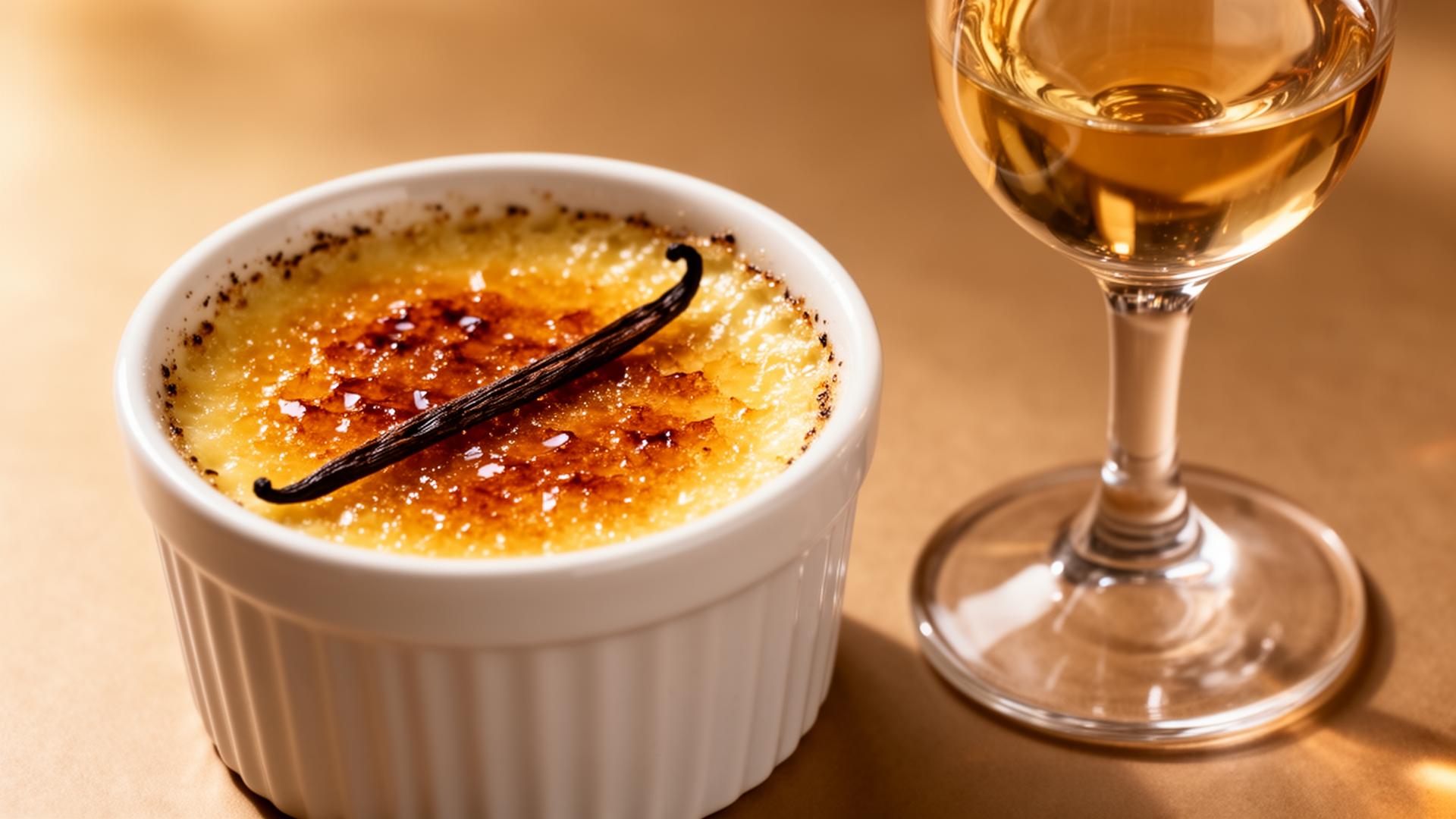
The vanilla custard wants apricot and honey in the glass — Sauternes delivers both. Château Doisy-Daëne and Château Coutet are reliable at the mid-tier; Château d'Yquem is the special-occasion bottle. A Tokaji Aszú 5 Puttonyos is the eastern European alternative.
Tarte Tatin → Vouvray Moelleux
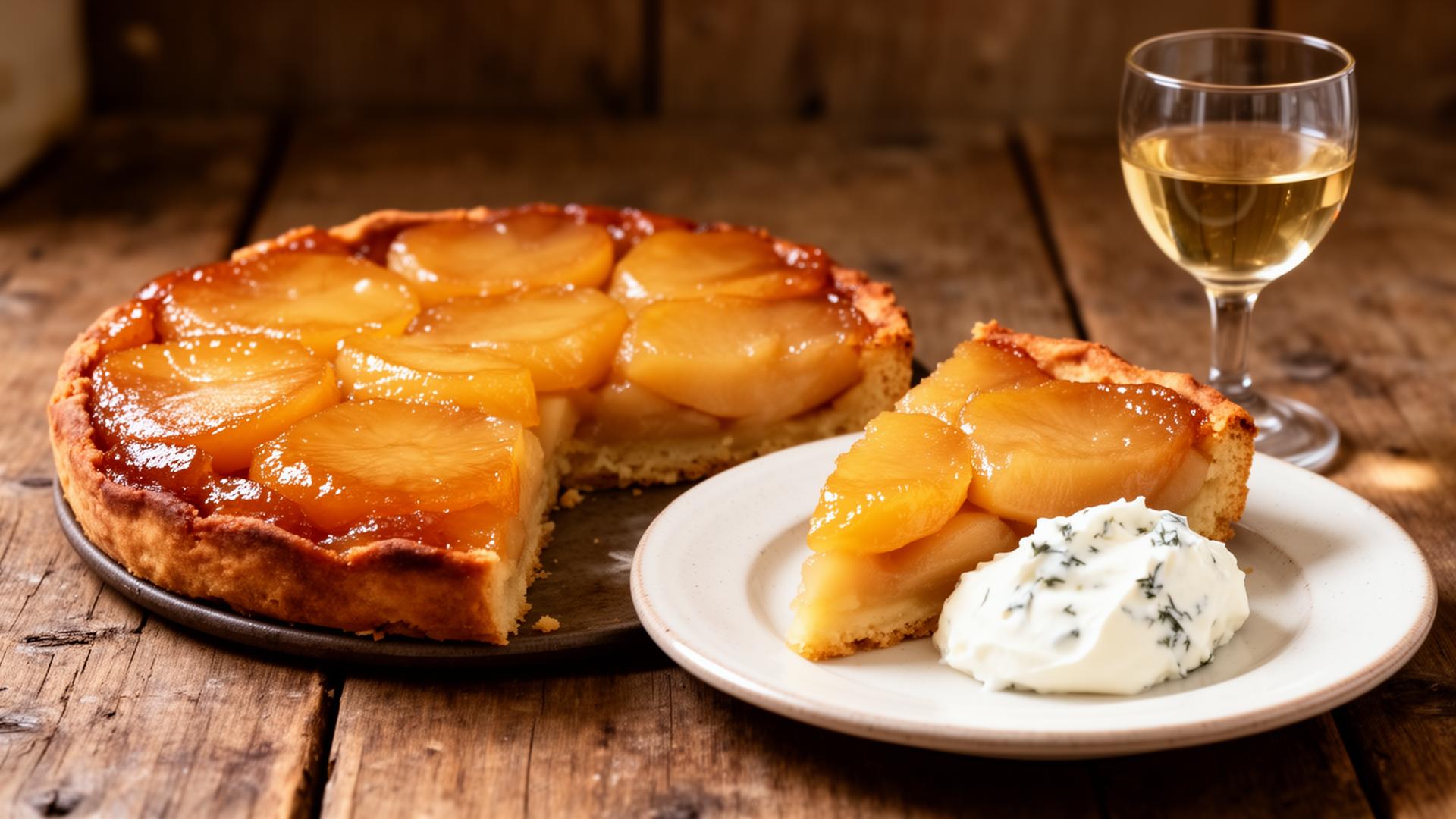
Caramelized apples want a Chenin Blanc — Vouvray Moelleux or Coteaux du Layon — with enough acidity to cut the butter and enough sweetness to keep up. Domaine Huet and Domaine Baumard are the names to know.
Tiramisu → Vin Santo
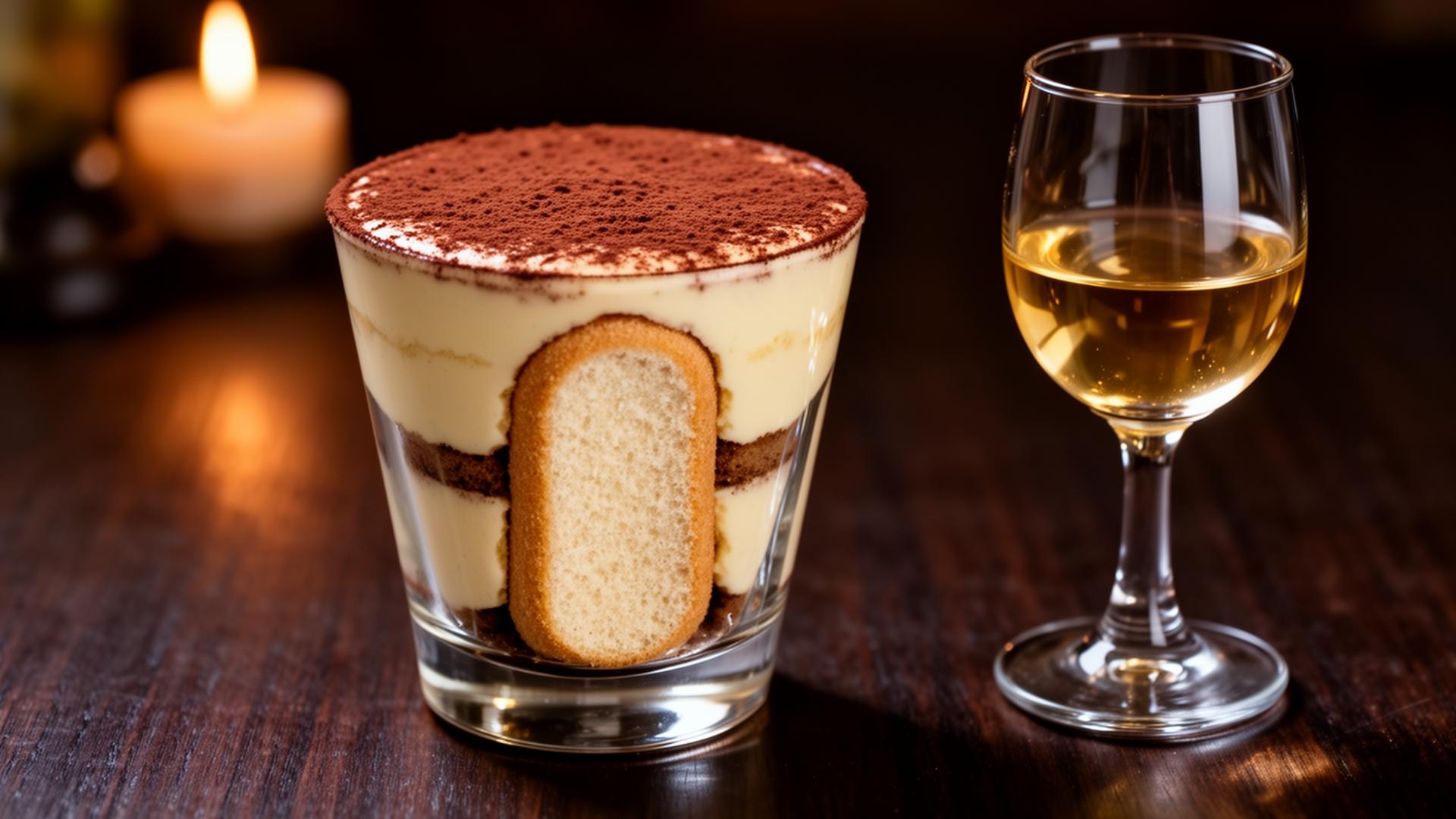
Vin Santo from Tuscany is made to drink with biscuits and mascarpone — the entire pairing is built in. Avignonesi and Isole e Olena make the benchmarks. A 10-year Tawny Port works almost as well.
Baklava → Muscat de Beaumes-de-Venise
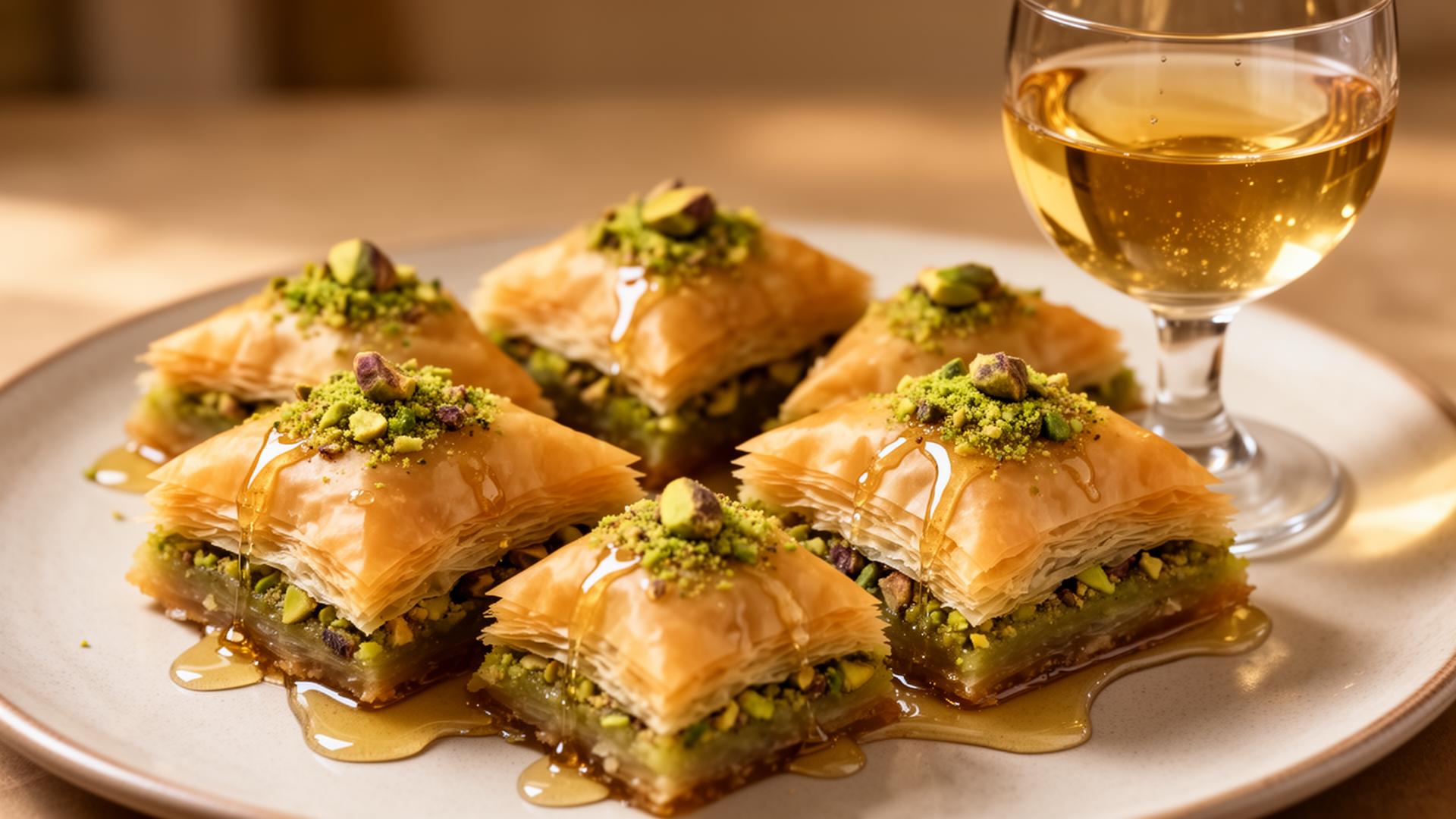
Honey, phyllo and nuts want a floral, honeyed dessert wine. Muscat de Beaumes-de-Venise from the southern Rhône is the textbook answer; Samos Muscat from Greece is the regionally honest pick. Both are about half the price of Sauternes.
Panna Cotta → Moscato d'Asti
Light, dairy-led desserts want light, slightly sparkling whites. Moscato d'Asti is low-alcohol, gently sweet, and floral — exactly what panna cotta with berry coulis needs. Saracco and Vietti are dependable.
Cheesecake → Late-Harvest Riesling
Cream cheese is a tough pairing — too rich for most sweet wines. Late-harvest Riesling (Spätlese or Auslese from Germany; Vendanges Tardives from Alsace) carries enough acidity to cut and enough sweetness to match. For New York cheesecake with berry topping, an Ice Wine is the upgrade.
Lemon Tart → Vouvray Moelleux or Late-Harvest Riesling
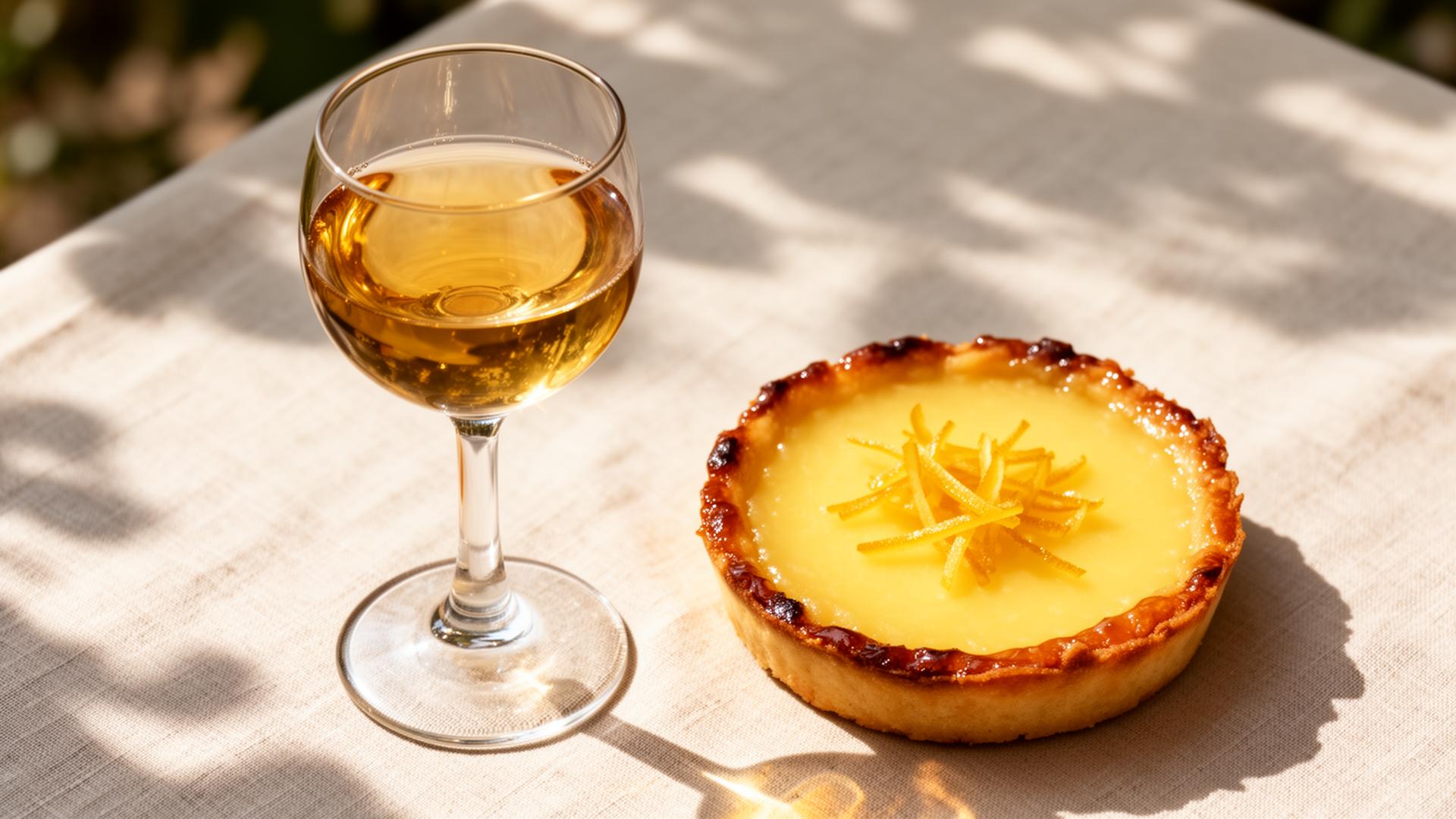
Citrus desserts need a wine with matching acid — otherwise the tart wins and the wine tastes flat. Vouvray Moelleux is the safest answer; an off-dry Riesling Spätlese is the German alternative.
Pavlova → Sauternes or Sweet Champagne
Crisp meringue with whipped cream and summer berries wants a bright, fragrant dessert wine. Sauternes works; a Demi-Sec or Doux Champagne is more festive. Veuve Clicquot Rich is the famous example.
Sticky Toffee Pudding → Pedro Ximénez or 20-Year Tawny
The treacle-and-date heart of British pudding wants a wine that tastes like raisin and molasses. Pedro Ximénez Sherry is exactly that; a 20-year Tawny Port is the lighter answer.
Chocolate Fondant → Maury Grenat or Banyuls
Molten chocolate cake needs Grenache, fortified — Maury Grenat or Banyuls from Roussillon. A Recioto della Valpolicella works for the bigger-occasion table.
Fruit Tarts → Match the Fruit
- Berry tarts → Late-harvest Zinfandel or Moscato d'Asti
- Stone fruit (peach, apricot) → Sauternes or Coteaux du Layon
- Citrus tarts → Vouvray Moelleux or late-harvest Riesling
- Apple/pear tarts → Vouvray Moelleux or Vin Santo
A Six-Bottle Dessert Cellar
If you keep these six bottles in the house, you can pair almost any dessert that lands on the table:
- Sauternes (Doisy-Daëne or similar) — the all-purpose default
- Vouvray Moelleux — for fruit and creamy desserts
- Vin Santo — for biscotti, tiramisu and Italian almond cake
- 10-year Tawny Port — for chocolate, sticky toffee, nuts
- Moscato d'Asti — the low-alcohol, light-dessert option
- Pedro Ximénez — the dessert-on-its-own pour, over vanilla ice cream
Dessert wine is the most forgiving course to pair if you respect the sweetness rule. Get the wine sweeter than the dish, match the weight, and the rest takes care of itself.