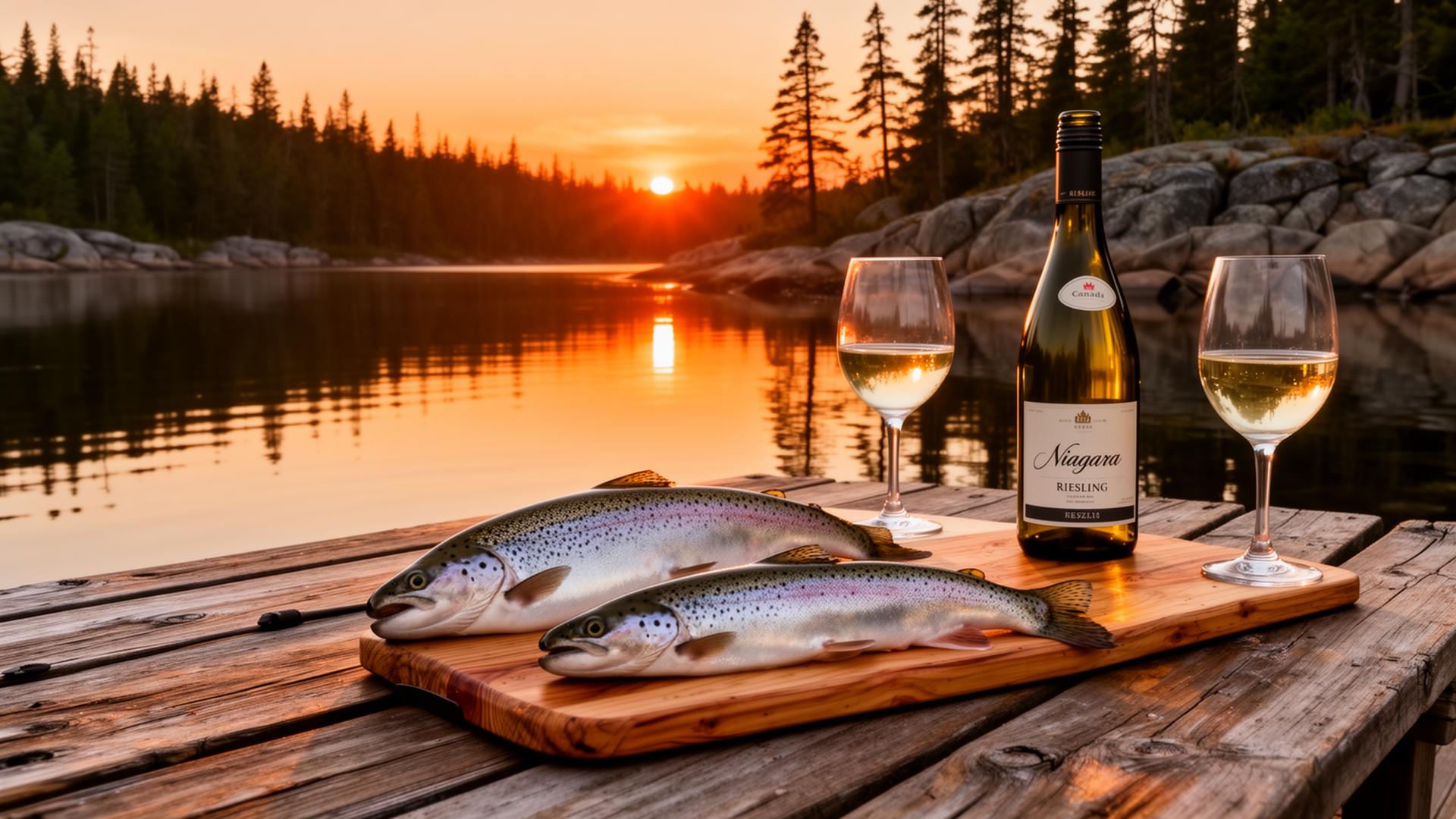
Canadian Fishing & Wine: A Coast-to-Coast Pairing Guide
From Mi'kmaq lobster boils on the Atlantic to Coast Salish cedar-plank salmon on the Pacific, paired with the Canadian wineries — including Indigenous-owned Nk'Mip Cellars — built for the fish.
Canada has more coastline than any country on earth and more freshwater than the rest of the world combined. Fishing here is not a hobby; it is heritage. Long before there was a Confederation, the Mi'kmaq smoked Atlantic salmon over green alder, the Anishinaabe pulled walleye from the Great Lakes at first light, and the Coast Salish cooked sockeye on western red cedar planks beside open fire. Today those traditions sit beside a young, confident Canadian wine industry that finally has bottles worthy of the catch.
Atlantic Canada: Lobster, Tidal Bay & the Mi'kmaq Table
The Atlantic provinces — Nova Scotia, New Brunswick, Prince Edward Island and Newfoundland & Labrador — are the soul of Canadian seafood. Atlantic lobster from the cold waters off Cape Breton and PEI is the country's most exported food and one of its most pristine. Snow crab, scallops from Digby, mussels from PEI's Malpeque Bay and Newfoundland salt cod round out the table. Behind it all sits the Mi'kmaq tradition of cooking shellfish in seaweed and seawater on the beach — a method that predates European arrival and still shapes the Maritimes lobster boil.
Nova Scotia answered the pairing question by inventing an entire appellation for it. Tidal Bay is a regulated white blend — fresh, aromatic, never above 11% alcohol — made specifically for Atlantic seafood. Benjamin Bridge leads the category with its Tidal Bay and an even more celebrated Brut Reserve sparkling that pours like Champagne for a tenth of the cultural noise. Lightfoot & Wolfville, Luckett Vineyards, L'Acadie Vineyards and Domaine de Grand Pré round out the Annapolis Valley scene. For lobster, the order is simple: Benjamin Bridge Brut Reserve first, Tidal Bay through the main course, a small pour of L'Acadie sparkling for dessert.
New Brunswick: Bay of Fundy Scallops, Restigouche Salmon & Acadian Tables
New Brunswick is the quiet powerhouse of Atlantic Canadian seafood. The Bay of Fundy — home to the world's highest tides — produces some of the planet's sweetest scallops out of Grand Manan and the Fundy Isles, alongside cold-water lobster, dulse and the famous Fundy salmon. Inland, the Restigouche and Miramichi rivers are legendary Atlantic salmon waters, fished for centuries by the Mi'kmaq and Wolastoqiyik (Maliseet) Nations, who still smoke salmon over green alder and serve it with fiddleheads in spring. Acadian cooking adds fricot, poutine râpée and pan-fried Fundy haddock to the table.
The province's wine scene is small but improving fast. Magnetic Hill Winery outside Moncton, Gagetown Cider Co. and Motts Landing Vineyard in the St. John River valley produce cool-climate whites and ciders that handle Fundy scallops beautifully. For Restigouche salmon, reach across the Gulf for a Nova Scotia Tidal Bay or a Prince Edward County Chardonnay; for a Saint John lobster roll, a chilled glass of Magnetic Hill L'Acadie Blanc or a Benjamin Bridge Nova 7 is the most local pairing on the Atlantic seaboard.
Newfoundland & Labrador: Salt Cod, Cod Tongues & the Iceberg Coast
No Canadian province has a deeper relationship with a single fish than Newfoundland with cod. For five centuries the Grand Banks defined the place; even after the 1992 moratorium, salt cod, fresh cod, cod cheeks and the prized cod tongues (pan-fried in pork scrunchions) remain the soul of the Newfoundland table. Add snow crab from the northeast coast, Labrador Arctic char, capelin rolling on the beach in June, and the Inuit and Innu smoked-fish traditions of Nunatsiavut, and you have one of the most distinctive seafood cultures in North America. The classic feast is fish & brewis: salt cod and hard tack soaked overnight, served with scrunchions and a glass of something cold.
Commercial wineries are few — Auk Island Winery in Twillingate and The Newfoundland Distillery Co. work primarily with partridgeberries, blueberries and iceberg water — so the pairing answer travels by ferry from Nova Scotia. Benjamin Bridge Nova 7 is the textbook match for salt cod fish cakes; L'Acadie Vineyards Tidal Bay handles pan-fried cod tongues; and for a Jiggs' dinner with salt beef and pease pudding, a slightly off-dry Domaine Les Brôme Riesling from Quebec cuts the salt without overpowering the plate. For Labrador Arctic char, the Okanagan Riesling logic from our North section applies equally well.
Quebec: Smoked Salmon, Gaspé Cod & Eastern Townships Wineries
Quebec's fishing story runs from the cold St. Lawrence Estuary to the wild Gaspé Peninsula and the Innu and Mi'kmaq communities of the Côte-Nord. The classic plate is Gaspé cod, smoked Atlantic salmon (often Indigenous-smoked over fruitwoods), Magdalen Islands lobster, and the under-appreciated freshwater sturgeon and walleye from northern Quebec lakes. Quebec also leads Canada in producing apple wine and ice cider, both of which pair beautifully with smoked fish.
In the Eastern Townships and the Brome-Missisquoi wine route, look to Vignoble de l'Orpailleur, Domaine Les Brôme, Vignoble du Ruisseau and Coteau Rougemont. Their bright, cool-climate whites — often Vidal, Seyval Blanc and Frontenac Blanc — handle smoked salmon better than most imports. For cod and chowder, an off-dry Vidal works; for grilled walleye, a Frontenac Gris with a touch of skin contact carries the day.
Ontario: Great Lakes Pickerel, Lake Trout & Niagara Whites
Inland Ontario is freshwater country. Pickerel (called walleye south of the border) is the fish of the Canadian shore lunch — dredged in flour, pan-fried in butter on a portable burner beside the lake, eaten with bannock and beans. Lake trout, smoked or grilled whole, is the deeper lake's contribution. The Anishinaabe and Cree communities around Lake Nipissing, Lake of the Woods and the northern Great Lakes still anchor much of the freshwater fishing culture, and Indigenous-led commercial operations now supply Canadian fine dining with sustainable pickerel and whitefish.
Niagara and Prince Edward County are perfect pickerel country. Cave Spring CSV Riesling from the Beamsville Bench is the textbook freshwater white — the same line and minerality that flatters Mosel trout works on Ontario pickerel. Tawse Quarry Road Chardonnay handles smoked lake trout. For a dock-side shore lunch, Henry of Pelham Cuvée Catharine sparkling rosé is the bottle that lifts the butter and fish into something celebratory. Read more in our Canadian cottage country guide.
The Fish & Canadian Wine Matrix
- Atlantic lobster (NS, PEI): Benjamin Bridge Brut Reserve · Tidal Bay · Lightfoot & Wolfville Chardonnay
- Smoked Atlantic salmon: Domaine Les Brôme Riesling · L'Acadie Vineyards sparkling · Tawse Spark!
- Cedar-plank Pacific salmon: Nk'Mip Qwam Qwmt Pinot Noir · Quails' Gate Pinot Noir · Hidden Bench Chardonnay
- Arctic char (Nunavut, Yukon, NWT): Tantalus Riesling · CedarCreek Estate Pinot Gris · Norman Hardie County Chardonnay
- Pickerel / walleye shore lunch: Cave Spring CSV Riesling · Bachelder Bai Xu Chardonnay · Henry of Pelham sparkling rosé
- Lake trout (smoked or grilled): Tawse Quarry Road Chardonnay · Closson Chase Chardonnay · Norman Hardie Pinot Noir
- Newfoundland salt cod & cod cheeks: L'Acadie Vineyards Tidal Bay · Benjamin Bridge Nova 7
- BC spot prawns & Dungeness crab: Quails' Gate Chenin Blanc · Mission Hill Reserve Sauvignon Blanc · Blue Mountain Brut
The Prairies: Whitefish, Pike & the Indigenous Catch
Manitoba, Saskatchewan and Alberta carry one of Canada's least-known but most important fishing economies. Lake Winnipeg whitefish and northern pike from the boreal lakes are commercially fished, much of it by Indigenous-run cooperatives, and the meat is exquisite — firm, sweet, low in oil. Cree and Métis cooking traditions across the Prairies smoke whitefish over poplar and serve it with bannock and saskatoon berry compote. Wine production is small in this region, but Manitoba's Banville & Jones import program and Alberta's Field Stone fruit wines offer pairing alternatives, while most Prairie tables reach for Niagara and Okanagan bottles to accompany the catch.
British Columbia: Pacific Salmon, Spot Prawns & Nk'Mip Cellars
The Pacific coast is Canada's defining wild-salmon territory. Five Pacific salmon species — chinook, sockeye, coho, pink and chum — underpin the food culture of more than 200 First Nations from the Fraser River to Haida Gwaii. Cedar plank salmon is the Coast Salish gift to North American cooking, and it remains the single most photographed Canadian dish in the world. Add Dungeness crab, halibut from Haida Gwaii, BC spot prawns in May and June, and you have a coast that arguably out-eats any in the world.
The pairing answer is in the Okanagan Valley, four hours inland. Nk'Mip Cellars in Osoyoos, owned and operated by the Osoyoos Indian Band, is North America's first Indigenous-owned winery and a fitting bookend to a salmon meal: their Qwam Qwmt Pinot Noir and Talon white blend are made specifically with Indigenous food traditions in mind. Quails' Gate and Meyer Family Vineyards produce the best Burgundian-style Pinot Noir for cedar plank salmon. Tantalus, CedarCreek and Mission Hill Reserve cover Riesling, Pinot Gris and Sauvignon Blanc for prawns, crab and halibut. Blue Mountain Brut is the sparkling answer for oysters at a Vancouver patio table.
The North: Arctic Char & Inuit Tradition
Above the treeline, fishing is survival, ceremony and feast. Arctic char — closer to salmon than trout, with bright pink flesh and a clean, almost sweet flavour — is the great fish of the Inuit table across Nunavut, Nunavik, the Northwest Territories and the Yukon. Traditional preparations include pipsi (wind-dried char) and kiviak-adjacent fermented preparations, plus simple seared filets cooked over qulliq oil lamps. There are no commercial wineries in the territories, but Arctic char from Cambridge Bay and Pangnirtung is now served at the country's top tables, and the pairing logic is the same as for salmon. A Tantalus Riesling from the Okanagan or a Norman Hardie County Chardonnay treats char with the respect it deserves.
A Note on Indigenous Food Sovereignty & Wine
Canadian wine and Canadian fishing both stand on Indigenous land and Indigenous knowledge. The cedar plank is not a styling choice; it is a 4,000-year-old Coast Salish cooking technology. The lobster boil on the beach is Mi'kmaq, not New England. The bannock-and-pickerel shore lunch is Anishinaabe and Cree. Acknowledging that history matters, and so does the simple act of buying Indigenous-led: Nk'Mip Cellars for wine, Manitoulin Brewing and Indigenous World Winery for adjacent pours, and the growing network of Indigenous-run commercial fisheries on every coast. Pair their wines with the fish their communities have stewarded for millennia, and the meal tells the whole Canadian story in one course.
Hosting a Canadian Fish Night
A Canadian fish night runs in three movements. First course: PEI oysters or Atlantic lobster with Benjamin Bridge Brut Reserve. Second course: cedar plank salmon or pickerel shore lunch with Nk'Mip Qwam Qwmt Pinot Noir or Cave Spring CSV Riesling. Dessert: a pour of Inniskillin Vidal Icewine with bannock pudding or saskatoon berry crumble. Three bottles, three regions, three Indigenous and settler traditions on the same table. That is the meal-first answer to "what is Canadian food and wine."
Keep Reading
Pair this with our Canadian cottage country wine guide, the Prince Edward County deep dive, and our Canada Day 2026 coast-to-coast pairing guide. For dinner tonight, open the iQ Sommelier.