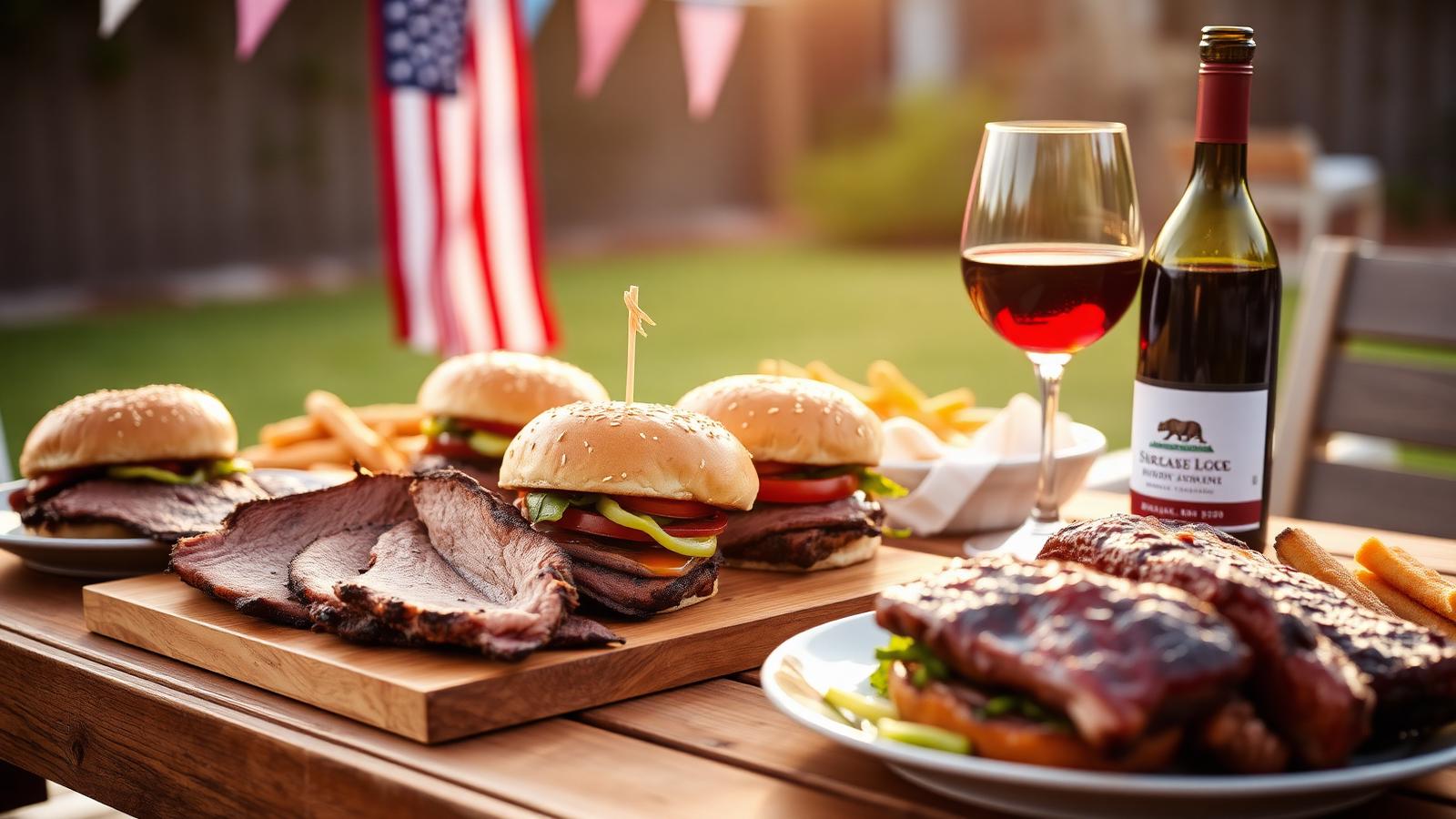
The Story Behind the Plate
American backyard cooking is the United States' national pastime as much as the game itself. From Texas brisket smoked for fourteen hours to Memphis dry-rub ribs, Kansas City burnt ends and Carolina vinegar pork, regional barbecue traditions are as distinct as the conferences in college football. Add in the all-American cheeseburger, smoked wings and grilled corn, and a watch party for the USA squad becomes a tour of the country's most beloved flavors. The good news for hosts is that American wine has finally caught up with American food. California, Oregon and Washington now produce bottles that are made for exactly this kind of long, smoky, communal meal.
Why These Pairings Work
The key to pairing wine with American BBQ is matching three things at once: smoke, sugar and salt. Zinfandel from Sonoma or Lodi nails all three. Its bramble fruit echoes the brown sugar in barbecue sauce, its natural pepperiness complements the smoked bark, and its generous fruit weight stands up to fatty cuts without collapsing. For lighter fare like grilled chicken or cedar-plank salmon, switch to a Russian River Pinot Noir or a Willamette Valley Pinot. The hosts of an all-burger night are well served by a juicy, unoaked Zinfandel or even a chilled Beaujolais, which adds a refreshing acidity that cuts cheese and char. Skip the big, oaky Cabernet here unless you are serving a high-end ribeye. With sauce-forward dishes, oak only fights the meal.
The Match-Day Ritual
Americans treat the watch party as the main event. The grill goes on hours before kickoff, the cooler is stocked by halftime, and the dessert table appears for extra time. For a 90-minute match, plan three serving waves: a pre-match grazing board with cured meats, cheddar and pickles, a main course at halftime built around brisket, ribs or burgers with cornbread and slaw, and a post-match dessert run of peach cobbler or s'mores. Wine should be poured in stemless glasses so guests can wander between the TV and the grill without spilling. Keep your Zinfandel just below room temperature: too warm and the alcohol burns, too cold and the fruit disappears.
Region Spotlight
Sonoma County is the wine region every American watch party should know. Unlike its more famous neighbor Napa, Sonoma is built for food: cooler coastal pockets for Pinot Noir and Chardonnay, warmer inland valleys like Dry Creek and Alexander Valley for Zinfandel, Syrah and Cabernet. Producers like Ridge, Seghesio and Bedrock have spent decades championing old-vine Zinfandel, some from vineyards planted in the 1880s. These wines carry a sense of place that pairs beautifully with the regional pride of American cooking. If you want to lean fully into the host-nation theme, build the wine list entirely from Sonoma: a sparkling for arrival, a Russian River Chardonnay for grilled fish, an Alexander Valley Zinfandel for the main course.
Decant your Zinfandel for thirty minutes before kickoff. The aeration softens the alcohol heat and brings the bramble fruit forward, which means it tastes better with sticky barbecue sauce. A simple step that turns a 25-dollar bottle into a 40-dollar experience.