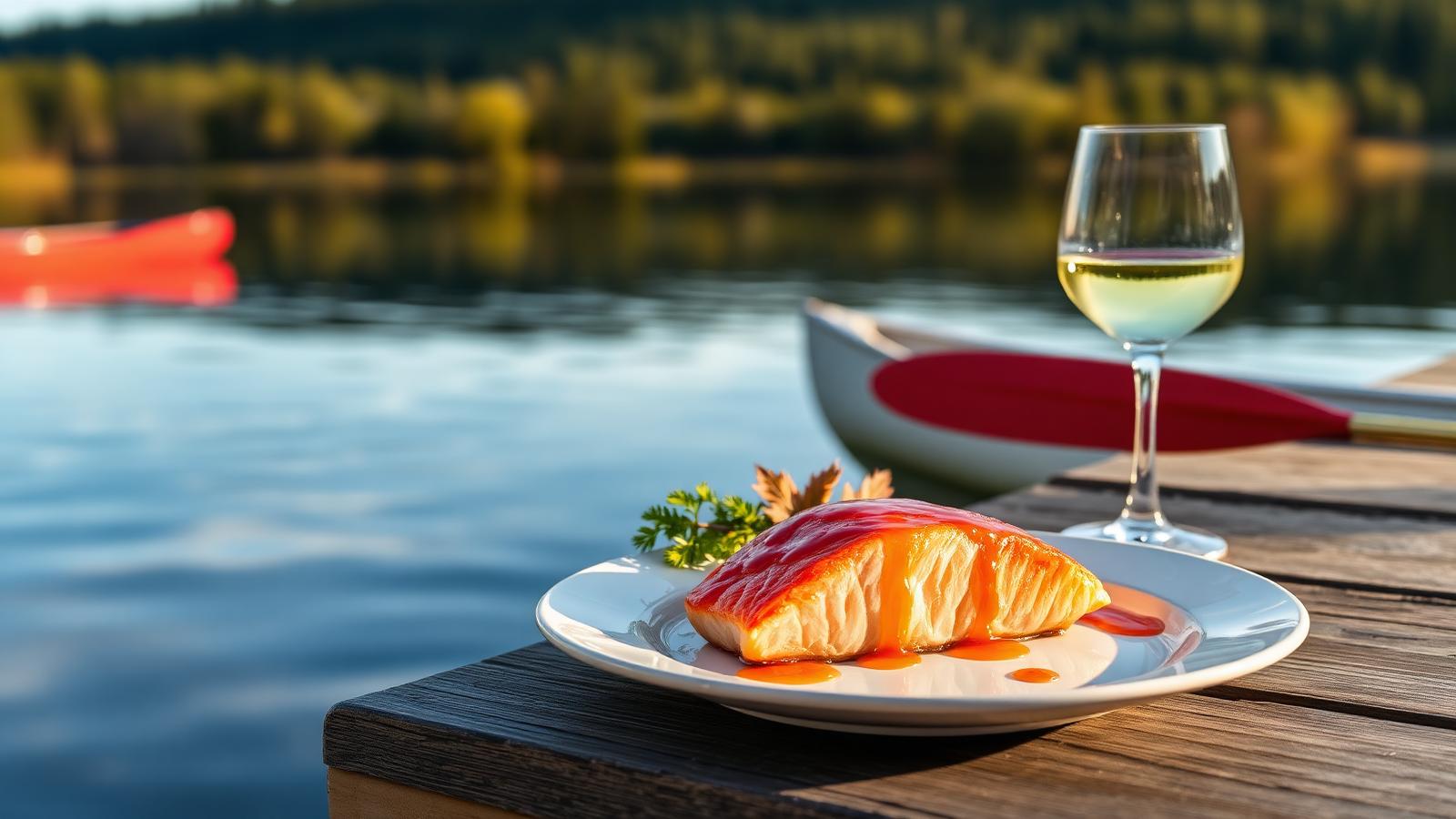
The Story Behind the Plate
Canadian cuisine at the watch party is quieter than its American neighbor but no less considered. Pacific salmon glazed with maple and grilled over alder, peameal bacon sandwiches from Toronto's St. Lawrence Market, tourtière from Quebec, butter tarts and Nanaimo bars for dessert, and of course poutine for the late-night surge. Canadian wine has grown up alongside this food, with the Niagara Peninsula in Ontario and the Okanagan Valley in British Columbia now producing bottles that hold their own against Old World benchmarks. The cool-climate, food-friendly style of Canadian wine makes it an ideal partner for a long tournament viewing session.
Why These Pairings Work
Canadian food rewards wines with bright acidity and restraint. Maple, smoke and root vegetables all amplify in the mouth, so the wine needs to refresh rather than compete. Niagara Riesling, especially off-dry styles, is the most versatile choice on the table: it handles maple salmon, ham, peameal bacon and even mildly spiced tourtière without missing a beat. For richer reds, look to Okanagan Pinot Noir, which echoes the cool-climate elegance of Burgundy at a fraction of the price. Avoid heavily oaked, high-alcohol reds with Canadian cuisine. They overwhelm the subtlety of maple, dill and dairy that runs through these dishes.
The Match-Day Ritual
A Canadian watch party tends to be smaller and more intimate than its American counterpart, with an emphasis on shared boards rather than buffet tables. Start with a platter of smoked salmon, dill creme fraiche and rye crackers paired with a chilled Niagara Riesling. At halftime serve sliders of peameal bacon with mustard, or for a Quebec slant, tourtière with green tomato relish. For dessert, put out butter tarts and pour a small glass of Inniskillin Vidal Icewine. The ritual closes with a coffee and a maple cookie, ideally somewhere warm enough to make standing on a porch feel like an event.
Region Spotlight
The Niagara Peninsula sits on the same parallel as the south of France, but its climate is moderated by Lake Ontario and the Niagara Escarpment, giving long warm autumns and cold dry winters. The Vidal grape thrives there and is the basis of Canada's globally celebrated ice wine industry, where grapes are left to freeze on the vine and pressed while still frozen. Beyond ice wine, producers like Tawse, Henry of Pelham and Cave Spring make some of the New World's most thoughtful dry Rieslings. On the West Coast, the Okanagan Valley is a desert pocket that produces structured Syrah, age-worthy Pinot Noir and crisp Pinot Gris, with Mission Hill, Burrowing Owl and Quails' Gate leading the way.
Pour your Niagara Riesling slightly warmer than instinct suggests, around 10 to 11 degrees Celsius rather than ice-cold. The extra few degrees release the citrus and stone-fruit aromatics that get muted at fridge temperature, and that aromatic lift is what makes the wine sing with maple-glazed salmon.