The Story Behind the Plate
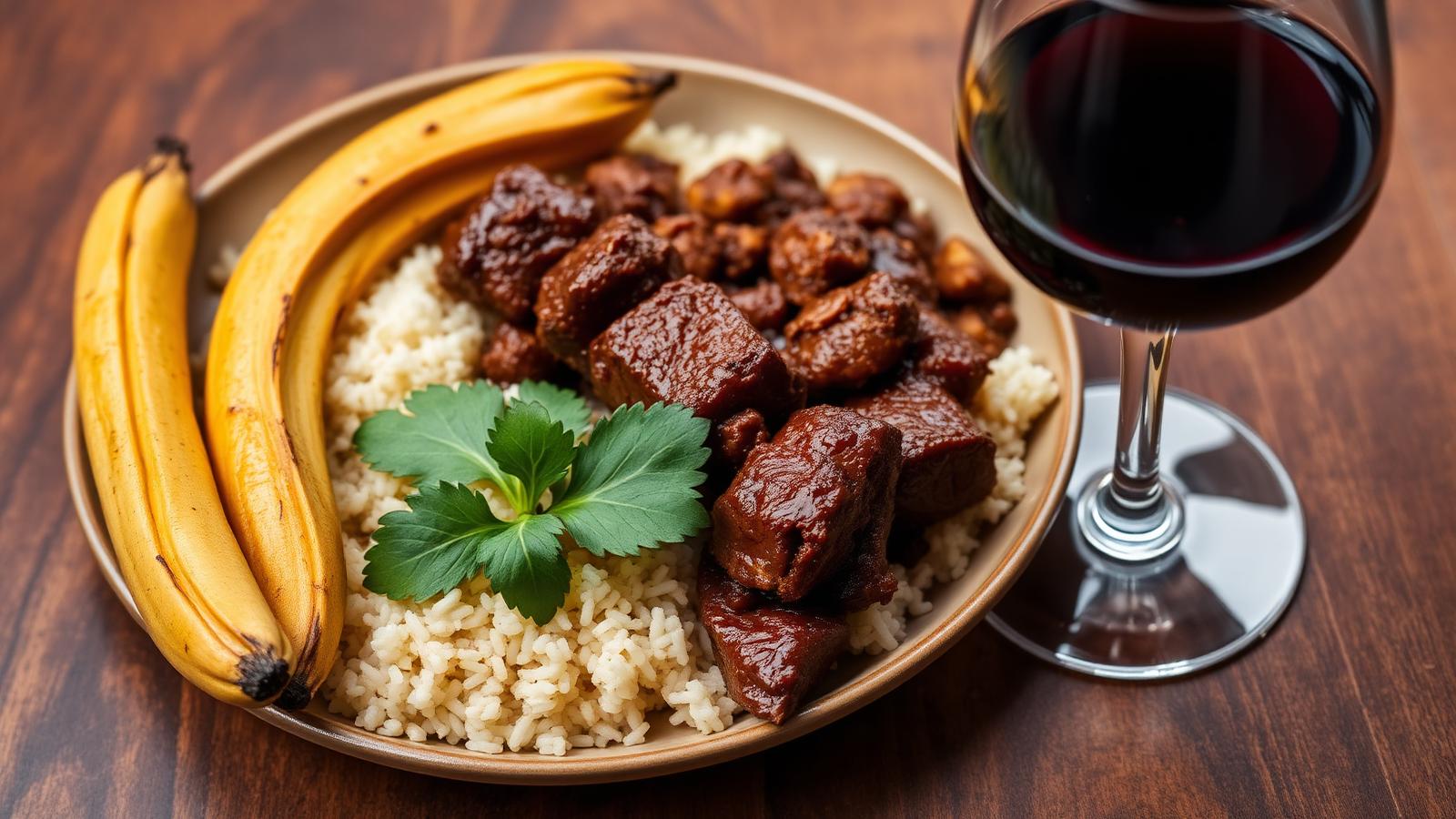
Nigerian cooking is the loudest, proudest food on the African continent, and it makes no apology for it. Jollof rice — the smoky, tomato-saturated one-pot — is the flag the country plants at every gathering, and the Ghana-versus-Nigeria jollof debate is the most cheerful food rivalry on earth. Suya, the spice-rubbed grilled beef skewers sold from roadside mai-suya stands, is the country's after-dark street icon. Egusi soup, pepper soup, efo riro, ofada rice with ayamase sauce, moin-moin and akara round out a daily table that runs from breakfast to late-night chop. Nigeria does not make its own wine at scale, but Lagos has one of the most sophisticated wine-drinking cultures in West Africa, and the country's diaspora has carried jollof and suya into wine bars from London to Houston.
Why These Pairings Work
Nigerian food is built on layered heat, palm oil, smoke and big aromatics, so the wines that work are the ones with enough fruit and structure to keep up. For suya, a smoky Northern Rhône Syrah like Côte-Rôtie or a Crozes-Hermitage finds the char and pepper at the heart of the yaji rub. For jollof, a bold dry rosé from the Languedoc or Provence handles the tomato, scotch bonnet and smoke without going flat. For egusi and efo riro, a Côtes du Rhône Villages or a low-tannin Carignan rides alongside the palm oil. For grilled fish at a Lagos beach table, a chilled Beaujolais Villages or a Loire Cabernet Franc works better than a heavy white. Skip oaked Chardonnay, big tannic Cabernet and anything sweet — the heat will fight all three.
The Match-Day Ritual
A Nigerian watch party is a full-volume event. Suya arrives first, wrapped in newspaper from the corner mai-suya stand, with sliced raw onion and extra yaji on the side. Jollof comes in two competing pots so guests can argue over party jollof versus home jollof. Pepper soup with goat meat or catfish makes the rounds for anyone who needs warming up. Chapman and Star lager pour all afternoon, with Rhône reds and rosés kept cold for the wine drinkers. At halftime someone brings out moin-moin or fried plantain, and the late-match dessert is almost always puff-puff dusted in sugar or a slice of chin chin. Music is non-negotiable: Afrobeats between every set piece.
Region Spotlight
Nigeria itself does not yet make commercial wine, but the import market is one of the most discerning in West Africa. Lagos wine bars lean heavily on Northern Rhône Syrah and southern French rosés for suya and jollof, with South African Pinotage and Argentine Malbec covering the steak nights. The newer story is Nigerian-American and Nigerian-British winemakers — a growing diaspora cohort building bridges between West African cuisine and the wider wine world. The closest thing to a domestic ferment is palm wine, the freshly tapped sap of the raffia or oil palm, which is both a Nigerian cultural icon and a perfect chilled aperitif when you can find it fresh.
Always pour your suya wine slightly cool. A Côte-Rôtie or Crozes-Hermitage at 15 to 16°C — about twenty minutes in the fridge before serving — keeps the wine fresh against the yaji heat. Warm Syrah turns jammy and loses to the pepper. Cold Syrah keeps lifting the smoke and pulls the meal forward through the second half.