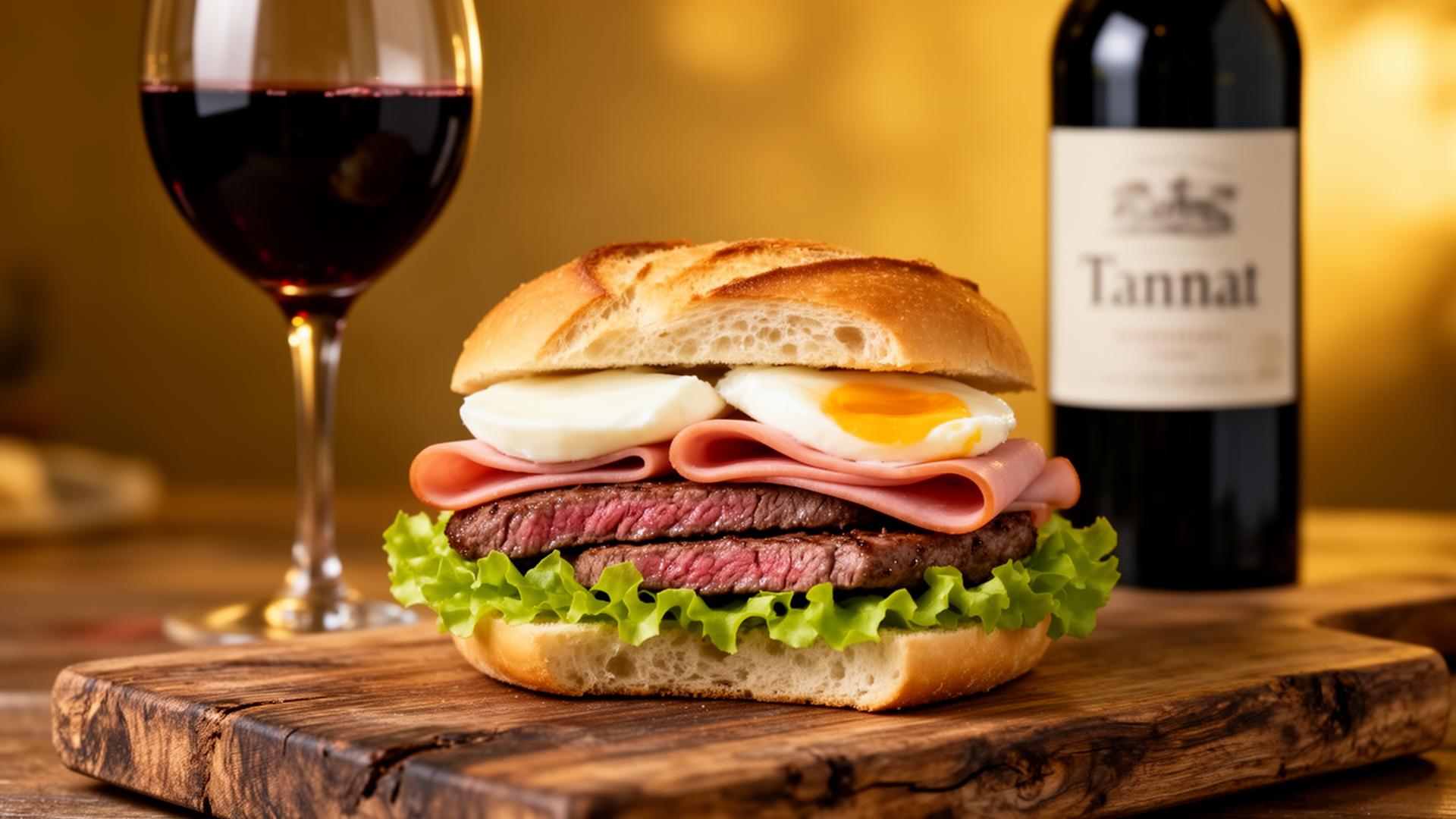
The Story Behind the Plate
Uruguay is the quiet over-performer of South American football and South American wine, both punching well above its population of 3.4 million. The food culture revolves around the parrilla and the chivito, the country's mighty layered sandwich that locals will argue is superior to any burger. Add in milanesa, dulce de leche pastries and the daily ritual of mate, and the Uruguayan watch party feels like an Argentine asado with a coastal accent. The wine on the table is almost always Tannat, the grape that arrived from Madiran in the 19th century and made itself at home in the country's red clay and ocean-cooled vineyards.
Why These Pairings Work
Tannat is the answer to most Uruguayan dishes. Its naturally high tannin and dark plummy fruit scrub fat from grilled cuts, stand up to chimichurri and meet the layered intensity of a chivito head on. For everyday pours look to Canelones and Juanico bottlings from Pisano and Familia Deicas. For special matches, step up to coastal Maldonado Tannat from Bodega Garzon, where the maritime climate gives the wine more elegance and silkier tannin. For lighter dishes like grilled fish from the Rio de la Plata, an Albarino from Garzon or a Sauvignon Blanc from Atlantida outperforms most reds. Skip heavy oaked Cabernet here. Tannat is the home pour for a reason.
The Match-Day Ritual
The Uruguayan watch party tracks the asado calendar. The parrilla goes on a couple of hours before kickoff with morcilla and chorizo first, followed by short ribs and finally the great cuts of ojo de bife. Chivitos hold the bench for halftime, often served on a board with Russian salad and a pile of fries. Mate circulates throughout the afternoon in the traditional gourd, passed left to right and refilled with hot water by whoever holds the thermos. Wine is poured into stemless tumblers in casual rounds, and the asado tends to outlast the match by several hours.
Region Spotlight
Maldonado, on the Atlantic coast near Punta del Este, is the most exciting Uruguayan wine region today. Granite soils, ocean breezes and cool nights give Tannat unexpected freshness and polish, and the same conditions produce serious Albarino, Sauvignon Blanc and Pinot Noir. Bodega Garzon, the flagship producer, has set a new benchmark for what coastal Tannat can be. Inland, Canelones remains the historic heart of Uruguayan wine, with old-vine Tannat from Pisano and Bouza giving a denser, more traditional expression of the grape.
Decant your Tannat for at least 45 minutes before kickoff. The grape has some of the highest tannin of any commercial variety, and a generous splash of air softens the grip and brings out the violet and dark plum aromatics. The result tastes like a wine twice its price next to a slice of chivito.