The Story Behind the Plate
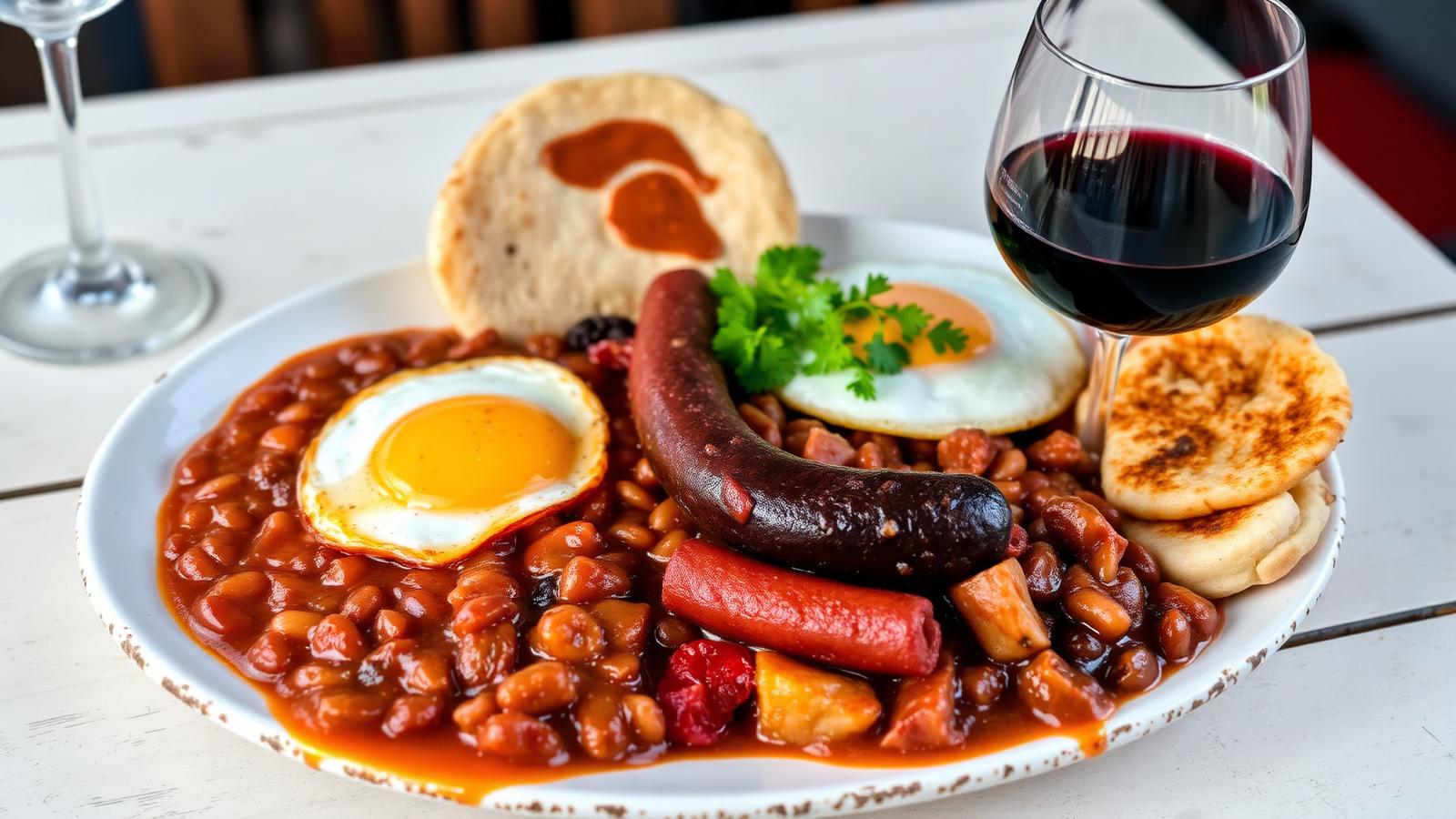
Colombian cuisine is regional and generous. The Antioquian bandeja paisa piles beans, rice, plantain, chicharron, chorizo, blood sausage, fried egg and avocado onto one plate that could feed two people. Arepas show up at every meal, with regional variations from cheese-filled arepa de choclo in Antioquia to thin arepas de huevo on the Caribbean coast. Add ajiaco soup from Bogota, ceviche from Cartagena, and lechona on the weekend, and you have a watch-party menu that rewards reds with character and whites with acidity. Since Colombia does not produce its own wine commercially, the table looks south to Chile and Argentina.
Why These Pairings Work
Colombian food is rich and varied, so flexibility matters more than tradition. A Chilean Carmenere is the most useful single bottle on the table, with enough body for chicharron and chorizo, soft tannin that does not fight rice and beans, and a touch of herbal lift that flatters hogao sauce. For coastal dishes like Cartagena ceviche or coconut rice, switch to an Albarino from Spain or a coastal Chilean Sauvignon Blanc. For ajiaco, the Bogota chicken-and-potato soup with capers and corn, try a lighter Pinot Noir from Casablanca. Avoid heavy oaked Cabernet with anything that includes plantain or coconut. The sweetness fights the wine.
The Match-Day Ritual
Colombian watch parties are loud, family-driven and built around shared plates. Things start with patacones and guacamole alongside cold beers, and shift to a bigger spread at halftime: arepas off the griddle, empanadas straight from the fryer, and the main course of bandeja paisa or grilled meats. Wine pours alongside, often a Carmenere or a Malbec in stemless glasses. Dessert is small, usually obleas with arequipe or a slice of tres leches, served with a tinto, the small cup of black coffee that fuels every Colombian afternoon.
Region Spotlight
Without a domestic wine industry, Colombian wine drinkers have made Chile and Argentina their default cellars. Chilean Carmenere has become a national favorite because its plush fruit and herbal edge mirror the role of aji and herbs in Colombian cooking. Mendoza Malbec is the second pillar, especially for grilled meat nights. The most exciting newer trend is Spanish Albarino from Rias Baixas finding its way onto Cartagena tables, where its saline character meets the city's seafood and coconut cuisine perfectly.
Serve your South American reds a touch chilled, around 15 degrees Celsius. Tropical heat amplifies alcohol on the palate, and a quick 15 minutes in the fridge before pouring keeps the fruit bright and the wine refreshing rather than heavy.