The Story Behind the Plate
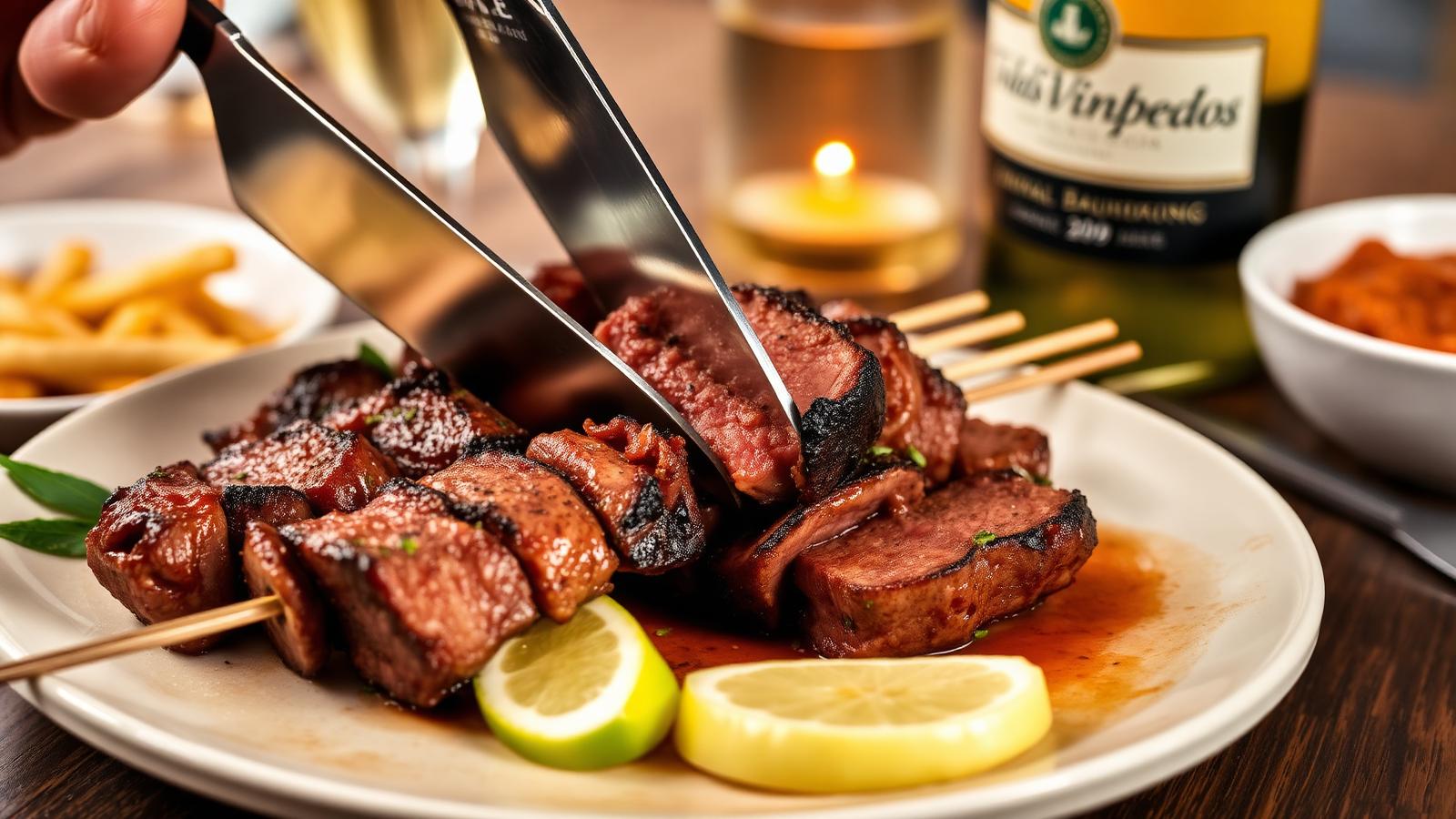
Brazilian food at a World Cup table tells two stories at once. There is the asado-adjacent churrasco of Rio Grande do Sul, with picanha, fraldinha and linguiça turning slowly on long skewers over open fires, and there is the Afro-Brazilian heritage of Bahia, with moqueca, vatapa and acaraje carrying coconut, dende oil and chile peppers. The Brazil watch party tends to lean churrasco for the main meal, but the smart host weaves in something Bahian for variety. Brazilian wine, long underestimated abroad, is now ready to pour confidently alongside both traditions. The Vale dos Vinhedos region produces sparklings that compete with Champagne and Tannat reds that handle the country's biggest cuts.
Why These Pairings Work
Brazilian sparkling wine is the great unsung hero of the World Cup pairing world. Traditional-method bottlings from Casa Valduga, Miolo and Cave Geisse have the acidity to cut through palm-oil moqueca, the toast to flatter farofa and the celebratory pop that the Brazilian table demands. For the meat-heavy churrasco, switch to a Vale dos Vinhedos Tannat or a Merlot-based blend. Tannat, the same grape that defines Uruguay, expresses itself with slightly riper fruit and softer tannin in Brazil. For feijoada, the slow-cooked black bean stew that is Brazil's unofficial national dish, choose a medium-bodied Tannat or a Carmenere from neighboring Chile. The richness needs body and the acidity is what keeps you reaching for the next spoonful.
The Match-Day Ritual
The Brazilian watch party starts with a caipirinha or a glass of cold sparkling wine and a bowl of farofa, queijo coalho on a stick and tapioca chips. As kickoff approaches, the churrasqueira goes on if the host has space, with picanha, garlic bread and chorizo turning over coals. Feijoada is the alternative for indoor or apartment hosting and is often prepared the day before, since the flavor improves overnight. Wine pours throughout, with sparkling reserved for goals and the final whistle. Dessert is a small slice of pudim de leite or brigadeiro, served with strong coffee and, for the adults, a glass of fortified Brazilian Moscatel.
Region Spotlight
Vale dos Vinhedos sits in the Serra Gaucha region of Rio Grande do Sul, settled in the 19th century by Italian immigrants from Veneto and Trentino. The terrain is steep and basalt-rich, and the cool, humid climate suits both sparkling wine production and Italian varieties like Glera, Moscato and Bonarda. Tannat thrives here too, often blended with Cabernet Sauvignon and Merlot for everyday drinking. Beyond Rio Grande do Sul, the Vale do Sao Francisco in the northeastern desert produces grapes year-round under irrigation, and the high-altitude Campanha region near the Uruguayan border is producing serious single-vineyard Tannat and Pinot Noir.
When pouring Brazilian sparkling, never serve it in a flute. Use a white-wine glass instead. The wider bowl releases the toasty, brioche aromatics that make traditional-method sparkling worth the price, and you can actually smell what you are drinking. The flute belongs to a different, less interesting century.