The Story Behind the Plate
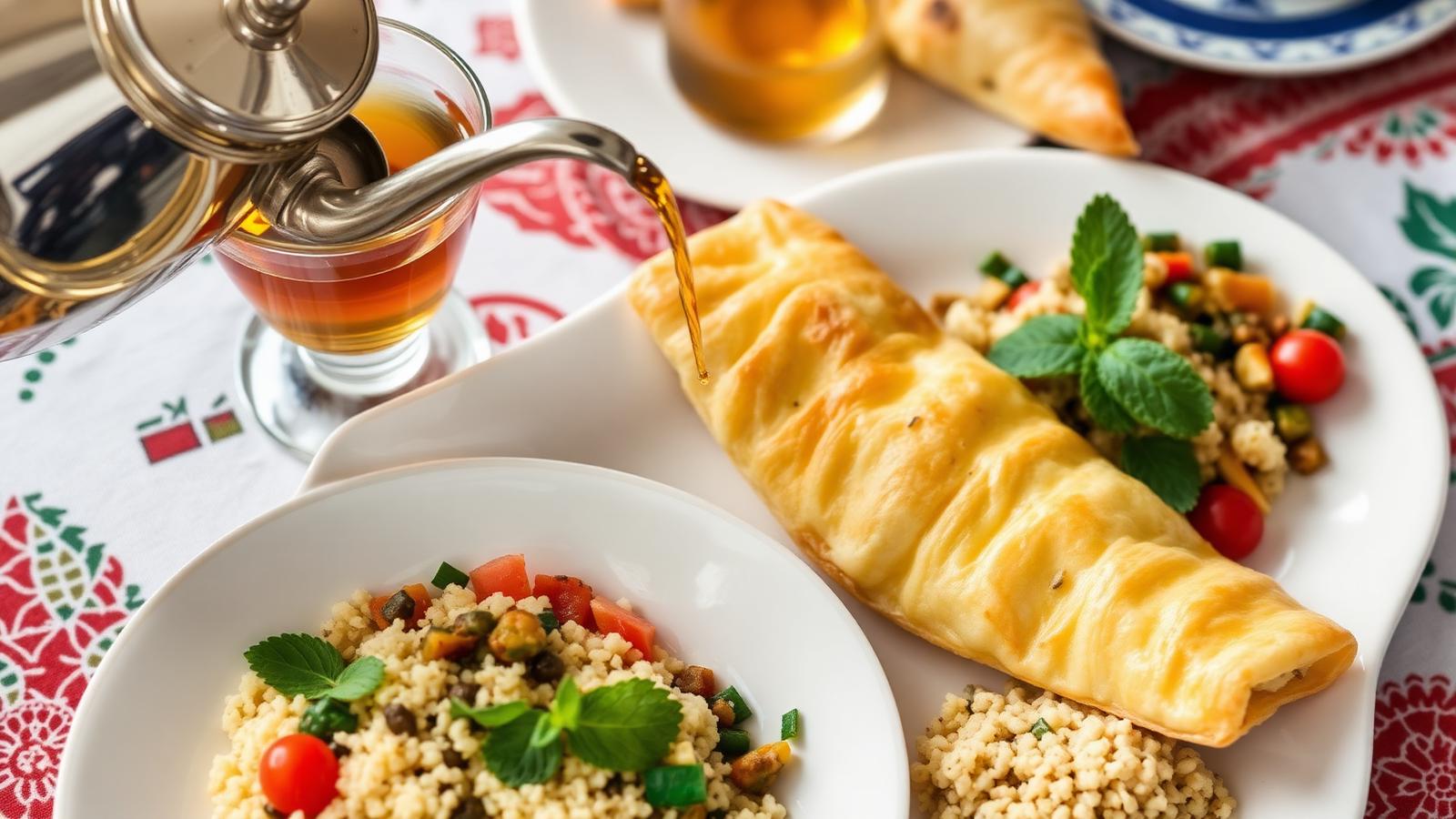
Tunisian cooking sits at the meeting point of North African, Mediterranean and Middle Eastern traditions, with harissa as its calling card and bold spice as its through-line. Brik, the crispy fried pastry with egg, tuna and capers, is the country's signature dish and a near-daily presence on Ramadan iftar tables. The Friday couscous, slow-cooked with lamb or vegetables, anchors family meals. Ojja with eggs and merguez, lablabi chickpea soup with harissa, and the citrus-and-olive abundance of Cap Bon round out the table. Tunisia is a Halal-majority country, and our editorial defers to that tradition with non-alcoholic pairings drawn from the country's deep heritage of citrus juices, mint teas and fig-based beverages.
Why These Pairings Work
Non-alcoholic pairings for Tunisian food need to handle bold spice, particularly the harissa that appears in nearly every savory dish. A premium NA sparkling rose like Noughty Rose has the fruit weight and effervescence to refresh between spicy bites of merguez or ojja. For lighter dishes like brik and salads, a chilled lemonade with mint or a passion fruit juice provides the citrus lift needed to cut the fried pastry and amplify the lemon squeeze that traditionally accompanies brik. For couscous, a glass of chilled fig juice or a fig-and-honey shrub provides earthy depth that flatters the slow-cooked broth. The Tunisian non-alcoholic table is generous, and the best hosts always offer multiple options to suit the dish in front of each guest.
The Match-Day Ritual
A Tunisian watch party tends to be family-centered and food-rich, often built around the late-afternoon iftar tradition during Ramadan or a midday weekend feast otherwise. The opening round usually includes brik fresh from the fryer, a small plate of harissa with bread for dipping, and bowls of marinated olives and lablabi soup. Couscous or a tray of merguez and grilled vegetables arrives at halftime. Mint tea pours throughout in small glasses. Dessert is traditional: makroud date pastries, baklawa with pistachios, or a bowl of fresh figs in season, finished with strong Turkish-style coffee scented with rosewater.
Region Spotlight
Tunisian beverage culture is shaped by the country's Mediterranean climate and rich agricultural tradition. Citrus from the north coast, especially blood oranges and mandarins, produces some of the world's most aromatic juices, often blended with mint or rosewater for special occasions. Figs from the Sahel coast are pressed into juices and infused into shrubs that pair beautifully with lamb and slow-cooked stews. Mint tea, made with green gunpowder tea and generous fresh mint, is the universal table beverage. For premium NA wine alternatives, Noughty, French Bloom and Lyre's are increasingly available in Tunis and the major coastal cities.
Serve your non-alcoholic sparkling rose in proper white-wine glasses rather than flutes. The wider bowl releases the fruit and floral aromatics that distinguish premium NA wines from generic alcohol-free options, and it elevates the pour into something that feels celebratory rather than substitute.