The Story Behind the Plate
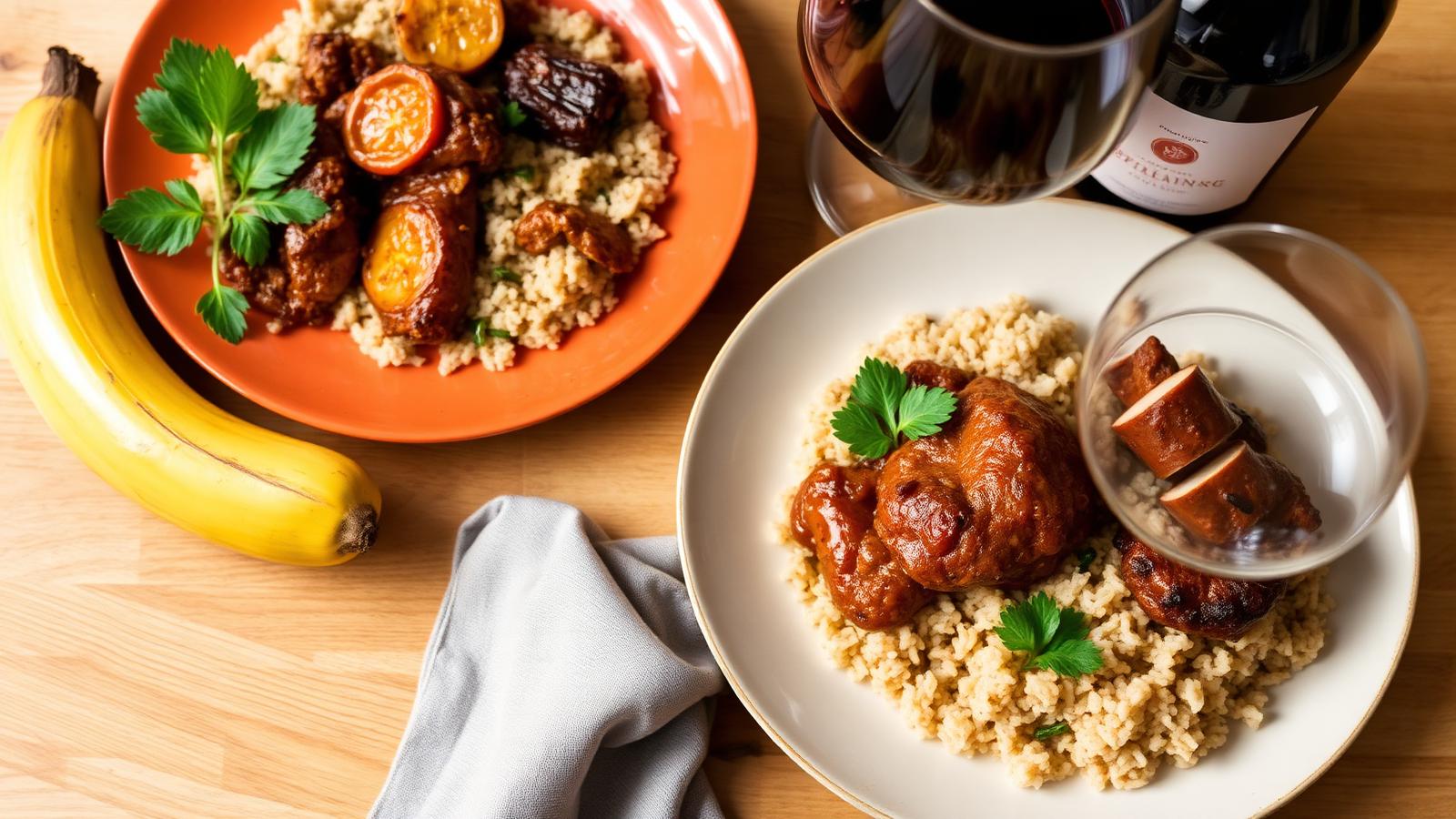
Ghanaian cooking is one of West Africa's boldest, with jollof rice as its global ambassador and a constant friendly rivalry with Nigerian and Senegalese versions of the dish. Waakye, the beloved rice-and-beans plate with shito pepper sauce and fried fish, is a Ghanaian breakfast institution. Banku and tilapia, fufu with light soup, and red red bean stew with fried plantain all carry deep tradition. Ghana does not produce wine of its own, so the wine table draws on French roses from Provence and the Rhone, plus Beaujolais reds that have the brightness to handle the country's smoky, spicy, tomato-rich cooking.
Why These Pairings Work
Ghanaian food rewards wines with body, fruit weight and just enough acidity to refresh between spicy bites. A bold Provence rose, especially a Bandol from Domaine Tempier, has the structure to meet smoky jollof and the gentle tannin to handle char from grilled fish or chicken. For waakye, a Cru Beaujolais or a Cotes du Rhone Villages provides the bright fruit needed without overwhelming the dish. For lighter preparations like banku with grilled tilapia and fresh pepper sauce, an Albarino from Rias Baixas or a Sauvignon Blanc from the Loire is the right call. Skip heavy oaked reds with Ghanaian food. The cuisine prizes generous spice and texture, and the wine should refresh rather than compete.
The Match-Day Ritual
A Ghanaian watch party is loud, joyful and built around the smell of jollof simmering for hours. The afternoon usually starts with a plate of kelewele spiced fried plantain and a glass of cold sobolo. As the match begins, the main course of jollof, fried chicken and salad arrives in generous portions, often served buffet-style. Bandol rose or Cotes du Rhone pours alongside. Smaller snacks like meat pies and chin chin circulate during the second half. The match closes with a slice of fresh pineapple or papaya, finished with a small cup of strong tea or instant coffee, the Ghanaian everyday default.
Region Spotlight
Without a domestic wine industry, Ghanaian wine drinking has effectively adopted Provence and the Rhone as its house regions. Provence rose, particularly bolder bottlings from Bandol and Tavel, pair so naturally with jollof and grilled meats that they have become the unofficial wine of upscale Accra hosting. The Rhone Valley contributes Grenache-based reds for richer dishes, while the Loire provides Sauvignon Blanc for grilled fish nights. Italian Vermentino from Sardinia is the newer trend, with its salinity and citrus character matching the coastal Ghanaian dishes of Cape Coast and Elmina particularly well.
Serve your Provence or Bandol rose slightly cooler than instinct suggests, around 9 degrees Celsius. West African heat warms wine in the glass quickly, and a slightly cooler initial pour keeps the wine refreshing rather than heavy across a long, hot match-day afternoon.