The Story Behind the Plate
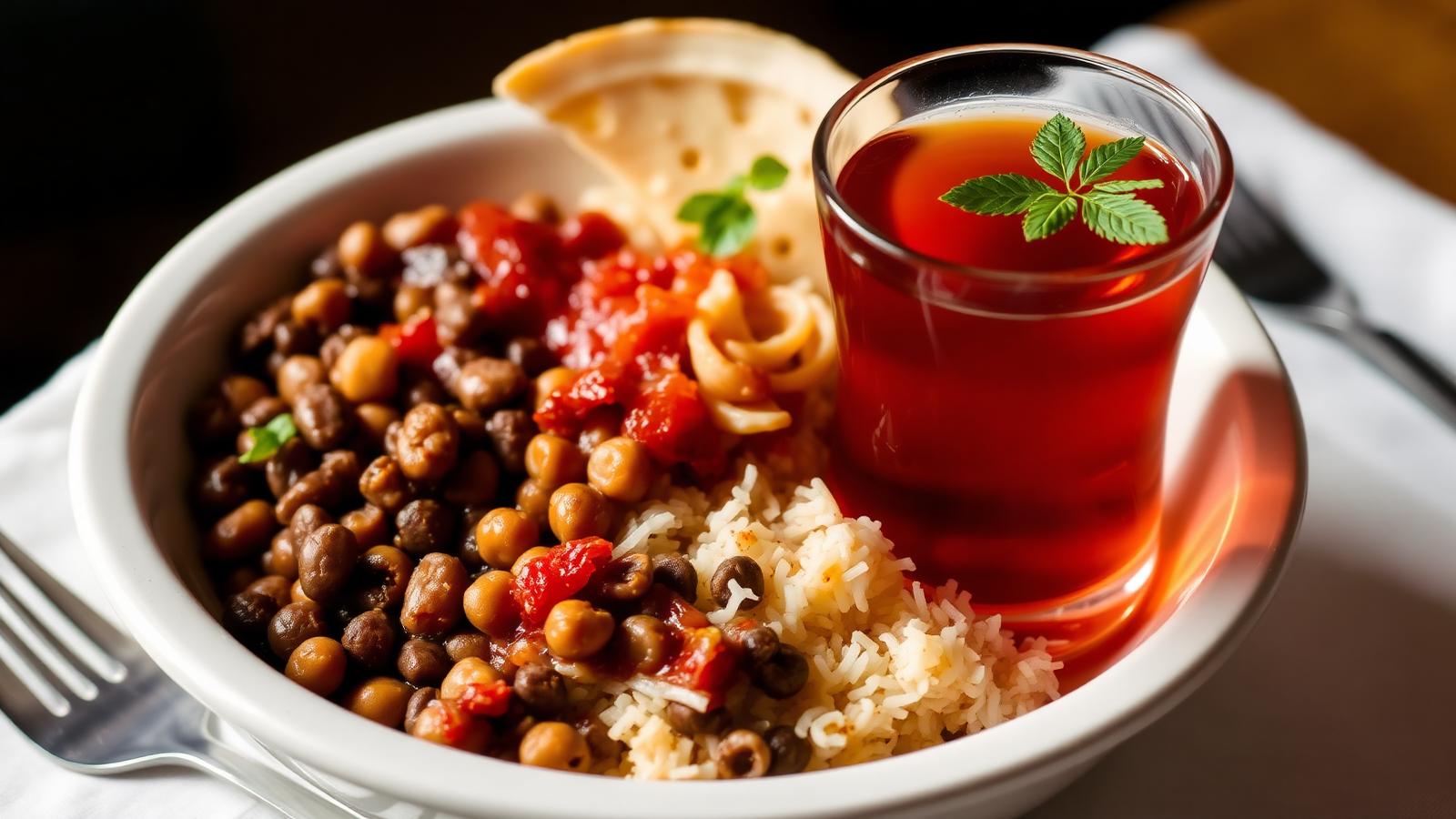
Egyptian cooking is built on legumes, grains and the slow-cooked stews of the Nile Delta. Koshari, the national street dish of pasta, rice, lentils, chickpeas and tomato-vinegar sauce, has become one of the world's great vegan comfort foods. Ful medames of stewed fava beans is the everyday breakfast, while molokhia, the silky jute-leaf stew with rabbit or chicken, anchors family meals. Mahshi stuffed vegetables and Ramadan classics like atayef and konafa round out the table. Egypt is a Halal-majority country, and our editorial defaults to non-alcoholic pairings out of respect for that tradition, leaning on the country's deep heritage of karkade hibiscus, fresh juices and herbal infusions.
Why These Pairings Work
Non-alcoholic pairings for Egyptian food work best when they echo the bright, tangy and earthy notes that define the cuisine. Karkade, served either hot or chilled, has the tart cranberry character that flatters koshari's tomato-vinegar sauce and balances the richness of molokhia. For more celebratory moments, a premium NA sparkling rose like French Bloom Le Rose or a Noughty Sparkling Rose provides the lift and complexity of Champagne without the alcohol. Fresh sugarcane juice, popular at Cairo street stalls, pairs surprisingly well with fried foods like falafel and ta'amiya. For dessert, a small glass of sahlab made with milk, orchid powder, cinnamon and chopped nuts provides a creamy finish that matches konafa and atayef perfectly.
The Match-Day Ritual
An Egyptian watch party tends to revolve around shared plates and steady refilling rather than formal courses. The afternoon often starts with a board of mezze: baba ghanoush, hummus, taameya falafel, pickled vegetables and warm baladi bread. Koshari or a tray of mahshi arrives at halftime, served from a communal dish. Karkade pours throughout in tall glasses with ice. Smaller snacks like sambousek pastries and bowls of mixed nuts circulate during the match. Dessert is traditional: konafa with cream and nuts or a slice of basbousa with syrup, finished with strong Turkish-style coffee in small cups.
Region Spotlight
Egyptian beverage culture is anchored by karkade, made from dried hibiscus flowers from the Nile Delta and southern Egypt, and famously served both hot and cold at every Egyptian table. Sahlab, the warm milk-based drink with orchid powder, cinnamon and chopped pistachios, is the winter favorite. Sugarcane juice, freshly pressed at street carts across Cairo and Alexandria, provides a sweeter everyday option. For premium NA wine alternatives, French Bloom, Noughty and Lyre's are now available at high-end Cairo hotels and select wine shops, expanding what is possible at sophisticated Egyptian dinner tables.
Brew your karkade with cold water rather than hot for the chilled version. Cold-brewing dried hibiscus for six to eight hours in the fridge produces a smoother, less astringent drink than hot-brewing and then chilling. Sweeten lightly with sugar or honey before serving and garnish with a slice of lime for the brightest, most refreshing pour.