The Story Behind the Plate
Swiss alpine cooking is built around dairy, charcuterie and the long winters that shaped it. Fondue from Fribourg and the Valais, raclette from the same region, rosti from Bern, papet vaudois from Vaud, and air-dried meat from the Grisons all carry centuries of mountain tradition. Swiss wine is one of the world's best-kept secrets, with over 250 grape varieties grown across six wine regions, almost all consumed domestically. The Valais, in particular, produces wines from indigenous varieties like Petite Arvine, Amigne and Heida that pair with fondue and raclette better than any imports could.
Why These Pairings Work
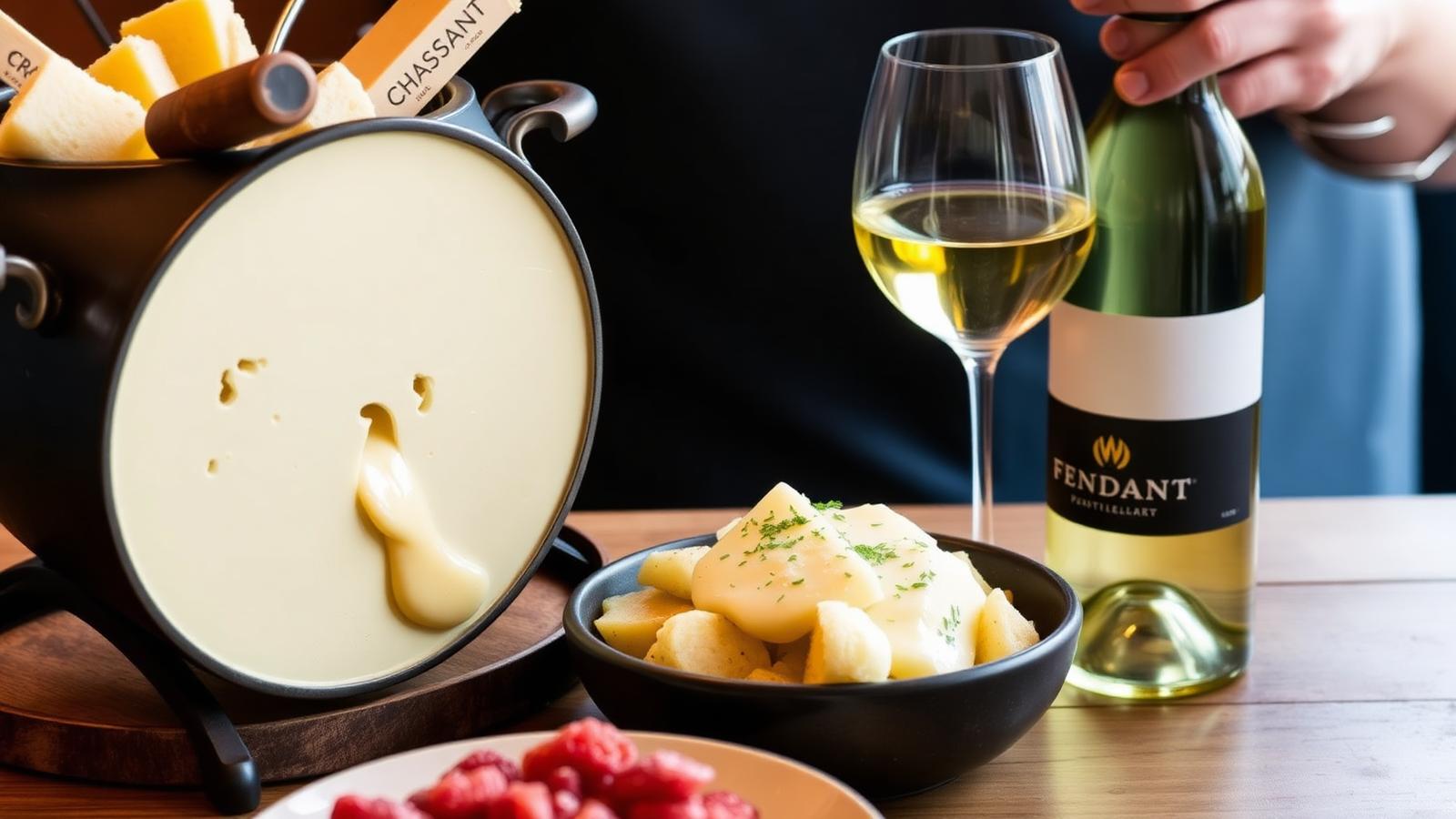
Swiss wine pairs with Swiss food because they evolved together. Chasselas or Fendant from the Valais and Vaud is the universal fondue and raclette wine, with its neutral fruit and steely acidity giving the cheese the spotlight it deserves. For air-dried meat like viande des Grisons or jambon cru, switch to a Pinot Noir from Neuchatel or a Cornalin from the Valais. For richer dishes like papet vaudois with leeks and saucisson, an off-dry Petite Arvine offers the salinity and lift the dish needs. The cardinal rule of Swiss wine pairing is to keep the wine in the same valley as the food whenever possible. The marriage is rarely accidental.
The Match-Day Ritual
Swiss watch parties are quieter and more intimate than their southern neighbors, often built around the cheese ritual rather than the screen. Fondue or raclette is set up on the table before kickoff, with Chasselas chilling in an ice bucket and a basket of bread cubes or boiled potatoes within reach. The match plays in the background while diners take their time with the cheese, swapping bread for charcuterie and bowls of pickled onions, gherkins and silverskins. Coffee with a small glass of Williamine pear brandy or a kirsch from Zug closes the evening, served slowly as the conversation moves from football to the next ski outing.
Region Spotlight
The Valais is Switzerland's largest wine region and arguably its most exciting, producing 50 indigenous grape varieties across steep terraced vineyards along the Rhone river. Petite Arvine, Heida (the local name for Savagnin), Amigne and Cornalin are all native to the Valais and produce wines you simply cannot taste anywhere else. The Vaud region, along Lake Geneva, is the home of Chasselas at its most refined, particularly from the Lavaux UNESCO-listed terraces. Producers worth seeking out include Marie-Therese Chappaz, Domaine du Mont d'Or, Provins, Henri Badoux and Domaine Louis Bovard.
Serve Chasselas at 11 degrees Celsius rather than ice-cold for fondue. The slightly warmer pour brings out the gentle hazelnut and white-flower notes that pair beautifully with melted Gruyere, while still keeping enough chill to refresh between bites. Over-chilling makes the wine taste flat against the richness of the cheese.