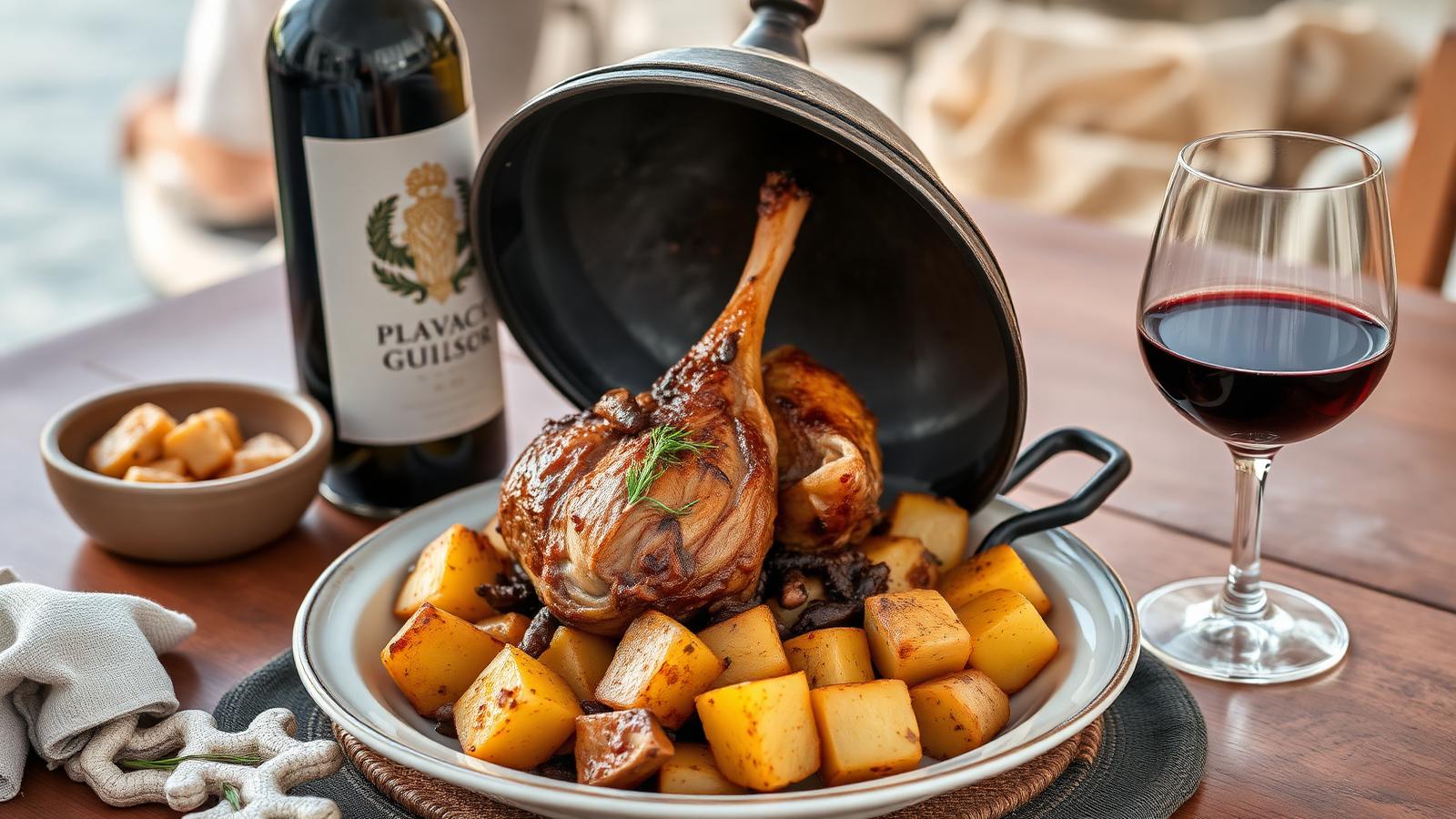
The Story Behind the Plate
Croatian cuisine splits cleanly between two worlds. The Adriatic coast, from Istria south through Dalmatia, is Mediterranean to its core, with grilled fish, octopus salad, prsut cured ham and the slow-cooked peka tradition. Inland, the cooking turns Central European, with strudels, sarma cabbage rolls and meat stews showing the long Habsburg influence. Croatian wine maps directly onto this divide, with mineral coastal whites like Malvazija and Posip for seafood, and structured Plavac Mali reds for slow-cooked Dalmatian meat. Cousin to California Zinfandel, Plavac Mali is the dark, dense grape that gives Croatia its global wine credibility.
Why These Pairings Work
Croatian food pairs best with Croatian wine, and the regional logic is straightforward. For grilled Adriatic fish, octopus and shellfish, reach for Malvazija Istarska from Kabola or Kozlovic, or Posip from Korcula. For peka of lamb, veal or octopus, the dish that defines a Dalmatian Sunday, Plavac Mali from the Peljesac peninsula is the undisputed answer, with Grgic Vina and Saints Hills setting the benchmark. For inland dishes like sarma, cevapi or Zagreb-style schnitzel, switch to a Graševina, the country's most planted white grape, or a Frankovka red from Slavonia. Skip international varieties when serving Croatian food. The native grapes consistently outperform them.
The Match-Day Ritual
A Croatian watch party stretches over an entire afternoon and naturally favors slow cooking. The peka often goes on hours before kickoff, with lamb or octopus tucked into a heavy iron pot under hot coals and left to cook gently while everyone gathers. A platter of prsut, sheep cheese, olives and bread is set out with a chilled bottle of Malvazija. As the match starts, salads of tomato, cucumber and onion arrive, and the peka is uncovered just after halftime in a cloud of fragrant steam. Plavac Mali pours for the main course, and the meal often runs well past the final whistle, finished with a small glass of rakija made from grapes, plums or herbs.
Region Spotlight
The Peljesac peninsula in southern Dalmatia is Croatia's most celebrated wine region, with two cru-level appellations for Plavac Mali: Dingac and Postup. Both sit on impossibly steep, sun-drenched slopes facing the Adriatic, where old vines produce concentrated, age-worthy reds that have made Croatian wine internationally known. Istria, in the north, is the white-wine star, with Malvazija Istarska from limestone and red-soil vineyards producing whites with structure, salinity and surprising aging potential. Korcula island contributes Posip and Grk, two indigenous whites that are slowly making their way onto wine lists abroad.
Open your Plavac Mali at least 45 minutes before serving and decant it. Plavac Mali shares its high tannin and dark fruit with its California cousin Zinfandel, and aeration is what unlocks the violet and dried herb aromatics that flatter slow-cooked Dalmatian meat. A 30-dollar bottle of Grgic Plavac Mali drinks like a 50-dollar wine after an hour in a decanter.