The Story Behind the Plate
Belgian cooking is one of Europe's most underrated traditions, combining French technique, Flemish frugality and a deep beer culture into a national kitchen that punches well above its weight. Moules-frites is the international ambassador, but the watch-party menu can just as easily run to waterzooi, carbonnade flamande, stoofvlees, grey shrimp croquettes from the North Sea coast and the great Belgian frites with mayonnaise. The country has a small but growing wine scene of its own, and a Belgian wine list typically draws heavily on neighboring Burgundy, Alsace and the Loire, all easily within a few hours by car.
Why These Pairings Work
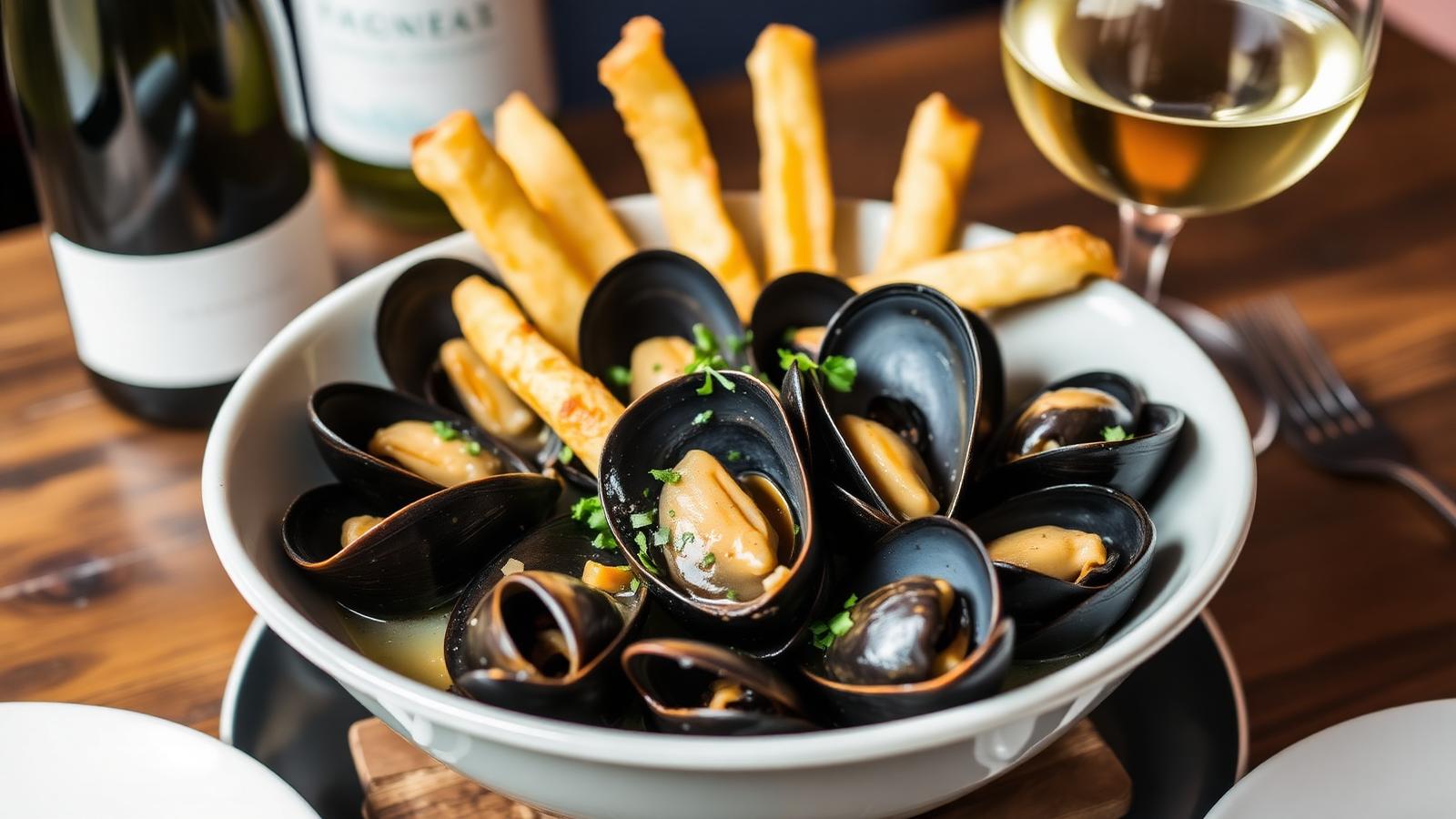
Belgian food rewards wines with acidity, finesse and a sense of restraint. For moules-frites, the classic Muscadet Sevre-et-Maine Sur Lie remains undefeated, with its salinity and oyster-shell minerality echoing the cooking liquid. For carbonnade flamande, the beef-and-beer stew of Flanders, a Cru Beaujolais like Morgon or Moulin-a-Vent gives just enough structure without competing with the malt. For waterzooi, a creamy chicken or fish stew from Ghent, a Cote de Beaune Chardonnay or an Alsace Pinot Blanc is the right call. For croquettes aux crevettes, the North Sea shrimp speciality, pour Champagne or a Cremant d'Alsace. Skip heavy oaked reds with Belgian food. The cuisine prizes subtlety, and the wine should follow.
The Match-Day Ritual
The Belgian watch party tends to start at a brasserie or cafe and migrate home for the second half. The opening round is usually a Trappist or Abbey beer with a board of pate, cornichons and bread. Once at home, the main course arrives, often a steaming pot of mussels in white wine or a slow-cooked carbonnade pulled from the oven. White Burgundy or Muscadet pours throughout. Frites with mayonnaise, andalouse or samurai sauce always accompany the main, never instead of it. Dessert is a small dish of gauffres or a Belgian chocolate truffle with espresso, eaten standing as extra time approaches.
Region Spotlight
Belgian wine drinking is shaped by proximity. Burgundy, just three hours south by car, supplies the white wines that dominate the country's serious tables, with Chablis and Cote de Beaune Chardonnay leading the way. Alsace contributes Pinot Blanc, Pinot Gris and Riesling for richer dishes, while the Loire Valley provides Muscadet for mussels and Sancerre for grilled fish. The domestic Belgian wine scene is small but improving, with Domaine du Chant d'Eole in Wallonia producing genuinely impressive traditional-method sparkling that competes with Cremant on quality and price.
When pairing wine with carbonnade flamande, decant the bottle for 30 minutes and pour it at 16 degrees Celsius. The stew has dark malt sweetness from the Belgian beer used in cooking, and a wine served too cold will taste hard against it. A slightly warmer pour brings the fruit forward and bridges the wine to the dish.