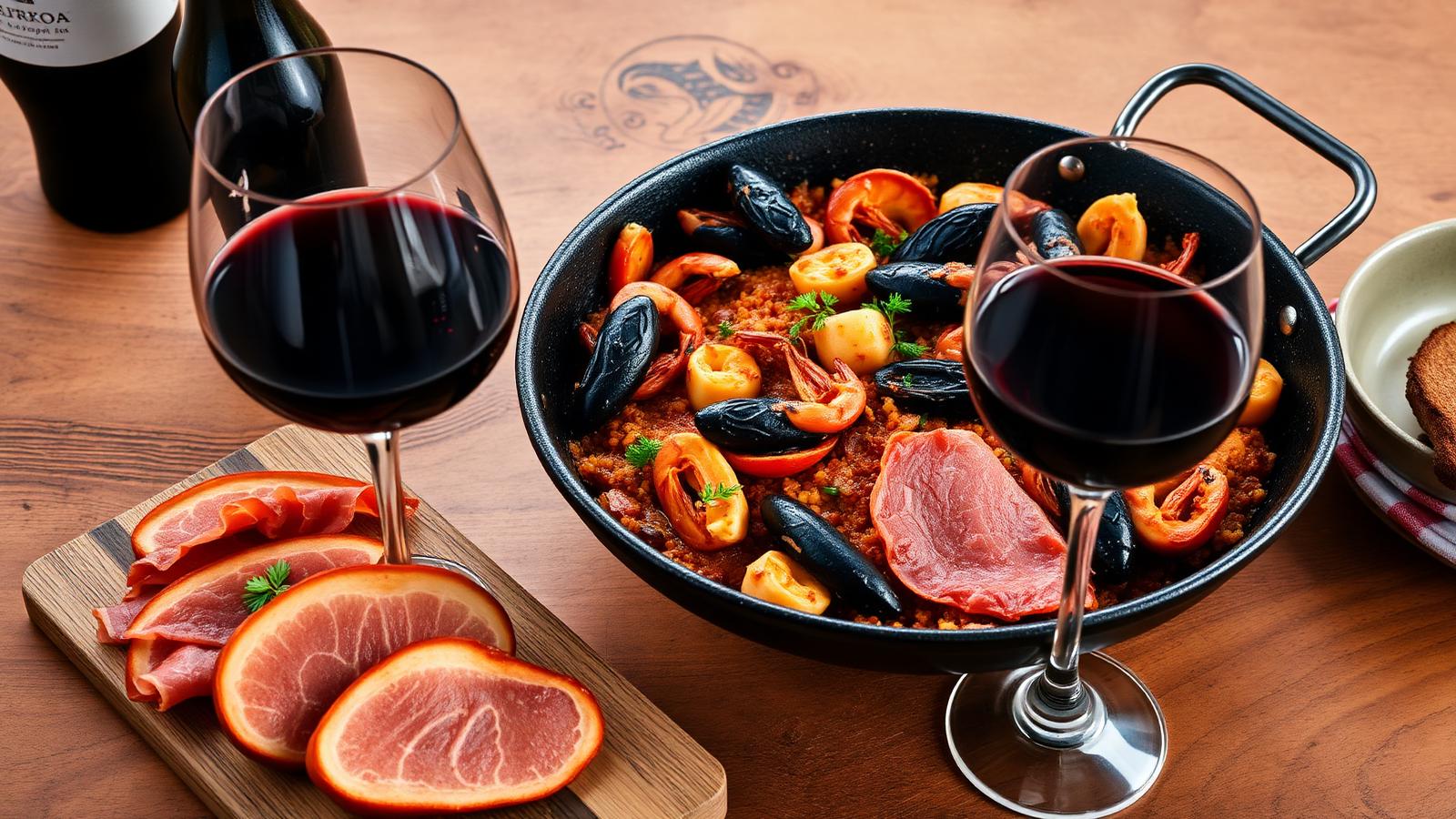
The Story Behind the Plate
Spain enters every World Cup with a kitchen that the rest of the world envies. Jamon iberico de bellota, paella from Valencia, pulpo a la gallega from Galicia, pintxos from San Sebastian, and the never-ending parade of tapas that turn a single meal into an all-afternoon affair. Spanish wine has the same regional depth, with Tempranillo from Rioja and Ribera del Duero, Garnacha from Priorat and Aragon, Albarino from Rias Baixas, Verdejo from Rueda, and Cava from Penedes. A Spain watch party is, by tradition, less a single meal than a rolling series of small plates, and the wine list should follow the same logic with several bottles open at once.
Why These Pairings Work
Spanish food rewards a sequence of wines rather than a single hero bottle. Start with Cava or a Fino Sherry alongside olives, almonds and the first round of jamon. Move into Albarino for shellfish and seafood paella, then pivot to a Rioja Crianza for chorizo, manchego and grilled lamb. For richer dishes like oxtail stew or cochinillo, a Ribera del Duero Reserva or a Priorat Garnacha-Carinena blend is the right call. For dessert, a chilled glass of Pedro Ximenez Sherry over ice cream is hard to beat. The Spanish principle is matching the wine to the small plate in front of you, not to the entire table.
The Match-Day Ritual
Spanish watch parties run late and lean toward grazing rather than sit-down meals. The afternoon starts around lunch with paella, often cooked outdoors in a large pan over orange wood, alongside Cava or a chilled Verdejo. The match itself is a tapas affair, with patatas bravas, croquetas, gambas al ajillo, tortilla and pan con tomate moving through in waves. Wine is poured in small glasses and frequently refilled, with everyone moving freely between sofa, table and balcony. Post-match, a small Sherry course with cheese carries the conversation well into the evening.
Region Spotlight
Rioja remains the spiritual home of Spanish wine, with Tempranillo aged in American oak giving the classic vanilla, coconut and dill profile that defines the region. Modern producers like Artadi and Telmo Rodriguez are pushing toward fresher styles with less oak. Ribera del Duero, two hours west, produces structured, age-worthy Tempranillo from higher elevations, with Vega Sicilia, Pingus and Aalto leading the way. For sparkling wine, look beyond standard Cava toward Corpinnat producers like Recaredo and Gramona, who make traditional-method bottlings that rival Champagne. Rias Baixas in Galicia owns Albarino, while Priorat owns the Spanish flag for big, mineral, age-worthy Garnacha-Carinena blends.
Open your Spanish reds at least 30 minutes before kickoff and pour them at 16 to 17 degrees Celsius. Modern centrally heated rooms tend to push reds above 20 degrees, and Tempranillo loses its lift when it gets too warm. A short rest in a cool spot keeps the cherry, leather and dill notes balanced.