The Story Behind the Plate
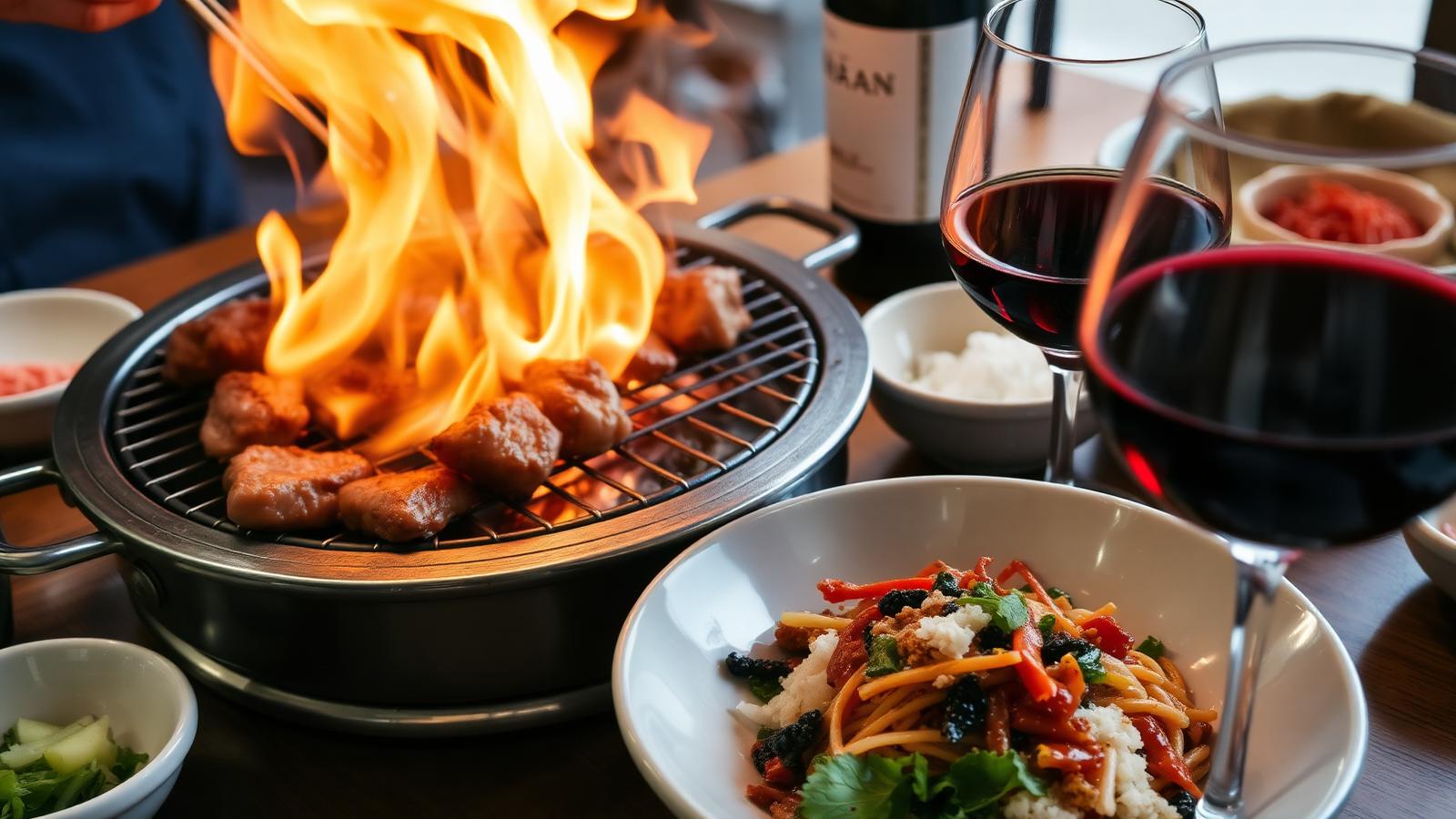
Korean cooking is built on fire, fermentation and the careful balance of sweet, spicy, salty and umami flavors. Korean BBQ of galbi short ribs and samgyeopsal pork belly is the country's global ambassador, often grilled tableside over charcoal or gas. Bibimbap of mixed rice with vegetables and gochujang is the national bowl, while bulgogi, kimchi jjigae, japchae and the endless parade of banchan side dishes complete the table. Korea does not produce wine commercially in any meaningful volume, but the country has built one of Asia's most sophisticated wine import markets, with German Riesling and Burgundy taking centre stage on serious tables.
Why These Pairings Work
Korean food pairs beautifully with wines that have both fruit weight and bright acidity. For Korean BBQ, the dual approach works best: a rich Australian Shiraz or California Zinfandel for the caramelized galbi and pork belly, paired with an off-dry German Kabinett Riesling for the spicy banchan and ssamjang dipping sauce. For bibimbap with gochujang, an off-dry Riesling handles the chile heat better than any dry wine could. For kimchi-based dishes like kimchi jjigae and budae jjigae, a traditional-method sparkling wine has the acidity to meet the fermentation funk head-on. For seafood-heavy preparations like haemul pajeon or Korean fried squid, a Chablis or a German dry Riesling provides exactly the right balance of weight and acidity.
The Match-Day Ritual
A Korean watch party tends to be loud, generous and built around the BBQ table. The grill is fired up before kickoff, with marinated galbi and samgyeopsal taking turns over the flame. A spread of at least eight to ten banchan dishes anchors the table, including kimchi, pickled radish, seasoned spinach, bean sprouts and rolled egg omelet. Soju shots circulate for the spirits drinkers, while Riesling and Shiraz pour for the wine drinkers. Lettuce leaves, perilla leaves, ssamjang and grilled garlic accompany every piece of meat. Dessert is often skipped in favor of a final round of cold soju and a small bowl of fresh fruit, served as the match enters extra time.
Region Spotlight
Without a meaningful domestic wine scene, Korean wine culture has embraced German Riesling as its house white. Seoul wine bars stock everything from Mosel Kabinett to Rheingau Spatlese, with Egon Muller, Selbach-Oster and Dr. Loosen appearing on serious lists. Burgundy is the second pillar, with both white and red Burgundy popular for special occasions. Australian Shiraz from the Barossa has become the de facto Korean BBQ wine, with Two Hands, Penfolds and Yalumba leading sales. The newest trend is California Pinot Noir from Sonoma and the Russian River Valley, which pairs beautifully with bulgogi and the milder Korean stews.
When serving Riesling with Korean food, choose Kabinett over Spatlese for the lower alcohol level, typically 8 to 9 percent. Korean meals tend to run long, with grilling, soju toasts and multiple courses, and the lower-alcohol Kabinett stays drinkable across the entire afternoon without losing focus or amplifying the chile heat that comes through later courses.