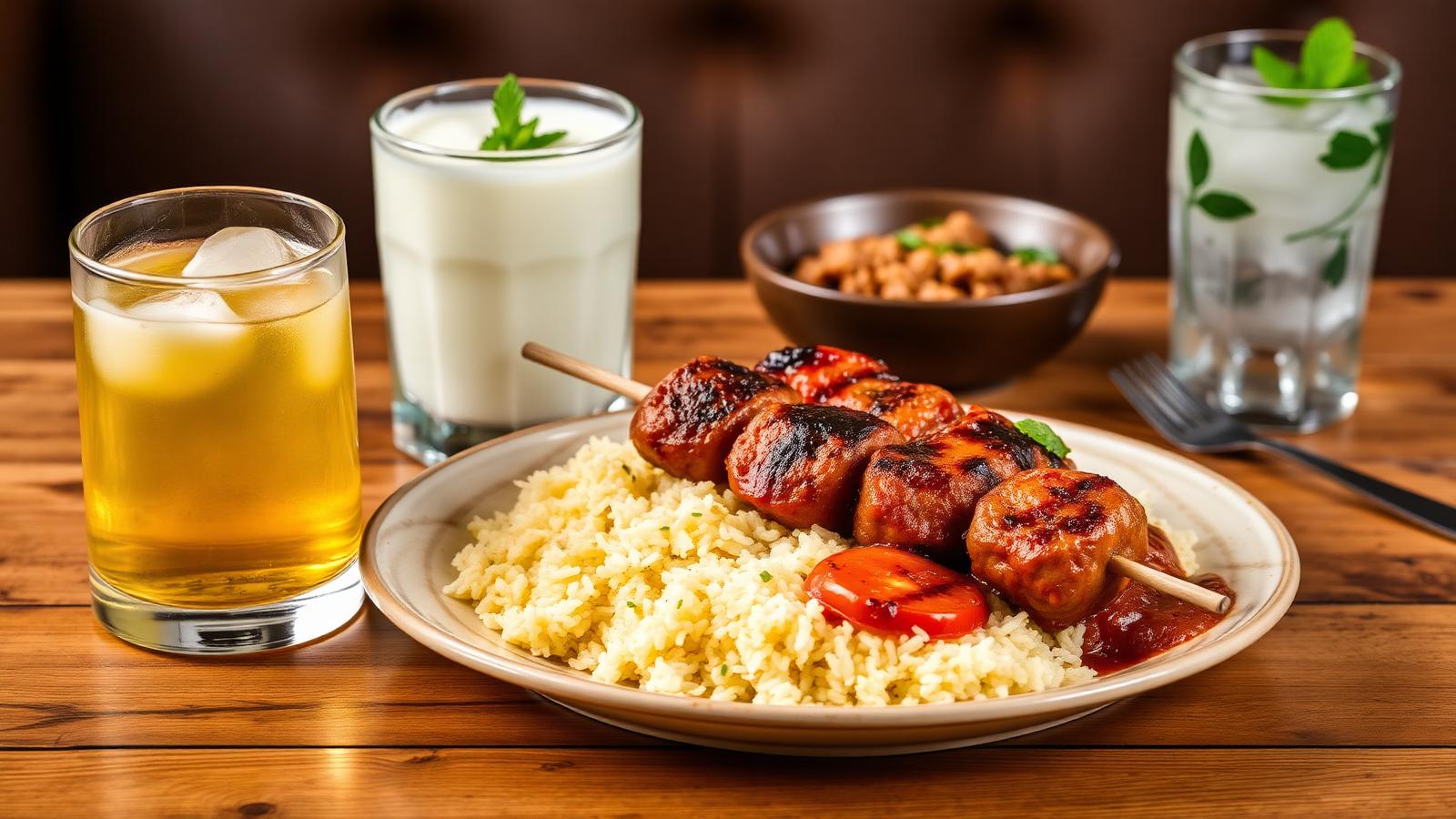
The Story Behind the Plate
Persian cooking is one of the world's most ancient and refined cuisines, built on slow-cooked stews, perfumed saffron rice and the delicate balance of sweet, sour and savory flavors. Chelow kabab with saffron rice and kebab koobideh is the national lunch, while ghormeh sabzi with herbs and dried lime, fesenjan with pomegranate and walnut, and tahchin layered saffron rice cake all carry centuries of tradition. Iran is a Halal-majority country, and our editorial defers to that tradition with non-alcoholic pairings drawn from the country's deep heritage of doogh, sharbat syrups and fresh juices. Persian beverage culture is itself one of the world's most thoughtful, with pairings considered as carefully as any wine selection.
Why These Pairings Work
Non-alcoholic pairings for Persian food work best when they balance the rich, slow-cooked depth of the cuisine with bright acidity and gentle bitterness. Doogh, the salty mint yogurt drink, is the universal kebab pairing and cuts through lamb fat the way a young Tannat would. For ghormeh sabzi and other herb-heavy stews, a pomegranate juice or a sharbat of mint or sour cherry provides the tart-sweet lift that flatters the dried-lime and herb base. For lighter rice dishes like tahchin or zereshk polo, a chilled rosewater lemonade or a sour cherry juice is the most natural match. For celebratory moments, a premium NA sparkling like Noughty Chardonnay provides Champagne-style complexity without the alcohol. The Persian non-alcoholic table is generous and deeply considered, and the best hosts always offer multiple options.
The Match-Day Ritual
A Persian watch party tends to be family-centered and food-rich, often spanning several hours with shared dishes and steady tea refills. The opening round usually includes a tray of fresh herbs (sabzi khordan), feta cheese, walnuts, lavash bread and pickled vegetables, paired with a chilled glass of doogh. The main course of chelow kabab, ghormeh sabzi or fesenjan arrives at halftime, served with saffron-tinted rice and tahdig, the prized crispy rice from the bottom of the pot. Sharbat or pomegranate juice pours throughout. Dessert is small and traditional: a tray of fresh fruit, baklava, or saffron ice cream with rosewater, finished with a small cup of Persian tea served in a thin glass with a sugar cube.
Region Spotlight
Persian beverage culture is anchored by the long tradition of sharbat, the family of syrup-based drinks made with rose petals, sour cherries, mint, quince or saffron, then diluted with cold water for serving. Doogh, the salty yogurt drink, is the universal kebab pairing across Iran. Saffron from Khorasan in eastern Iran is the world's most prized, and a few threads infused into water or milk produces beverages of extraordinary aromatic complexity. Pomegranate from Yazd and the central provinces produces some of the world's most concentrated juices. For premium NA wine alternatives, Noughty and Lyre's are increasingly available in Tehran and the larger Iranian diaspora communities worldwide.
Serve doogh in a chilled glass with a few extra mint leaves and a sprinkle of dried mint on top. The fresh mint brightens the drink and amplifies the herbal notes that make it the perfect pairing for grilled lamb. A pitcher made an hour before kickoff and chilled in the fridge tastes noticeably better than one mixed last minute, as the dried mint has time to bloom into the yogurt.