The Story Behind the Plate
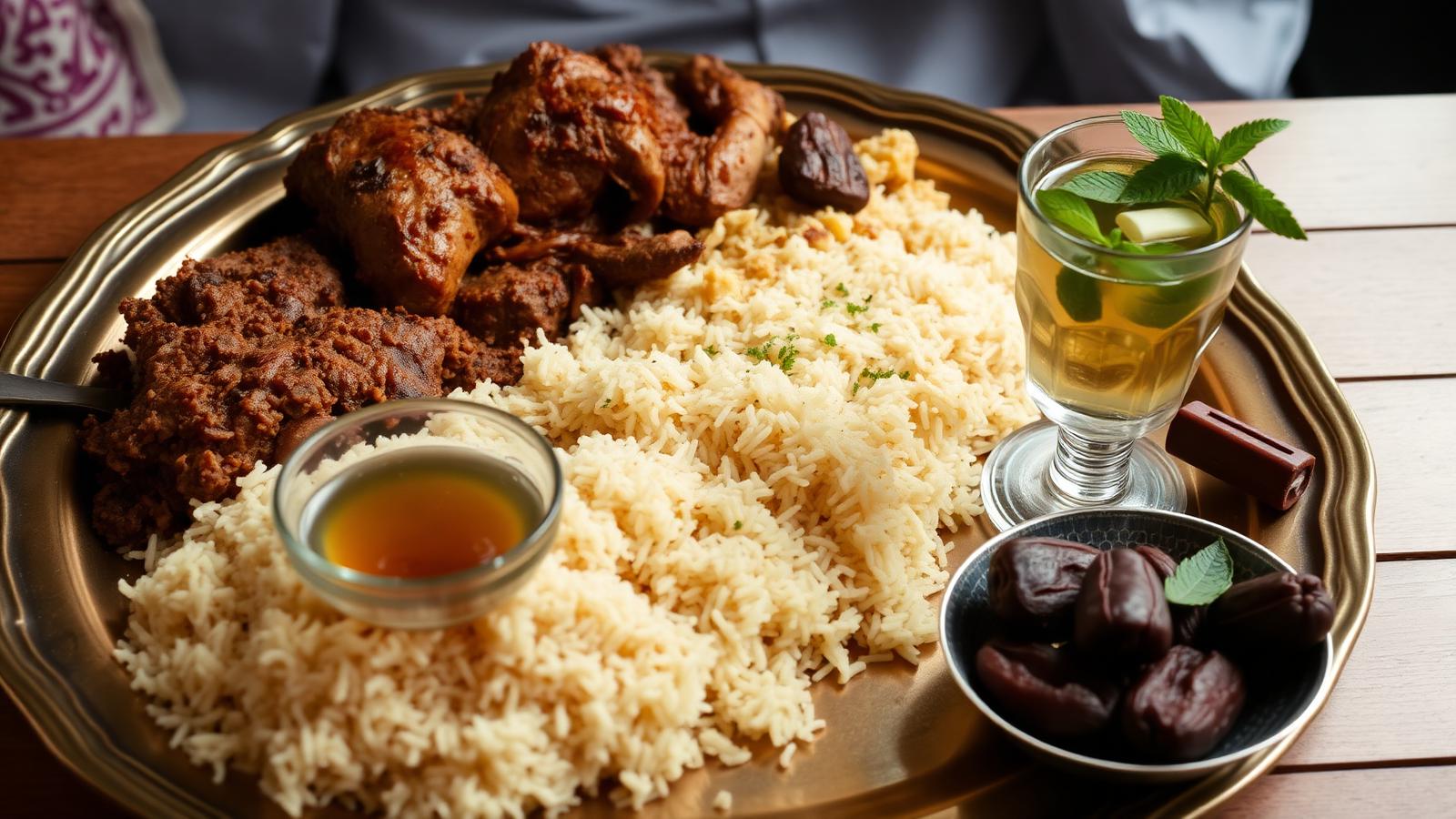
Saudi cooking is built on the long Bedouin and Hejazi traditions of the Arabian Peninsula, with kabsa as the national dish and mandi as the celebratory feast. Saffron rice anchors both, while spiced lamb, chicken or fish provides the protein. Mutabbaq stuffed flatbreads, jareesh wheat porridge and the universal Arabic coffee with dates round out the table. Saudi Arabia is a Halal-majority country, and our editorial defers to that tradition with non-alcoholic pairings drawn from the country's rich heritage of Arabic coffee, fresh juices, mint-rosewater lemonades and the growing global category of premium NA wines that now provides genuinely sophisticated celebration pours.
Why These Pairings Work
Non-alcoholic pairings for Saudi food work best when they echo the aromatic complexity of the cuisine. Mint lemonade with rosewater, served chilled, is the universal table beverage and pairs beautifully with kabsa, mandi and grilled meats. For celebration moments, a premium NA sparkling rose like Noughty Rose or French Bloom Le Rose provides Champagne-style complexity that flatters saffron rice and spiced meat without competing. Fresh pomegranate juice, especially from the Taif region, provides a deeper, more tannic option that pairs well with grilled lamb. For dessert, a small cup of Arabic coffee scented with cardamom, accompanied by dates, is the classic finish. The Saudi non-alcoholic table is generous and deeply hospitable, and the best hosts always offer multiple options.
The Match-Day Ritual
A Saudi watch party tends to be family-centered, hospitable and built around the majlis tradition of shared seating on floor cushions or low couches. The opening round always includes a tray of Arabic coffee with dates, served in small handle-less cups in a specific clockwise order. As the match starts, a spread of mezze appears: hummus, mutabbal, fattoush, kibbeh and bowls of mixed nuts. The main course of kabsa or mandi arrives at halftime, served from a large communal platter with everyone gathered around. Mint lemonade and premium NA sparkling pour throughout. Dessert is small and traditional: kunafa, mahalabia or fresh fruit, finished with a second round of Arabic coffee and more dates.
Region Spotlight
Saudi beverage culture is anchored by Arabic coffee, made from lightly roasted beans flavored with cardamom and served in small handle-less cups as the universal symbol of hospitality. The serving ritual itself is part of Saudi identity, with the host pouring from a long-spouted dallah and refilling until the guest gently shakes the cup. Mint lemonade with rosewater is the everyday refreshment, while fresh pomegranate juice from Taif and dates from Madinah provide deeper flavor options. For premium NA wine alternatives, French Bloom, Noughty and Lyre's are increasingly available in Riyadh and Jeddah's high-end hotels and supermarkets, giving Saudi hosts genuinely sophisticated celebration pours.
Serve your Arabic coffee at the very start and end of the match, never in between. The ritual marks the formal opening and closing of the gathering, and using it as a punctuation rather than a continuous pour respects the cultural tradition. Pair the coffee with three dates per guest, the traditional Saudi serving, and let everyone refill their own cup with the dallah passed gently around.