The Story Behind the Plate
Australian cooking has come into its own in the past two decades, drawing on British roots, Mediterranean immigration and the abundance of Pacific seafood into a confident national style. The Sunday lamb roast remains a cornerstone, with rosemary, garlic and mint sauce as the standard accompaniments. Barramundi from northern waters, kangaroo and wallaby on the menu of progressive restaurants, and the universal weekend barbie of snags and chops carry deep tradition. Australian wine is a global powerhouse, with Shiraz from the Barossa Valley, Cabernet from Coonawarra, Chardonnay from Margaret River and Pinot Noir from Tasmania all setting world standards. For an Australia match, the wine list practically chooses itself.
Why These Pairings Work
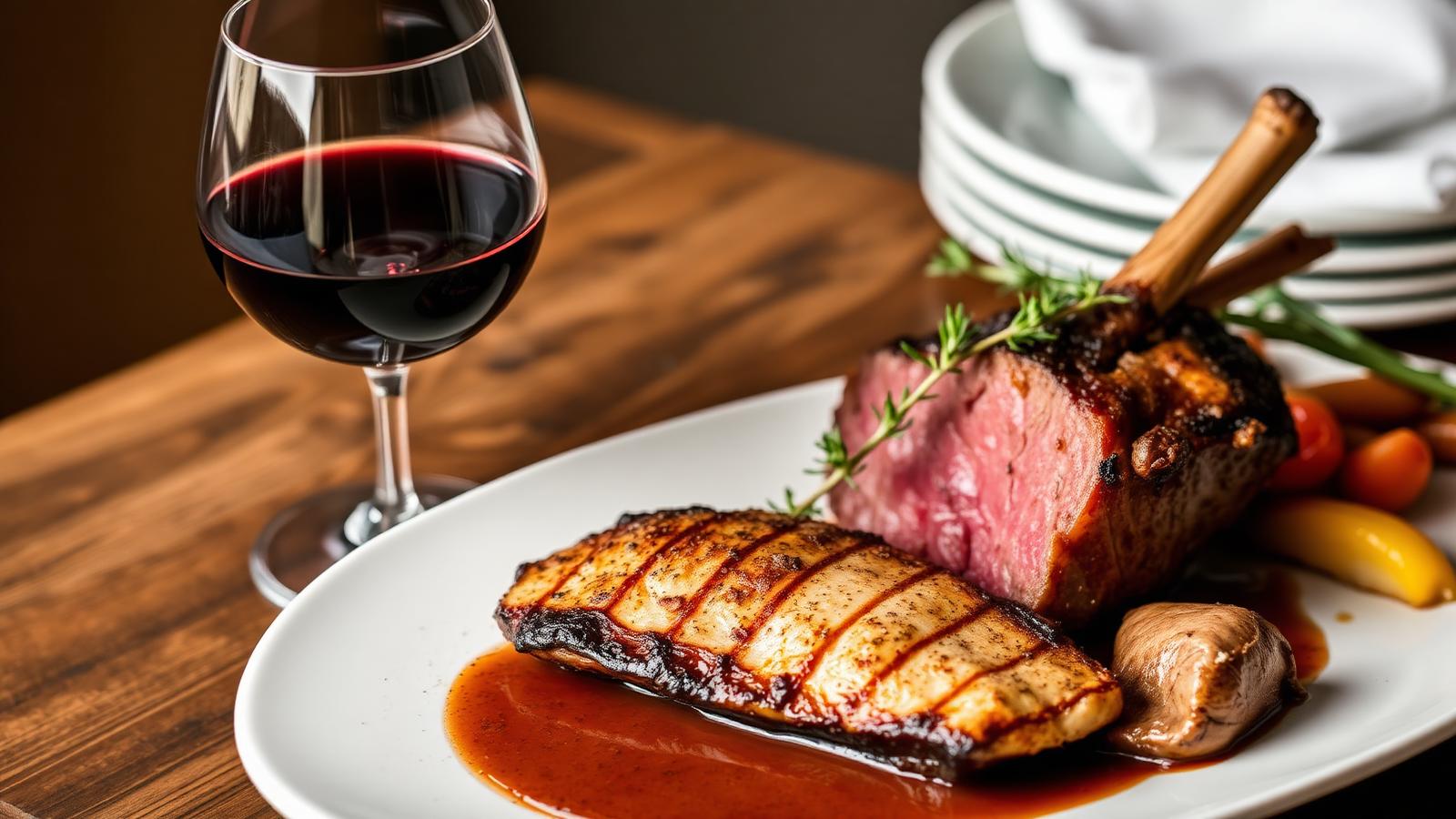
Australian food pairs almost universally with Australian wine, and the regional logic is famously direct. For the Sunday lamb roast, a Barossa Valley Shiraz is the textbook match, with its peppery dark fruit and plush body meeting rosemary and roast meat head on. For Coonawarra Cabernet on older birds, the structure and herbal lift balance the gaminess perfectly. For barramundi and Pacific seafood, a Margaret River Chardonnay or a Hunter Valley Semillon provides the body and acidity needed. For casual barbie nights with snags, lamb chops and chicken wings, a McLaren Vale Grenache-Shiraz-Mourvedre blend is the friendly everyday choice. For dessert pavlova with cream and passionfruit, a Rutherglen Muscat is the unbeatable Australian finish.
The Match-Day Ritual
An Australian watch party is built around the barbie if the weather allows, which is most of the year in most of the country. The grill is fired up an hour before kickoff with snags, lamb chops, chicken thighs and prawns hitting the bars in waves. A platter of dips, crusty bread and stuffed vine leaves anchors the spread, paired with chilled Tasmanian sparkling or a glass of Margaret River Chardonnay. Salads of beetroot, rocket and pumpkin balance the meat. Shiraz or GSM pours for the main course, served in oversized glasses in the casual Australian wine-bar tradition. Dessert is pavlova with whipped cream and seasonal fruit, finished with strong long-black coffee and, for the adults, a small glass of Rutherglen Muscat.
Region Spotlight
The Barossa Valley in South Australia is the spiritual home of Australian Shiraz, with old-vine vineyards dating back to the mid-19th century producing wines of remarkable depth and longevity. Penfolds, Henschke, Yalumba and Torbreck set the global benchmark for what Barossa Shiraz can be. Margaret River in Western Australia is the country's white wine capital, with Chardonnay and Cabernet from Leeuwin Estate, Cullen and Vasse Felix competing with the best of the world. Tasmania has emerged as the most exciting cool-climate region, with Pinot Noir, Chardonnay and traditional-method sparkling rapidly catching up with Burgundy and Champagne on quality. The Hunter Valley north of Sydney produces some of the world's most distinctive Semillon, with low-alcohol, age-worthy wines that improve for decades in the bottle.
Decant your Barossa Shiraz for at least an hour before serving and pour at 16 degrees Celsius rather than full room temperature. Barossa Shiraz can run high in alcohol, often 14.5 to 15 percent, and a slightly cooler pour keeps the alcohol in check while letting the dark fruit, pepper and chocolate notes shine. The wine tastes more elegant and food-friendly with the temperature dialed down.