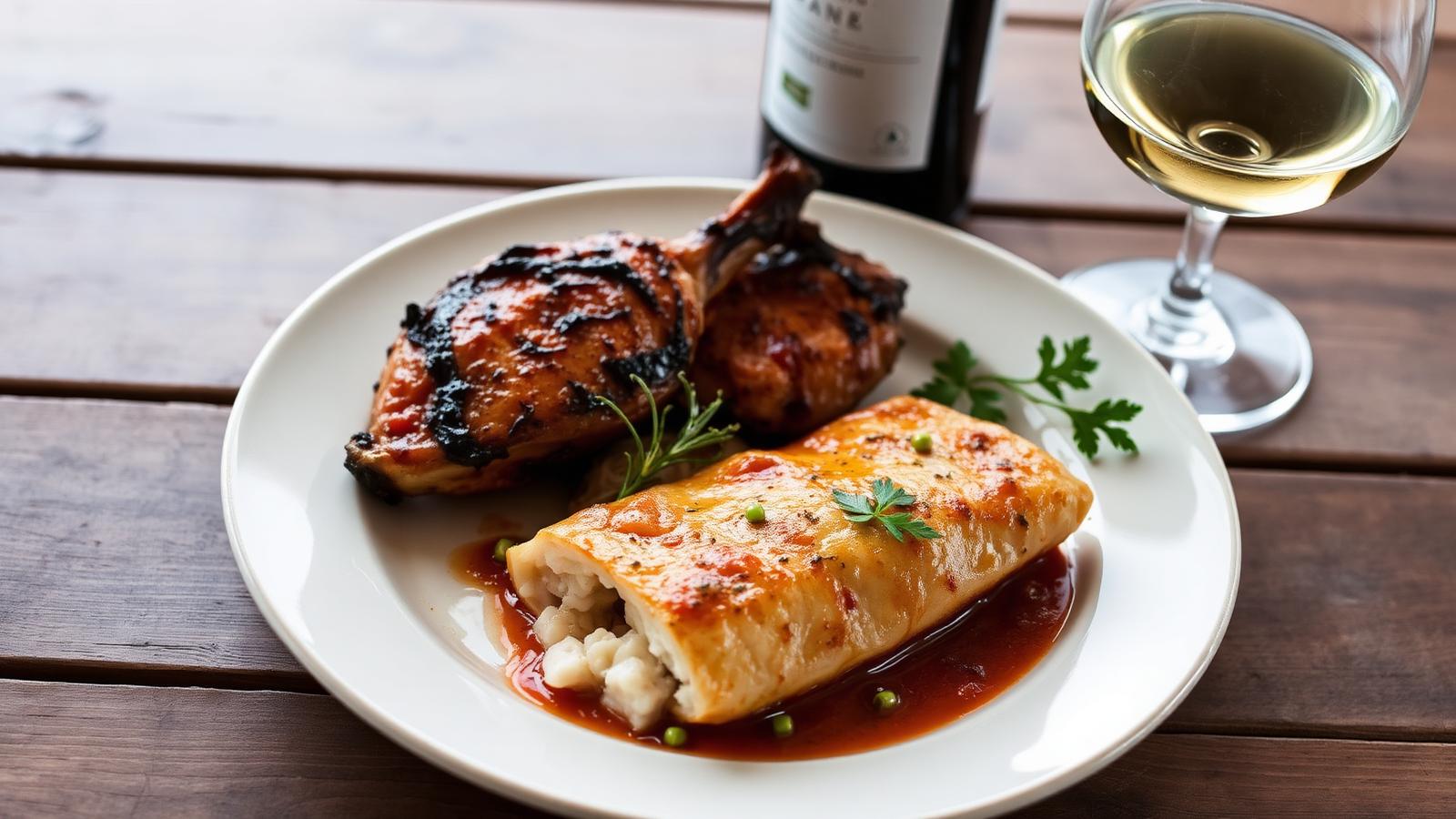
The Story Behind the Plate
Portuguese cooking is built on Atlantic seafood, slow-cooked stews and the unmatched salt cod tradition known as bacalhau, of which Portuguese chefs claim 365 distinct preparations. Add in grilled sardines from the Lisbon summer, frango piri-piri from the south, cataplana from the Algarve and pasteis de nata for dessert, and the watch-party menu writes itself. Portuguese wine is one of the great undervalued categories in the world, with the Douro Valley producing rich, structured reds, Vinho Verde from Minho giving crisp, mineral whites, and the Alentejo making generous Mediterranean-style blends. A Portugal match deserves a Portuguese table.
Why These Pairings Work
The Portuguese pairing principle is simple. Vinho Verde, especially Alvarinho from Monção, is the seafood wine of the country, with the salinity and citrus to handle grilled sardines, octopus salad and bacalhau a bras. Douro reds, often blends of Touriga Nacional, Touriga Franca and Tinta Roriz, are the meat wines, with enough structure for cabrito assado and piri-piri chicken. Alentejo reds are friendlier and rounder, perfect for porco preto and stews. Skip the international varieties when serving Portuguese food. The native grapes have evolved alongside the cuisine for centuries, and they consistently outperform imports at the same price point.
The Match-Day Ritual
The Portuguese watch party starts with petiscos, the Portuguese version of tapas: olives, cheese, cured chorizo, octopus salad and bowls of bread with olive oil. A chilled Vinho Verde or a glass of dry white Port pours alongside. The main course lands at halftime, often a sardinhada in summer or a cataplana of seafood or meat in cooler weather. Douro reds or Alentejo blends pour for the second half. The match closes with a small glass of Tawny Port, a pastel de nata still warm from the oven, and an espresso, the unbeatable Portuguese finish.
Region Spotlight
The Douro Valley is Portugal's calling card, a UNESCO-listed terraced landscape of schist slopes along the Douro River where vines have been grown since Roman times. Port has been the historic export, but in the past three decades dry Douro reds have become some of the most exciting wines in Europe, with producers like Niepoort, Quinta do Crasto, Quinta do Noval and Wine and Soul leading the way. The Vinho Verde region in the rainy northwest produces fresh, low-alcohol whites that pair brilliantly with seafood. The Alentejo, sweeping across the south, makes Mediterranean-style blends with riper fruit and softer tannin, ideal for casual hosting.
Open your Douro red at least an hour before kickoff and decant it. Native varieties like Touriga Nacional and Touriga Franca have dense tannin that needs air to soften, and a Quinta do Crasto Reserva tastes 30 percent more elegant after an hour in a decanter than it does straight from the bottle.