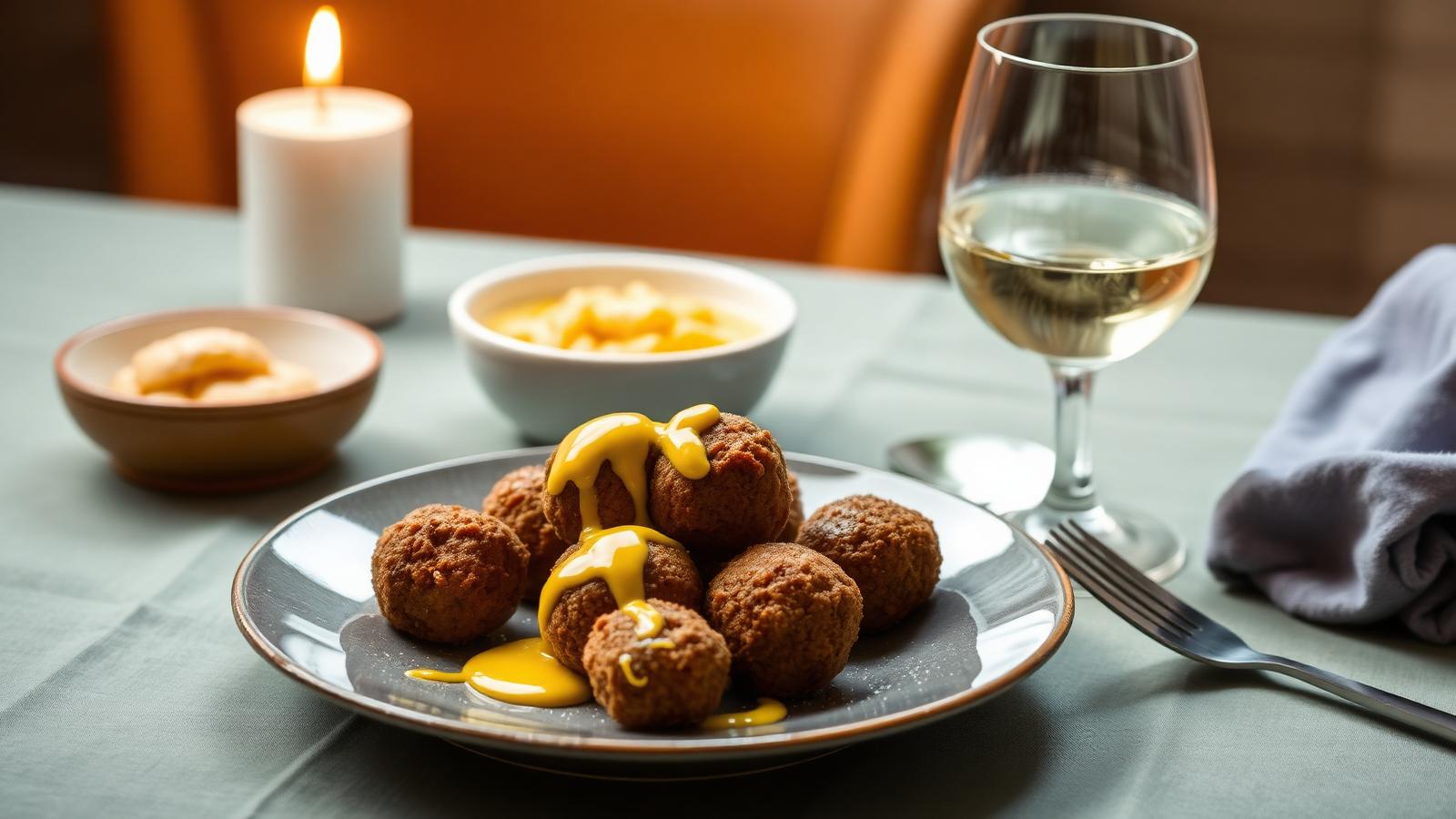
The Story Behind the Plate
Dutch cuisine is honest, hearty and built for cold afternoons. Stamppot in dozens of regional variations, bitterballen and kroketten at the bar, raw herring with onions in summer, and the famously dense Sunday rijsttafel adopted from Indonesia. The Netherlands does not produce much wine of its own, but the Dutch are among the most knowledgeable wine consumers in Europe, with a deep tradition of importing from Alsace, the Mosel and Burgundy. A Dutch watch party tends to favor structured whites and Champagne-style sparklers that handle fried snacks, smoked fish and rich potato dishes with equal grace.
Why These Pairings Work
The Dutch table rewards wines with cut and clarity. For bitterballen, kroketten, kaastengels and other fried snacks, a traditional-method sparkling like Cremant d'Alsace is the most reliable choice. For stamppot, especially the kale-and-sausage boerenkool version, a dry Alsace Riesling or a Pinot Blanc holds up to the mash and the smokiness. For raw herring with onions, a chilled Muscadet Sur Lie or a Sauvignon Blanc from Sancerre meets the salinity head-on. For rijsttafel, the Indonesian-inspired feast still common at Dutch family gatherings, switch to an off-dry German Riesling Kabinett, which handles the chile heat and sweet-savory satay without flinching.
The Match-Day Ritual
Dutch watch parties tend to be efficient and well-organized, which is precisely what you would expect. A spread of borrelhapjes goes out before kickoff, with bitterballen, kaastengels, cubes of aged Gouda, slices of liverworst and gherkins. A pitcher of Heineken anchors the table for the beer drinkers, while a bottle of Cremant or Alsace Riesling pours for the wine drinkers. At halftime, stamppot or pea soup with rookworst arrives in deep bowls. Dessert is small and Dutch: a few stroopwafels with coffee, or a slice of appeltaart with whipped cream, served as the match enters extra time.
Region Spotlight
Without a significant domestic wine industry, Dutch wine culture has adopted Alsace as its spiritual home. The Vosges-shadowed strip of eastern France produces aromatic dry whites from Riesling, Pinot Blanc, Pinot Gris and Gewurztraminer that pair brilliantly with the fried, smoked and pickled flavors of Dutch cooking. Producers like Trimbach, Hugel, Weinbach and Zind-Humbrecht are widely available in Amsterdam wine shops. The Mosel Valley in Germany is the second pillar, with off-dry Riesling Kabinett serving as the universal Dutch wine for anything spicy or sweet-savory.
Chill your Alsace Riesling to around 9 degrees Celsius rather than full fridge cold. Over-chilling mutes the aromatic lift that makes Alsace whites special, and a slightly warmer pour brings out the white peach and crushed-stone character that flatters stamppot and bitterballen.