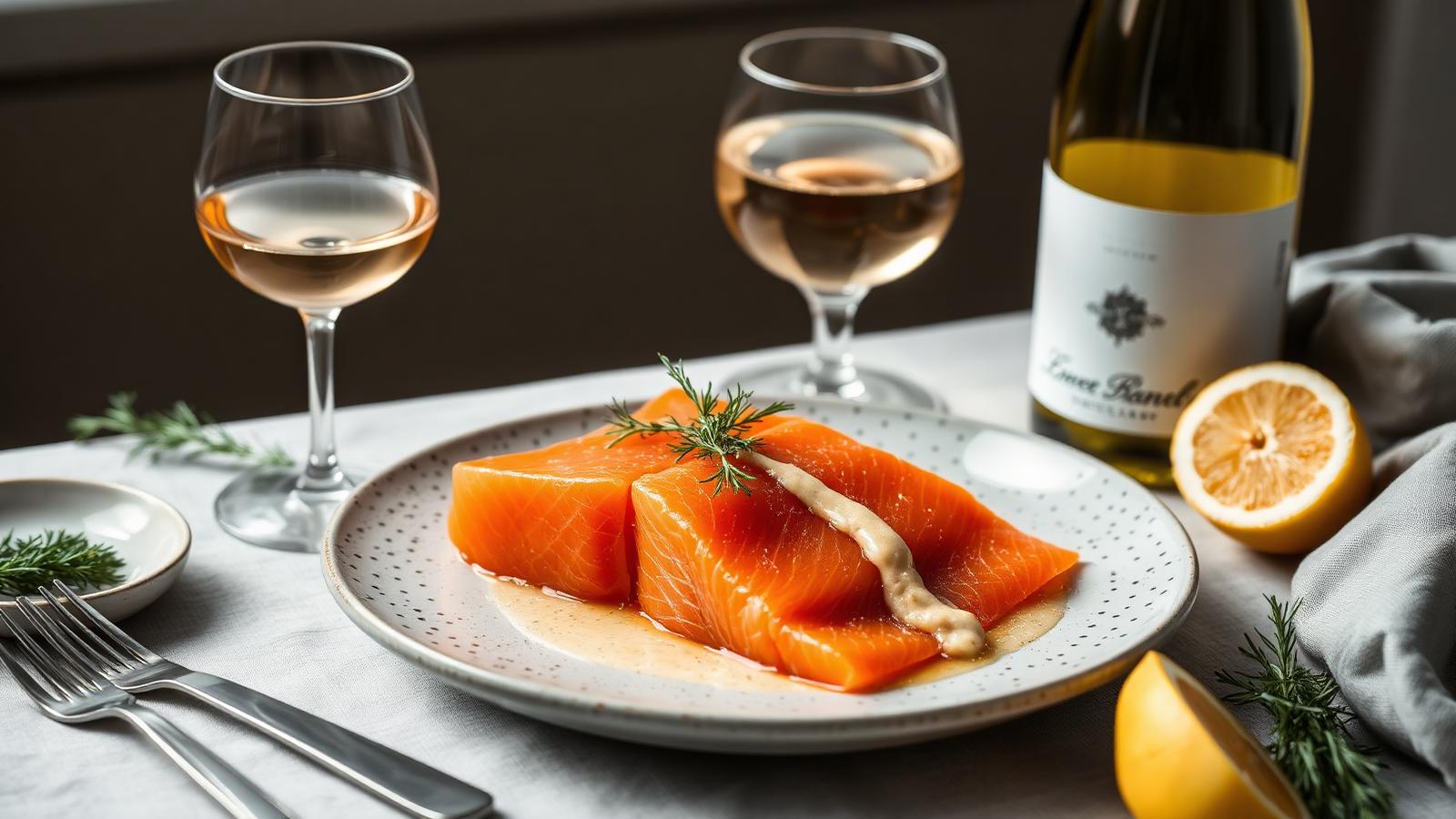
The Story Behind the Plate
Norwegian cooking is shaped by the Atlantic, the long winters and the centuries-old need to preserve food through cold months. Cured and smoked salmon, pickled herring, lutefisk at Christmas, kjottkaker meatballs with brown sauce, and fenalar cured lamb from the western fjords all carry deep traditions. Norway produces almost no wine of its own, but the country has one of the world's most discerning import markets, with a state monopoly that prioritizes quality across price tiers. The Norwegian table tends to favor bone-dry Atlantic-climate whites and elegant Burgundy-style reds that complement the country's restrained, ingredient-driven cooking.
Why These Pairings Work
Norwegian seafood, especially cured and smoked salmon, pairs best with bone-dry whites with citrus lift and crushed-stone minerality. Mosel Riesling at Trocken or Kabinett Trocken level is the most reliable choice, with Alsace Sylvaner and Loire Sancerre close behind. For richer fish like halibut, cod and Atlantic salmon prepared with butter, white Burgundy from Meursault or Puligny-Montrachet justifies its price tag. For traditional meat dishes like kjottkaker, fenalar or pinnekjott (the salted, dried and steamed Christmas lamb ribs), a Cote de Beaune Pinot Noir or a Cru Beaujolais provides exactly the right balance of fruit and structure. Avoid heavy oaked reds and fruit-forward New World whites. Norwegian cuisine rewards restraint, not weight.
The Match-Day Ritual
Norwegian watch parties tend to be small, calm and family-driven, with an emphasis on shared boards and koselig coziness. A platter of cured salmon, rye crackers, dill creme fraiche and pickled vegetables anchors the spread, paired with a chilled bottle of Mosel Riesling. Kjottkaker or a steaming pot of fiskesuppe arrive at halftime in deep bowls, often served with boiled potatoes and lingonberry on the side. Wine pours into modest glasses rather than oversized stemware. Dessert is small and traditional: krumkake with whipped cream, or a slice of bløtkake for special matches, finished with strong filter coffee.
Region Spotlight
Without a meaningful domestic wine scene, Norway has built its national wine culture around imports from Burgundy, the Mosel and the Loire. The Vinmonopolet state monopoly has, somewhat counterintuitively, become a force for wine quality, sourcing directly from small producers across Europe and offering bottlings that would be hard to find even in their home regions. Burgundy in particular is a Norwegian favorite, with Cote de Beaune whites and village-level reds appearing on tables across Oslo and Bergen. German Riesling is the second pillar, especially from the Mosel and Saar, where the chalky acidity matches cured fish almost too well.
Chill your Mosel Riesling to 8 degrees Celsius for gravlaks and pickled herring. Norwegian curing techniques are subtle and benefit from a wine served cold enough to refresh the palate between bites, without losing the citrus and stone-fruit aromatics that make Riesling the right pairing in the first place.