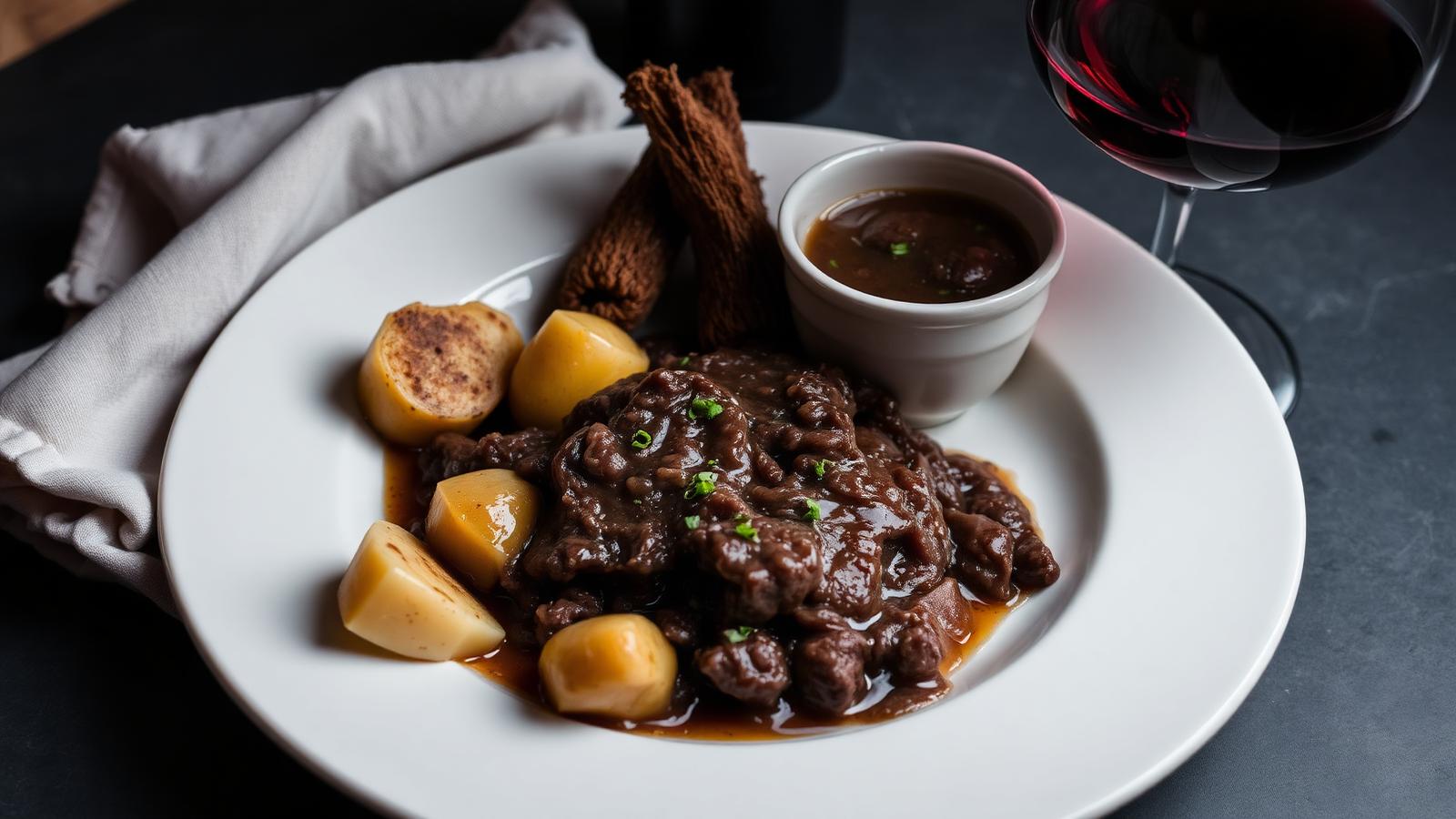
The Story Behind the Plate
Scottish cuisine has shed its old reputation in the past two decades and now stands as one of Europe's most exciting regional kitchens. Cullen skink chowder from the northeast coast, haggis with neeps and tatties from the Highlands, Aberdeen Angus beef, Scottish salmon both wild and smoked, and the great Burns Night dinner all carry centuries of tradition. Scotland does not produce wine of its own, with the climate firmly favoring barley, peat and whisky production. The Scottish wine table is built almost entirely on imports, with a particular emphasis on the Northern Rhone, Burgundy and the great fortified wines of Portugal that match the country's earthy, savory cooking.
Why These Pairings Work
Scottish cooking rewards wines with savory depth and gentle warmth. For haggis, the national dish of oats, offal and pepper, a Northern Rhone Syrah from Cornas or Cote-Rotie is the textbook match, with smoky pepper and dark fruit echoing the spice in the dish. A 10 or 20 Year Tawny Port is the traditional Burns Night pour and works just as well for any haggis course. For Aberdeen Angus beef, a structured Bordeaux from Pauillac or Saint-Estephe is hard to beat, while smoked salmon calls for a steely Chablis or a German dry Riesling Spatlese. For cullen skink, the creamy smoked haddock chowder, an Alsace Pinot Blanc or a Cote de Beaune Chardonnay provides the body and acidity the dish demands.
The Match-Day Ritual
Scottish watch parties tend to favor pub-style hosting, with a roaring fire, plenty of crusty bread and substantial sharing plates. The pre-match round usually includes a board of smoked salmon, oatcakes and crowdie cheese, paired with a glass of Chablis or a chilled lager. At halftime the main course arrives, often a slow-cooked stew of beef with stout, or a Scotch pie with mushy peas. Wine pours for the second half, typically a Rhone Syrah or a Cru Beaujolais. The match closes with a small glass of single malt whisky, neat or with a few drops of spring water, and a wedge of dark chocolate or a piece of Dundee cake to balance the peat.
Region Spotlight
Without a domestic wine industry, Scottish wine culture has built itself around the strongest matches for the national cuisine. The Northern Rhone has effectively become Scotland's house red region, with Syrah from Cornas, Hermitage and Cote-Rotie appearing on almost every serious wine list. Burgundy is the white wine pillar, particularly Chablis and the Macon for everyday drinking, with Cote de Beaune Chardonnay reserved for special matches. The historic Auld Alliance between Scotland and France has also kept Bordeaux on Edinburgh and Glasgow tables for centuries, while Portugal contributes the Port and Madeira that close out so many Scottish meals.
When serving Tawny Port with haggis, chill it lightly to around 12 degrees Celsius rather than serving at room temperature. The slight chill brings out the dried fruit and nut character that complements the dish, and keeps the alcohol from feeling heavy on the palate after a generous bowl of neeps and tatties.