The Story Behind the Plate
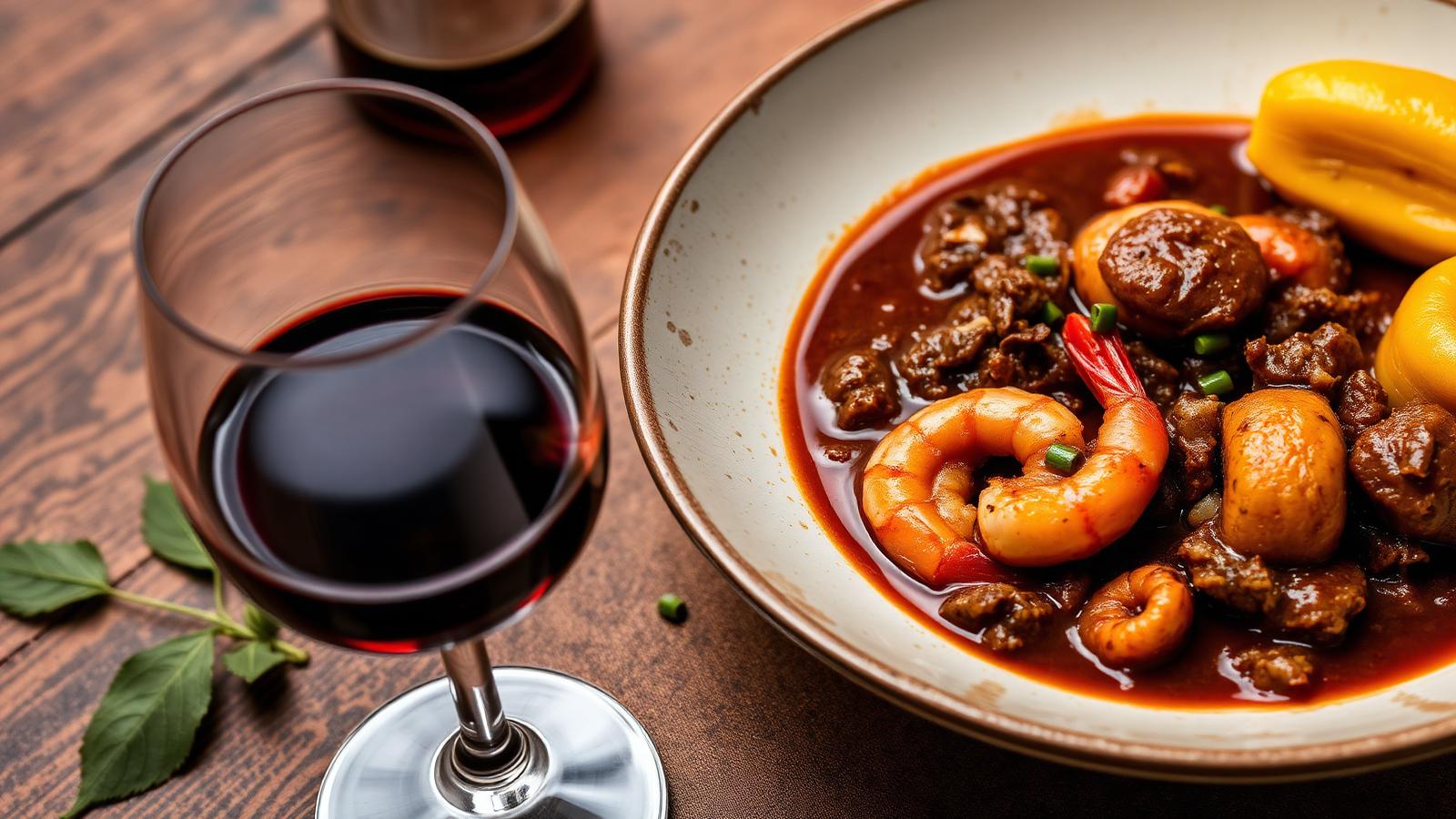
Cameroonian cooking is one of West and Central Africa's most varied, drawing on rainforest, savanna and coastal traditions into a single national kitchen. Ndole bitterleaf stew with peanuts and shrimp is the national calling card, while poulet DG with plantains anchors celebrations and koki bean cake from Yaounde provides the everyday comfort. Mbongo tchobi spice stew, achu corn fufu and the universal pepper soup round out the table. Cameroon does not produce wine of its own, so the wine table draws on French imports, particularly Alsace whites for the peanut-rich ndole and Beaujolais reds for poulet DG. The cuisine prizes bold flavors, bitter greens and the careful balance of nuts and spices, all of which reward wines with body and bright fruit.
Why These Pairings Work
Cameroonian food rewards wines with body and a touch of richness to handle the peanut and bitter green base of the cuisine. For ndole, an Alsace Pinot Gris from Domaine Weinbach is the textbook match, with the rich, off-dry white standing up to the peanut sauce without competing with the bitter greens. For poulet DG, a Cru Morgon Beaujolais or a Cotes du Rhone red provides the bright fruit needed to balance the sweet plantains and peppers. For grilled fish and lighter dishes, a Loire Sauvignon Blanc or a Spanish Albarino is the right call. For dessert fresh fruit and beignets, a small glass of Sauternes or a Beaumes-de-Venise Muscat is the friendly finish. Skip dry, austere whites with ndole. The peanut sauce needs a wine with body and gentle fruit weight.
The Match-Day Ritual
A Cameroonian watch party is loud, family-driven and built around shared plates served continuously across the afternoon. The opening round usually includes plantain chips, grilled fish skewers and bowls of pepper sauce, paired with bissap or fresh ginger juice. The main course at halftime is often ndole with rice or plantains, or poulet DG served family-style from a large pot. Wine pours alongside for the wine drinkers, while Castel and 33 Export beer remain the everyday choices for many guests. Dessert is small and traditional: a bowl of fresh mango or pineapple, beignets with sugar, finished with strong Cameroonian coffee from the Bamenda highlands.
Region Spotlight
Without a domestic wine industry, Cameroonian wine culture is shaped by French imports, reflecting the country's bilingual French and English colonial heritage. Alsace whites from Trimbach and Weinbach lead the way for ndole nights, while Beaujolais Cru like Morgon and Fleurie serves the everyday meal table. The truly distinctive Cameroonian beverage scene revolves around bissap hibiscus, ginger juice and the world-class specialty coffee from the western highlands around Bamenda and Bafoussam, where award-winning farms have begun appearing on third-wave coffee menus across North America and Europe. The country's growing craft beer scene in Douala adds another layer to modern Cameroonian hospitality.
Decant your Alsace Pinot Gris for 15 minutes before serving with ndole. The brief aeration brings out the gentle honeyed and quince notes that flatter the peanut sauce, while keeping enough acidity to balance the bitter greens. A Trimbach Pinot Gris from a good vintage tastes like a wine twice its price after a short rest in a decanter.