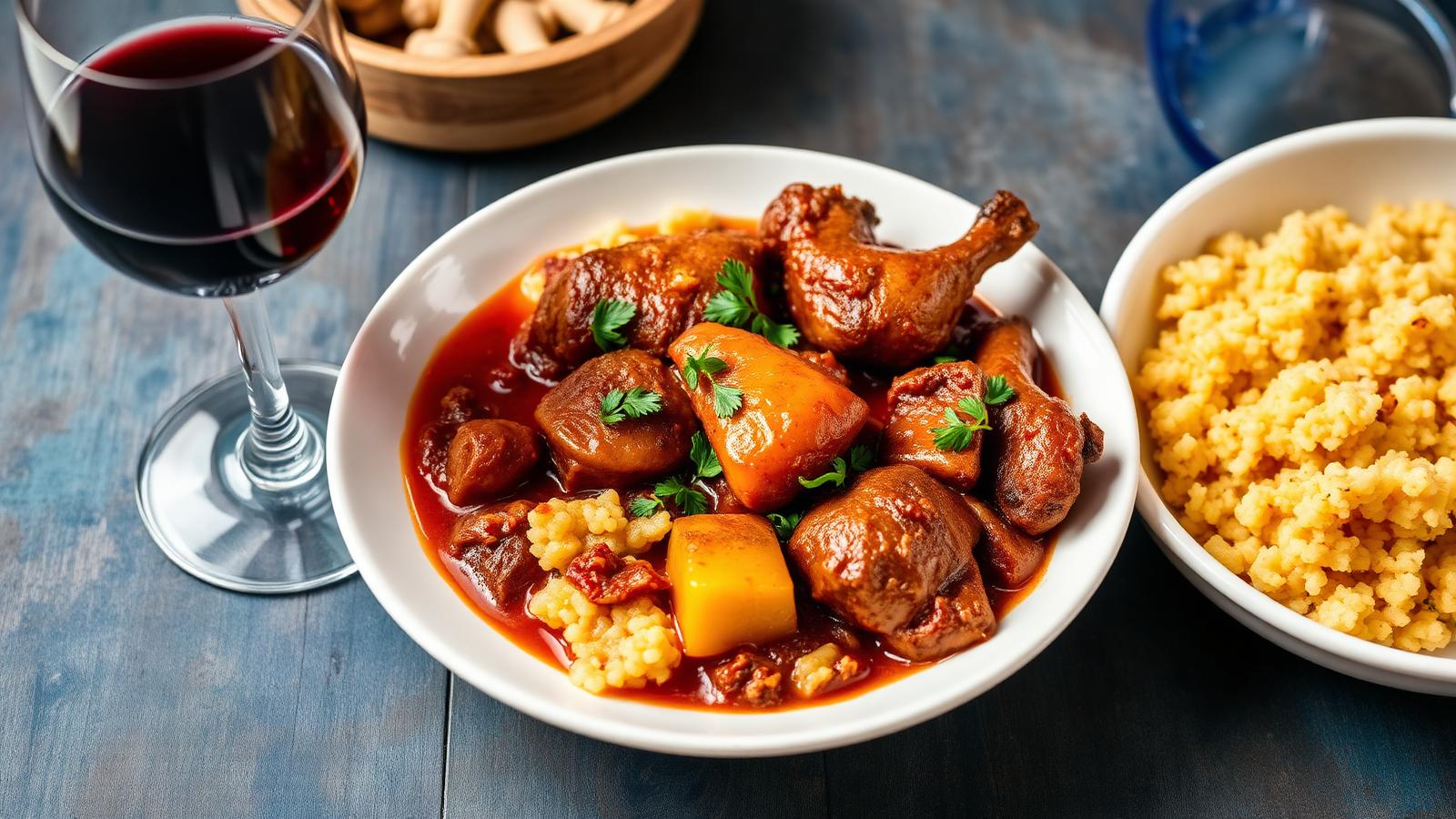
The Story Behind the Plate
Ivorian cooking is one of West Africa's most distinctive, built around attieke fermented cassava couscous, kedjenou slow-cooked chicken in earthenware, sauce graine palm nut stew, and the bold flavors of grilled fish with kedjenou. Foutou plantain and yam mash, aloko fried plantain, and the universal pepper sauce of fresh chili, onion and ginger complete the everyday table. Cote d'Ivoire does not produce wine of its own, with the country's agricultural identity firmly tied to cocoa, coffee and rubber production. The Ivorian wine table draws on French imports, with Burgundy whites for kedjenou, Beaujolais for grilled fish and Provence rose for the spicy everyday plates.
Why These Pairings Work
Ivorian food rewards wines that have body, bright acidity and just enough complexity to meet the slow-cooked depth of the cuisine. For kedjenou, a white Burgundy from Pouilly-Fuisse or Macon-Villages is the textbook match, with the rich, mineral Chardonnay standing up to the concentrated chicken or guinea fowl. For attieke with grilled fish or smoked tilapia, a Loire Sauvignon Blanc from Sancerre or a Spanish Albarino provides the lift needed. For sauce graine and palm-nut-based stews, a Cru Beaujolais like Morgon offers the bright fruit to balance the richness. For dessert fresh fruit and bissap, a small glass of Sauternes or a Beaumes-de-Venise Muscat is the friendly finish. Skip heavy oaked reds with Ivorian food. The cuisine is bright and pepper-forward, and the wine should follow.
The Match-Day Ritual
An Ivorian watch party is loud, generous and built around shared plates served continuously across the afternoon. The opening round usually includes aloko fried plantain with fresh pepper sauce, grilled fish skewers, and bowls of bissap or bouye baobab juice. The main course at halftime is often attieke with grilled tilapia and onions, or a kedjenou served from the earthenware pot. Wine pours alongside for the wine drinkers, while Flag beer remains the everyday national choice for many guests. Dessert is small and traditional: a bowl of fresh mango or pineapple, a slice of dégué millet pudding, finished with strong cafe touba spiced with djar grains.
Region Spotlight
Without a domestic wine industry, Ivorian wine culture has built itself around French imports, reflecting the historic French colonial influence. Burgundy whites from Macon and Pouilly-Fuisse lead the way for serious dining, while Beaujolais and Cotes du Rhone serve the everyday meal table. The Ivorian beverage scene is itself remarkable, with bissap hibiscus drink, bouye baobab juice, ginger juice and the universal cafe touba (a spiced coffee infused with djar pepper) all serving as serious matches for the country's cuisine. The cocoa industry, while not strictly a beverage, increasingly contributes to Ivorian craft chocolate that pairs beautifully with fortified wines and aged rums for dessert.
Serve your Pouilly-Fuisse at 11 degrees Celsius rather than ice cold. White Burgundy at this slightly warmer temperature reveals the hazelnut, white-flower and crushed-stone notes that flatter kedjenou's concentrated chicken broth, while still keeping enough chill to refresh between bites of attieke. Over-chilling mutes the aromatic complexity that makes the pairing special.