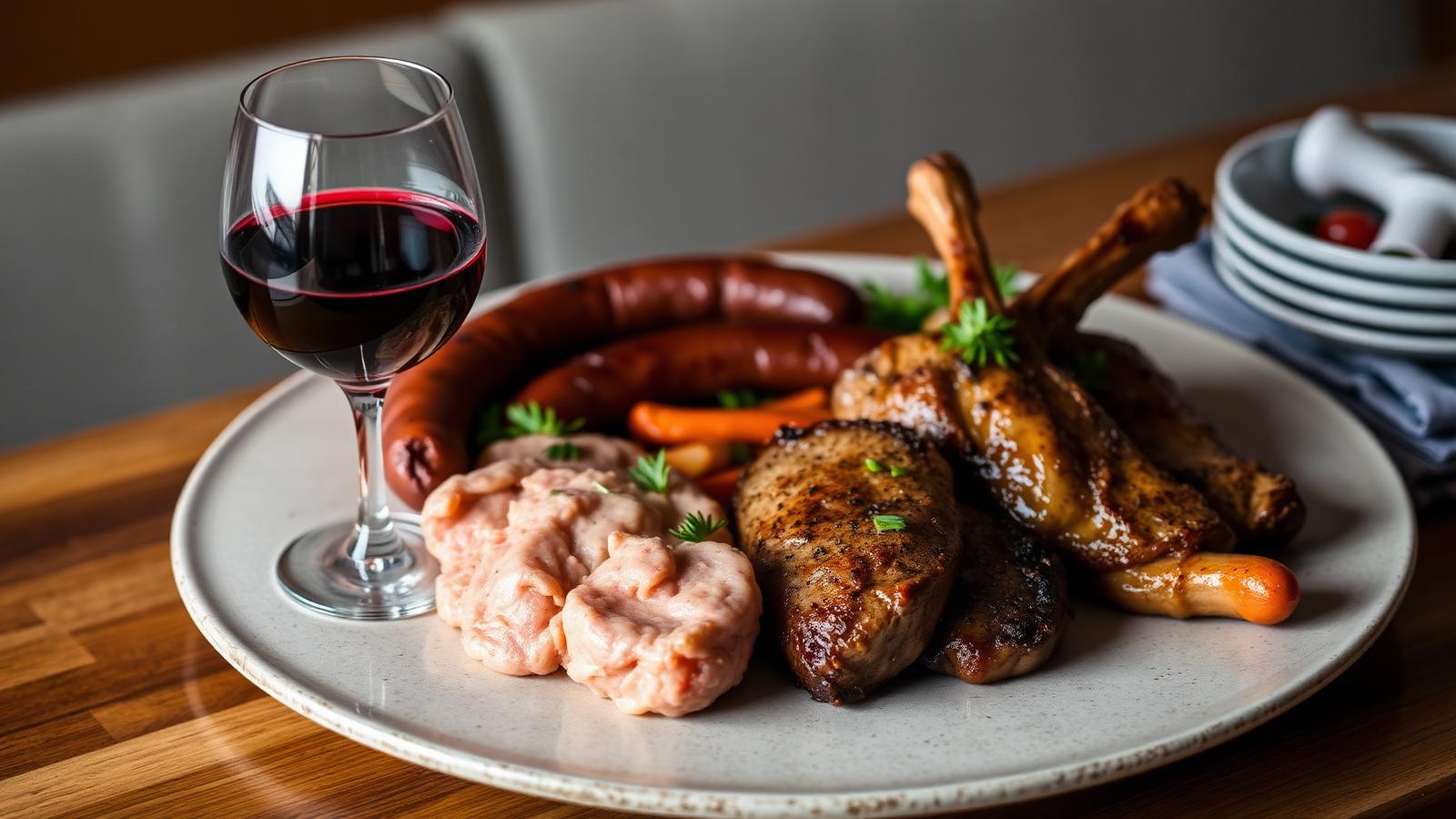
The Story Behind the Plate
South African cooking sits at a global crossroads, drawing on Dutch colonial, Cape Malay, English and indigenous African traditions into a single national cuisine. The Saturday braai is the country's most beloved ritual, with boerewors, lamb chops, sosaties and pap on the menu. Bobotie, the curried-mince Cape Malay classic with sweet egg-and-milk topping, is the country's most distinctive dish, while bunny chow from Durban, biltong, koeksisters and milk tart all carry deep tradition. South African wine has emerged as one of the world's most exciting categories in the past two decades, with old-vine Chenin Blanc, Hemel-en-Aarde Pinot Noir and Swartland Syrah leading a quality revolution that has changed how the world sees the country.
Why These Pairings Work
South African food pairs beautifully with South African wine, and the regional logic is clear. For the Saturday braai, especially boerewors and lamb chops, a Swartland Syrah from Mullineux or a Kanonkop Pinotage provides the smoky depth and dark fruit the dish demands. For bobotie, a cool-climate Pinot Noir from the Hemel-en-Aarde Valley, especially from Hamilton Russell or Storm, has the elegance to flatter the sweet-spiced topping without overwhelming the curried mince. For grilled fish and seafood from the Cape coast, a Chenin Blanc from Stellenbosch or Swartland is the textbook match. For dessert, a Vin de Constance Muscat from Klein Constantia continues the historic dessert wine tradition that Napoleon famously requested on St. Helena.
The Match-Day Ritual
A South African watch party almost always centers on the braai if the weather allows. The fire is lit at least an hour before kickoff with hardwood like blue gum or kameeldoring, and the first round of boerewors goes on early to feed the early arrivals. Lamb chops, sosaties and the centerpiece sirloin or rump arrive in waves as the match progresses, always with pap and chakalaka on the side. South African Pinotage, Syrah or a Bordeaux-style blend like Rust en Vrede pours throughout. Salads of beetroot, butternut and a sharp green dressing balance the meat. Dessert is melktart with a sprinkle of cinnamon, or a koeksister dripping with syrup, finished with rooibos tea or a small glass of Cape Tawny.
Region Spotlight
Stellenbosch and Franschhoek remain South Africa's most internationally recognized wine regions, producing structured Bordeaux-style blends from producers like Kanonkop, Rust en Vrede, Vergelegen and Glenelly. The Swartland, an hour north of Cape Town, has emerged as the country's most exciting region, with old-vine Syrah and Chenin Blanc from Mullineux, Sadie Family and AA Badenhorst redefining what South African wine can be. The Hemel-en-Aarde Valley near Hermanus is the country's Pinot Noir capital, with Hamilton Russell and Storm producing cool-climate wines that compete with Burgundy. Klein Constantia continues the historic Vin de Constance dessert wine tradition that has been celebrated since the 18th century.
Open your South African Pinotage at least 45 minutes before kickoff and decant if possible. Pinotage benefits enormously from aeration, which softens its smoky edge and brings out the dark plum and chocolate notes that flatter braai meats. A 25-dollar Kanonkop Kadette tastes like a 45-dollar wine after an hour in a decanter.