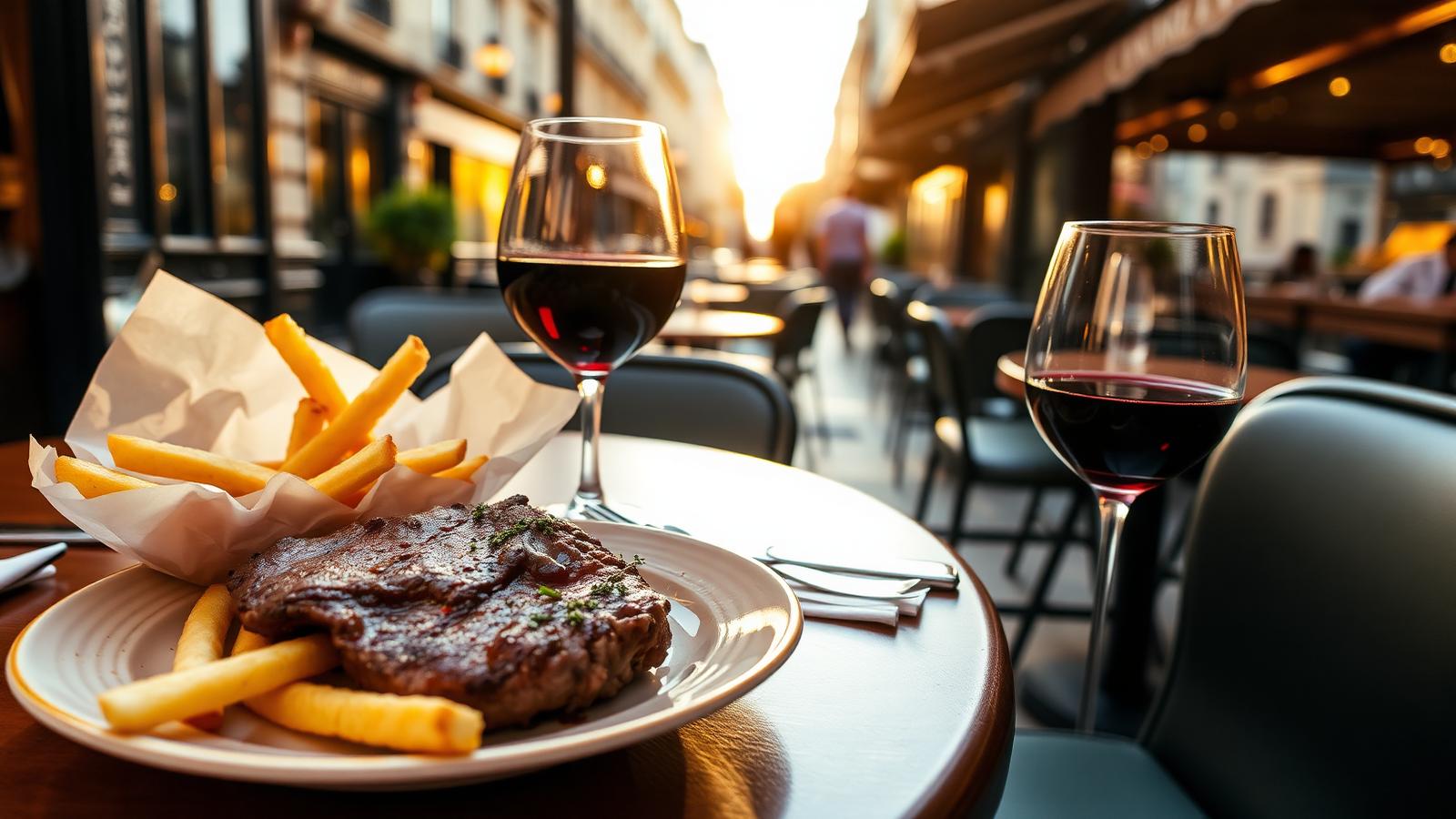
The Story Behind the Plate
France enters the World Cup with arguably the deepest food-and-wine culture on the planet, and a watch-party menu can draw from any region: bistro steak frites and coq au vin from Paris and Burgundy, bouillabaisse and pissaladiere from Provence, choucroute from Alsace, cassoulet from the Southwest. The challenge for hosts is not finding a French wine to match: it is choosing among the dozens of regions that could legitimately appear on the table. The French approach to a long meal is to pour multiple wines in sequence, each chosen to flatter one specific dish, rather than forcing a single bottle to span the entire evening.
Why These Pairings Work
The French pairing principle is what the locals call the marriage of terroir, meaning a regional dish is almost always best with a regional wine. Coq au vin from Burgundy belongs next to a village-level red Burgundy. Cassoulet from Toulouse belongs next to a Madiran or a Cahors. Steak frites from any Paris bistro reaches its peak with a Cru Beaujolais or a Cotes du Rhone Villages. For watch-party hosting, the simpler version of this rule is to pick one French region and stay loyal to it for the night. A Burgundy table might pour a Chablis with starters, a Cote de Beaune Pinot Noir with the main course and a touch of Marc de Bourgogne to close. A Rhone table would run from Tavel rose to Cotes du Rhone to Chateauneuf-du-Pape.
The Match-Day Ritual
The French watch party is a long, civilized affair built around an aperitif hour and a real meal at halftime. Open with Champagne or Cremant and a board of cured meats, cornichons and pickled radishes. The main course lands during the halftime break: steak frites with bearnaise, or a one-pot coq au vin if the host wants to stay seated for the second half. The cheese course follows the match, with three or four selected by texture and origin, served at room temperature with crusty bread. Espresso and a small glass of Calvados or Armagnac end the evening. Throughout, wine glasses are kept half full so the wine has room to breathe and aromatics have room to bloom.
Region Spotlight
Burgundy remains the spiritual home of French wine, with 84 distinct appellations carved from a 50-mile sliver of land south of Dijon. Pinot Noir and Chardonnay reach their global pinnacle here, particularly in the Cote de Nuits (Nuits-Saint-Georges, Gevrey-Chambertin, Vosne-Romanee) and Cote de Beaune (Meursault, Puligny-Montrachet). The village-level wines from these communes are often more interesting than premier crus from lesser areas. Bordeaux, in contrast, is built around Cabernet- and Merlot-based blends from Left Bank communes like Pauillac and Saint-Julien (Cabernet-dominant, structured and age-worthy) and Right Bank appellations like Saint-Emilion and Pomerol (Merlot-dominant, plush and approachable younger).
If you are pouring red Burgundy, slightly under-chill it: 14 to 16 degrees Celsius rather than full room temperature. Modern centrally heated rooms run too warm for delicate Pinot Noir, and the wine tastes flabby and alcoholic when served above 18 degrees. A quick 15 minutes in an ice bucket before kickoff will transform the bottle.