The Story Behind the Plate
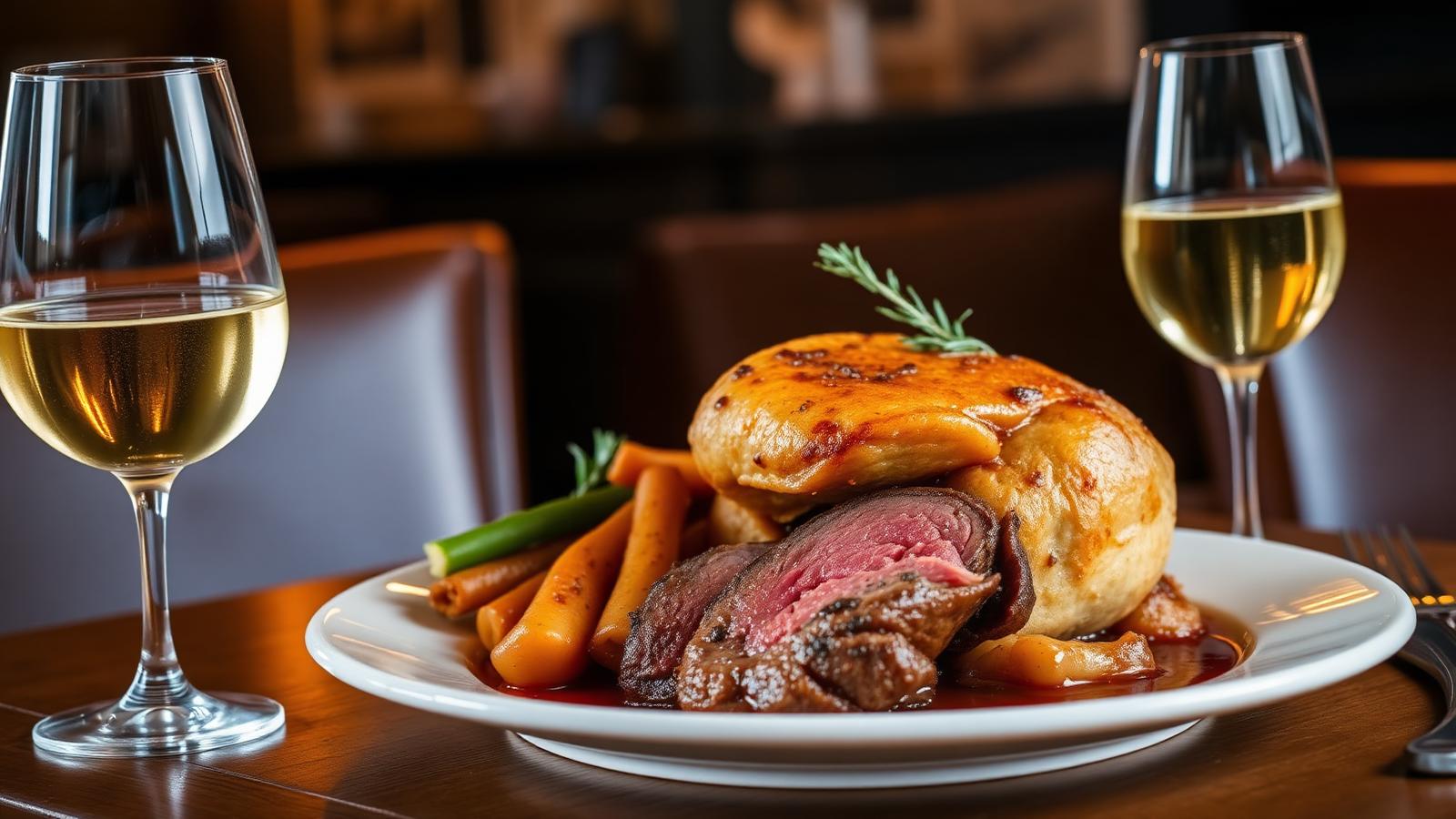
English food has undergone a quiet revolution over the past two decades, moving from a punchline to a serious global cuisine. The Sunday roast remains the centerpiece of English domestic cooking, with beef, lamb or chicken roasted alongside Yorkshire pudding, roast potatoes and gravy. Fish and chips remain the Friday night standard. Add in pub classics like pies, sausages and mash, and ploughman's lunches with Stilton and pickles, and the watch-party menu writes itself. The bigger surprise is English wine: in 30 years the country has gone from producing a few thousand bottles of curiosity to making world-class traditional-method sparkling that competes directly with Champagne. An England match deserves an English bottle on the table.
Why These Pairings Work
English sparkling wine works for an English watch party because the chalk soils of Sussex and Kent give the same minerality and tight acidity that defines Champagne. Nyetimber, Gusbourne, Chapel Down and Hambledon are the benchmark producers. For roast beef, an English sparkling rose has the structure and red-fruit notes to handle the meat without overpowering the Yorkshire pudding. For fish and chips, a still Bacchus from Kent offers exactly the citrus bite that malt vinegar provides, making it almost a textbook pairing. For the cheese course, especially with mature Cheddar or Stilton, switch to a vintage port or a Pedro Ximenez sherry. England has always borrowed wines from across the Channel, and the World Cup is no time to break that tradition.
The Match-Day Ritual
The English watch party tends to combine pub and home rituals. A pre-match pint at the pub, then back home for the actual match if the venue is too crowded. The home menu starts with snacks: sausage rolls, pickled onion crisps, scotch eggs, a board of cheese and Branston pickle. At halftime, fish and chips arrive from the chippy or a quick mid-match curry from the local Indian, ideally a chicken tikka masala (which English public opinion has long claimed as the national dish). Pours follow the same flow: English sparkling on arrival, a glass of Bacchus or a Cru Beaujolais with the main, port and Stilton for extra time. The full-time whistle is celebrated with another round of bubbles, regardless of the result.
Region Spotlight
Sussex and Kent dominate English wine for one geological reason: chalk. The same chalk seam that surfaces in Champagne runs under the English Channel and re-emerges in the South Downs and along the Kent coast. The cool maritime climate gives the long, slow ripening that traditional-method sparkling demands, and acidity levels in English base wines often resemble those in Champagne in cool vintages. Beyond sparkling, look to Cornwall's Camel Valley for elegant still Bacchus, to Hampshire for Hambledon's elegant Blanc de Blancs, and to Essex's Crouch Valley for the country's most promising still Chardonnay and Pinot Noir.
Pour English sparkling slightly warmer than Champagne (around 9 degrees Celsius rather than 7) to bring out the apple and brioche notes. English bubbles are leaner than Champagne by nature, so over-chilling mutes the aromatics. A 15-minute rest out of the ice bucket before serving makes a noticeable difference.