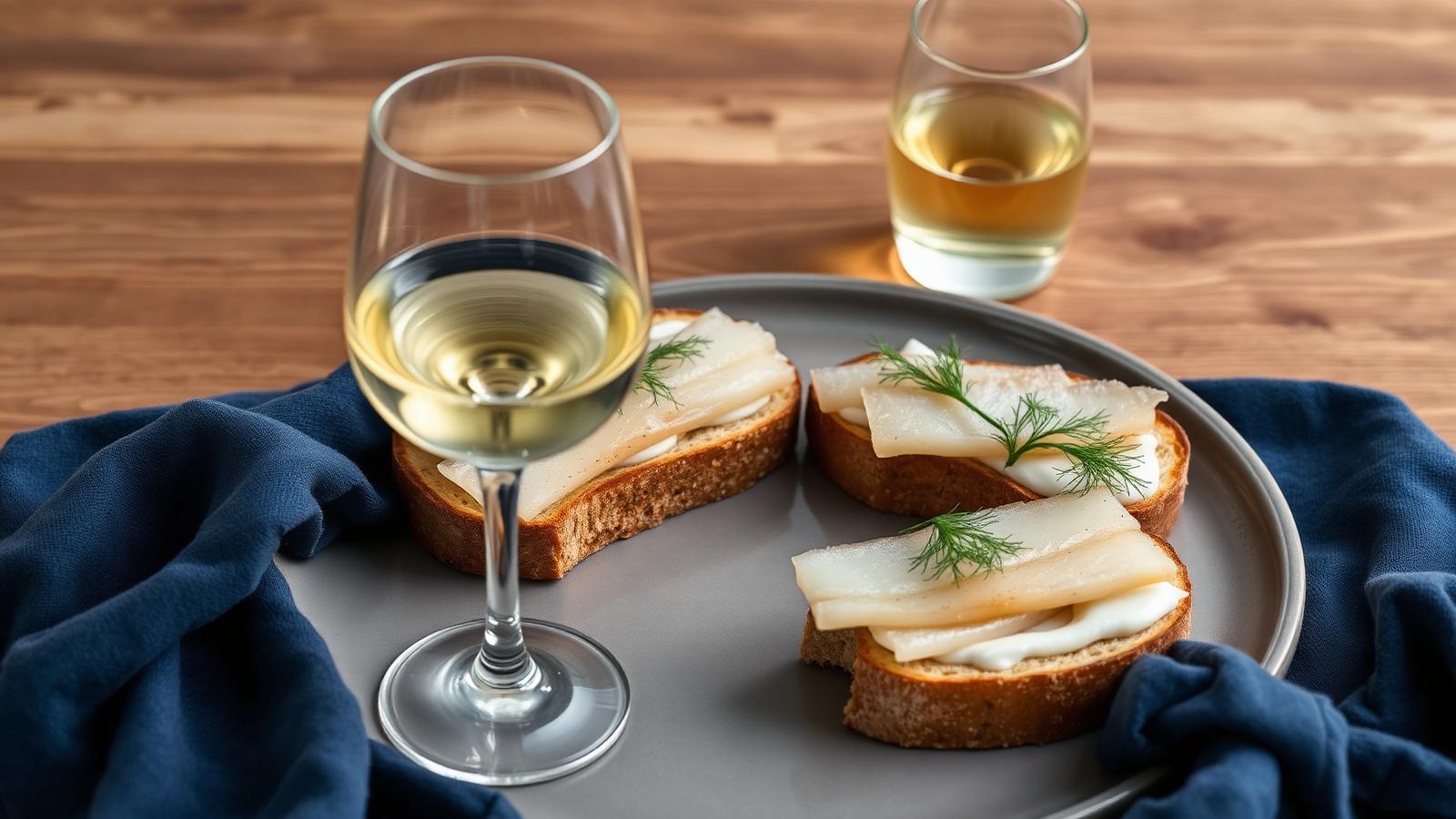
The Story Behind the Plate
Modern Danish cuisine has become a global reference point in the past two decades, with restaurants like Noma rewriting what Scandinavian cooking can mean. But the everyday Danish table remains rooted in centuries-old traditions: smorrebrod open-faced sandwiches on dense rye bread, frikadeller meatballs with potatoes and brown gravy, stegt flaesk pork belly with parsley sauce, and the ritual Christmas duck. Denmark produces almost no wine of its own, so Danish wine culture leans heavily on Germany, Alsace and Austria for the bone-dry, food-friendly whites that pair best with the country's pickled, smoked and cured flavor profile.
Why These Pairings Work
Danish cooking is a study in salt, vinegar, dill and rye, all of which reward wines with bright acidity and minimal oak. Bone-dry German Mosel Riesling is the universal smorrebrod wine, particularly with pickled herring, gravlaks and shrimp salad. For richer dishes like frikadeller or stegt flaesk, an Alsace Pinot Blanc or a Cru Beaujolais provides just enough body without overwhelming. For traditional Christmas duck with prunes and apples, an off-dry Spatlese Riesling is the textbook match. Skip oaked Chardonnay and heavy reds. Danish cuisine prizes restraint, and the wine should follow that lead.
The Match-Day Ritual
A Danish watch party reflects the broader cultural value of hygge. Lit candles even in the afternoon, blankets on the sofa, and a long table set carefully with shared boards. Smorrebrod typically anchors the spread, with three or four different toppings prepared in advance and arranged on dense rye. Frikadeller with potatoes and pickled cucumbers often follows at halftime. Mosel Riesling pours throughout the wine drinkers, while a chilled Aquavit shot accompanies the herring course for anyone who wants the full Scandinavian experience. Dessert is small: a slice of rhubarb tart with cream or a piece of marzipan with coffee.
Region Spotlight
Without a meaningful domestic wine scene, Danish wine culture has effectively adopted the Mosel Valley as its house cellar. Bone-dry Riesling from producers like Selbach-Oster, Egon Muller, Dr. Loosen and J.J. Prum is on virtually every serious Danish wine list. The Pfalz contributes richer dry Rieslings for heartier dishes, while Alsace provides Pinot Blanc, Sylvaner and Pinot Gris for variety. For sparkling, Cremant d'Alsace and traditional-method German Sekt have become favorites, especially for celebratory moments. A small Danish wine scene is emerging in southern Funen and Lolland, with Pinot Noir and Solaris showing modest promise.
Chill your Mosel Riesling to 8 degrees Celsius and pour small portions. Mosel Riesling at Kabinett level is naturally low in alcohol, often 8 to 9 percent, which means it stays drinkable across an entire afternoon without losing focus. Refill often rather than pouring large glasses that warm up before they are finished.