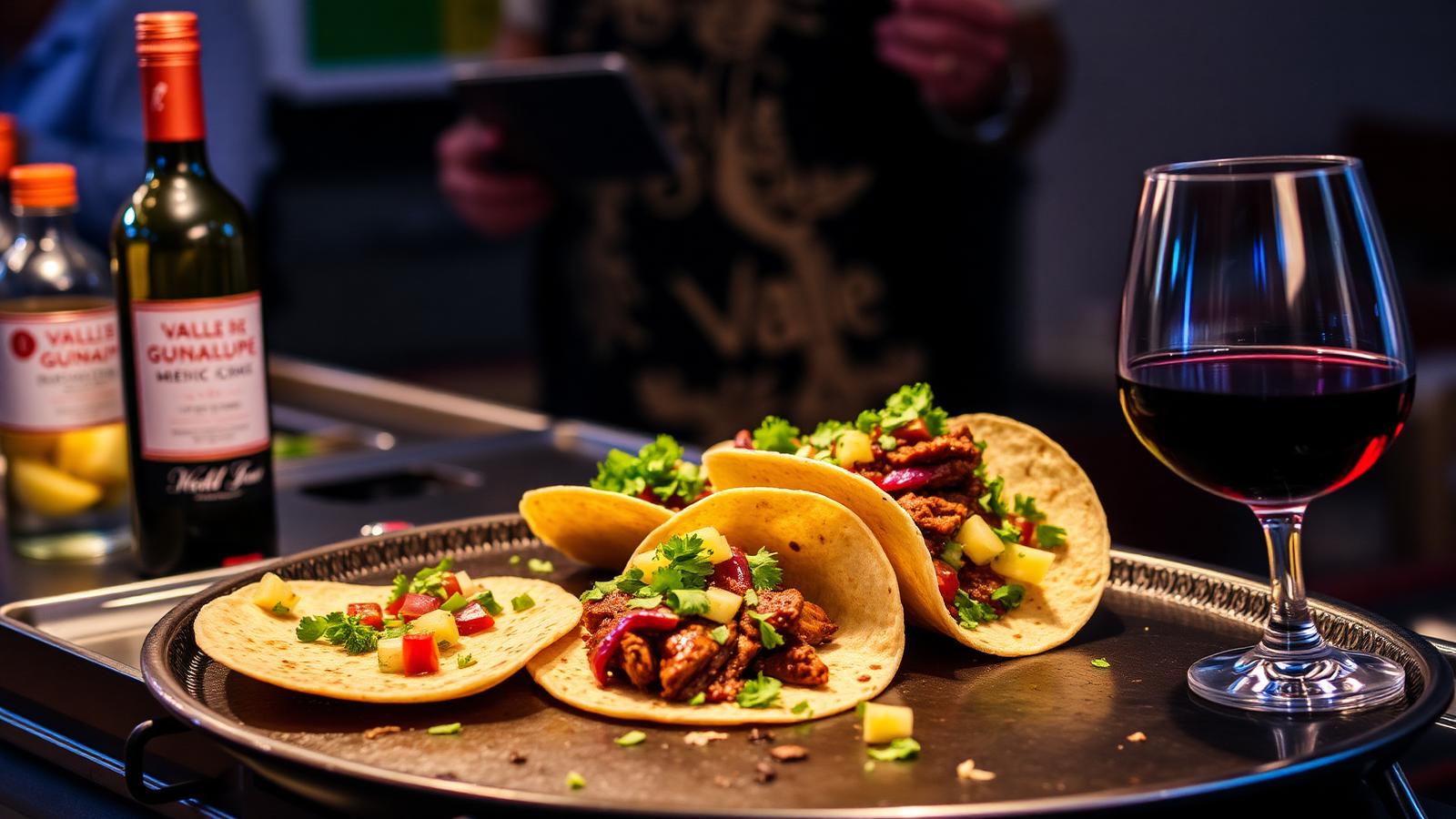
The Story Behind the Plate
Mexico hosts the 2026 World Cup with the deepest culinary tradition of any participating nation. Tacos al pastor with pineapple shaved from the trompo, mole negro from Oaxaca with its twenty-plus ingredients, cochinita pibil from the Yucatan wrapped in banana leaves, tamales steamed for hours, fresh ceviche from Sinaloa. These dishes belong to a country UNESCO recognized as having a globally important cuisine. Less known internationally is that Mexico is also a serious wine country. The Valle de Guadalupe in Baja California, just south of San Diego, has been producing world-class wine for over a century and is finally getting the recognition it deserves.
Why These Pairings Work
The biggest mistake with Mexican food is reaching for a big oaky Cabernet. High alcohol and heavy tannin amplify chile heat instead of taming it. The better path is fruit-forward, medium-bodied reds with bright acidity: Valle de Guadalupe Nebbiolo, Spanish Garnacha, Beaujolais and Tempranillo are all excellent choices. For mole, which carries dried chile, chocolate and dried fruit, a slightly oaked Tempranillo or a Northern Rhone Syrah meets the dish in the middle. For lighter dishes, especially fish tacos and aguachile, a saline Albariño or a Sauvignon Blanc from Casablanca, Chile is the right call. And always remember the original Mexican pairings: agua de jamaica, horchata and tamarindo are not afterthoughts. They are part of the cuisine.
The Match-Day Ritual
Mexico match days are loud, late, family-driven and built around a long taqueria-style table. Start the afternoon with chips, fresh salsa and guacamole, paired with a chilled Mexican Sauvignon Blanc or a glass of bone-dry Cava. When the match starts, fire up the carne asada or al pastor on the comal and put out warm tortillas, lime wedges, salsa verde, salsa roja and pickled red onions. The main wine on the table should be a Valle de Guadalupe red poured into stemless glasses or even tumblers, in the casual Mexican wine-bar tradition. For dessert, serve flan or churros with a small glass of mezcal for the adults and a horchata for everyone else.
Region Spotlight
The Valle de Guadalupe is a Mediterranean-climate valley about 90 minutes south of the U.S. border, with sandy granite soils, ocean-cooled summer nights and a winemaking tradition stretching back to the 16th-century Jesuit missions. Today over 150 wineries operate there, including Monte Xanic, L.A. Cetto, Casa de Piedra, Vena Cava and Adobe Guadalupe. The grapes that thrive are Mediterranean and Spanish in origin: Tempranillo, Grenache, Nebbiolo, Cabernet Sauvignon, Chenin Blanc and Viognier. The valley has also become one of North America's most exciting culinary destinations, with chefs like Drew Deckman and Diego Hernandez running open-air restaurants that pair wood-fired Baja cuisine with neighboring wines.
Serve your Valle de Guadalupe red slightly chilled, around 14 to 15 degrees Celsius. Cooler temperatures lock in the fresh fruit and tame the alcohol, which is critical when you are pairing with chile heat. A 20-minute trip in an ice bucket before pouring transforms the wine.