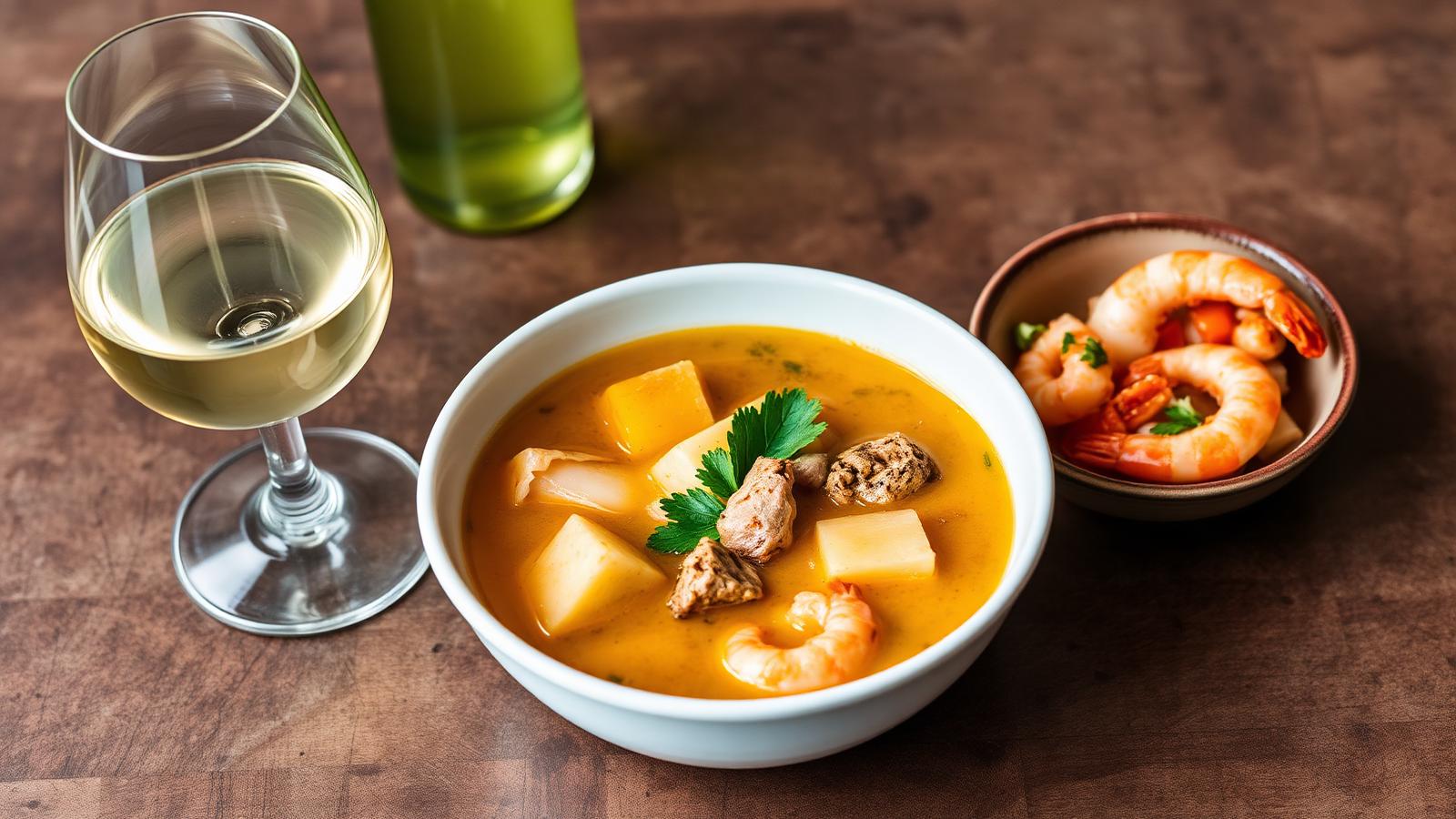
The Story Behind the Plate
Panamanian cooking sits at the intersection of Caribbean, Pacific and Central American traditions, with sancocho as the national soup, ceviche as the beloved Pacific snack, and ropa vieja as the comforting Sunday classic. Patacones twice-fried green plantains accompany almost every meal, while empanadas, hojaldres fried dough and arroz con pollo round out the everyday table. Panama does not produce wine of its own, so the wine table draws on Spain and Chile, with Albariño leading for seafood and Carmenere for richer meat dishes. The cuisine prizes brightness, herbs and citrus, all of which reward wines with acidity and restraint.
Why These Pairings Work
Panamanian food pairs best with wines that refresh rather than dominate. For Pacific ceviche, an Albariño from Rías Baixas is the textbook match, with its saline and citrus character echoing the lime cure and the freshness of the seafood. For sancocho, a chilled Beaujolais Villages or a Chilean Pinot Noir provides the lift the citrusy broth needs without overwhelming the chicken and root vegetables. For ropa vieja and grilled meats, a Chilean Carmenere from Maipo offers the herbal lift and plush fruit needed. For lighter dishes like arroz con pollo or hojaldres, a Sauvignon Blanc from Casablanca is the friendly everyday choice. Skip oaked Chardonnay and heavy reds with Panamanian food. The cuisine is bright and herbal, and the wine should follow.
The Match-Day Ritual
A Panamanian watch party is generous and family-centered, often built around shared plates and steady refilling of small dishes. The opening round usually includes ceviche, patacones with hogao sauce and bowls of mixed nuts. The main course at halftime is often sancocho served from a large pot, or a tray of carne asada with rice and beans. Albariño or Carmenere pours throughout, with Panamanian rum cocktails serving as the late-match alternative. Dessert is small and traditional: a slice of bienmesabe, hojaldres dusted with powdered sugar, or fresh tropical fruit, finished with strong Panamanian coffee from Boquete.
Region Spotlight
Without a domestic wine scene, Panamanian wine drinking is shaped by Spanish and Chilean imports. Albariño from Rías Baixas has become the unofficial Pacific seafood wine of Panama City, with its salinity perfectly matched to ceviche and grilled fish. Chilean Carmenere from Maipo and Colchagua leads the red wine category for richer dishes, while Argentine Malbec from Mendoza serves the steak nights. The newer trend is Panamanian specialty coffee from Boquete entering global wine pairings, with the country's award-winning Geisha coffee variety appearing on tasting menus across Central America.
Serve your Albariño in a wider white-wine glass rather than a flute or tulip. The wider bowl releases the saline minerality and grapefruit notes that make Albariño the perfect ceviche wine, and the slightly slower warming in the glass keeps the wine crisp across a long Panamanian afternoon.