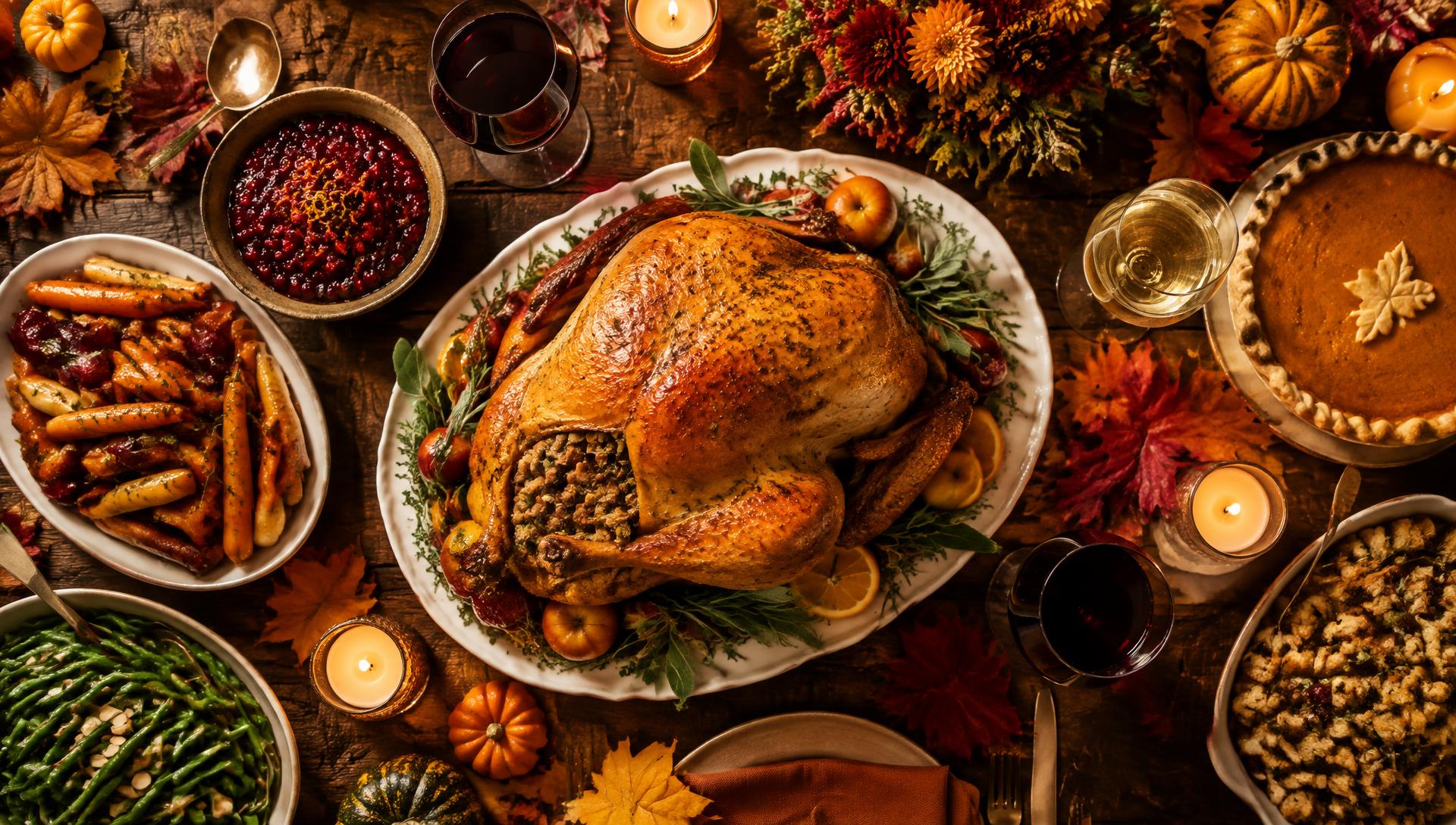
The Thanksgiving Wine Guide 2026
Fifteen dishes, one table. The two-bottle plan, the bottle math and the pairings from turkey to pie.
Thanksgiving is the hardest pairing day of the year, and it is not close. No other meal asks one table to hold roast poultry, three different starches, something with marshmallows on it, two vegetables cooked with bacon, a salad with dried cranberries and a dessert course — all at the same time, on the same plate. There is no perfect wine for that. There is, however, a playbook.
This is the 2026 edition: the strategy, the two-bottle plan, the dish-by-dish matches, the bottle math, and the fix for every way the day usually goes wrong.
The Strategy: Pour Wines That Never Fight
Thanksgiving dinner has three landmines: sweetness (candied yams, cranberry sauce, glazed carrots), herbs and stuffing (sage, thyme, savory), and sheer volume (fifteen dishes, one palate). The wines that fail are the extremes — big tannic Cabernet turns bitter against sugar, and delicate wine disappears entirely under the gravy.
What survives everything: high acidity, moderate alcohol, soft tannin, ripe fruit. Pinot Noir, Gamay, dry Riesling, Chenin Blanc, Grenache, sparkling. If a bottle would be great with roast chicken and good with a slice of quiche, it will be great on Thursday.
The Two-Bottle Plan
If you want the whole decision made in one trip: buy a Pinot Noir and a dry Riesling. That pair covers the table better than any other combination at any price point. Willamette Valley, Burgundy, Sonoma Coast or a German Spätburgunder for the red; Alsace, the Finger Lakes, Clare Valley or the Mosel for the white. Both serve at cool temperatures, both handle sweetness and herbs, and neither punishes a guest for building the wrong bite.
Upgrade for a bigger table: add a sparkling for the welcome pour and grazing hour, and a Zinfandel or Grenache for the dark-meat and gravy loyalists.
Dish by Dish: The 2026 Matches
Turkey, white meat: the most forgiving food on the table. Chardonnay, Chenin, Riesling, Pinot, Gamay — everything works. Do not spend your best bottle here.
Turkey, dark meat and gravy: this is where the meal actually gets rich. Pinot Noir with a few years of age, or a Sonoma Coast version, is the move.
Stuffing and sage: herbal, savoury, bready. Grenache, Syrah from the northern Rhône, and white wines with some skin contact all echo the herbs. Beaujolais Cru never misses.
Cranberry sauce: tart and sweet at once. The wine needs equal acidity — Pinot, Gamay, dry Riesling. Tannic reds taste metallic against raw cranberry.
Sweet potato casserole and candied yams: meet the sweetness or lose. Off-dry Riesling, Gewürztraminer, or a fruit-forward Zinfandel.
Green bean casserole and brussels sprouts: the sulphur compounds in brassicas are why the table needs at least one white. Riesling and Grüner Veltliner handle it; most reds do not.
Vegan and vegetarian plates: mushroom wellington, lentil loaf, roasted squash. Umami loves Pinot — a mushroom-centred plate is the best pairing on the table for an aged Pinot Noir. A vegan mushroom gravy widens the red options for the whole table.
Bottle Math and Serving Temperature
The standard: one bottle per two adults across a four-hour meal, plus two spares per eight guests. A table of ten: two sparkling, three red, two white, one sweet for the pie. Round up; leftover wine is a Friday problem, not a Thursday one.
Temperature is the most common failure. A house at 22°C with the oven running pushes reds past 20°C, where alcohol reads hot and fruit turns to jam. Pull reds down to 16–17°C — thirty minutes in the fridge before serving. Whites at 10–12°C, not fridge-cold. Open the reds when the first guests arrive, not when dinner is plated.
The Dessert Pour
The rule for pie: the wine must be sweeter than the dessert, or it tastes like nothing. Pumpkin and pecan want Tawny Port, Sauternes, a German Auslese Riesling or an Icewine, in small glasses at 8–10°C. Apple pie leans toward late-harvest Vouvray or a demi-sec sparkling. One 375ml bottle per four dessert-eaters is plenty.
Troubleshooting the Table
The uncle who only drinks Cabernet: let him. Put a Napa Cab on the table anyway; it pairs fine with the plain turkey and the rolls. Thanksgiving is not the day to convert anyone.
Nobody drinks: stock a proper non-alcoholic lane so it is a choice, not an afterthought. A good dealcoholized sparkling, a non-alcoholic Riesling-style white, and sparkling cider cover the table with the same ceremony.
Cocktail hour runs long: pour something low-alcohol and food-friendly — a Cru Beaujolais or a dry rosé — so the table is not three glasses deep before the bird comes out.
Hand It to the iQ Sommelier
List your actual menu in the iQ Sommelier — including the marshmallow situation — and it returns pairings scaled to your table, your budget and your guests' diets, each with a lower-cost twin. It is the fastest way to walk into the store on Wednesday with a list instead of a prayer.