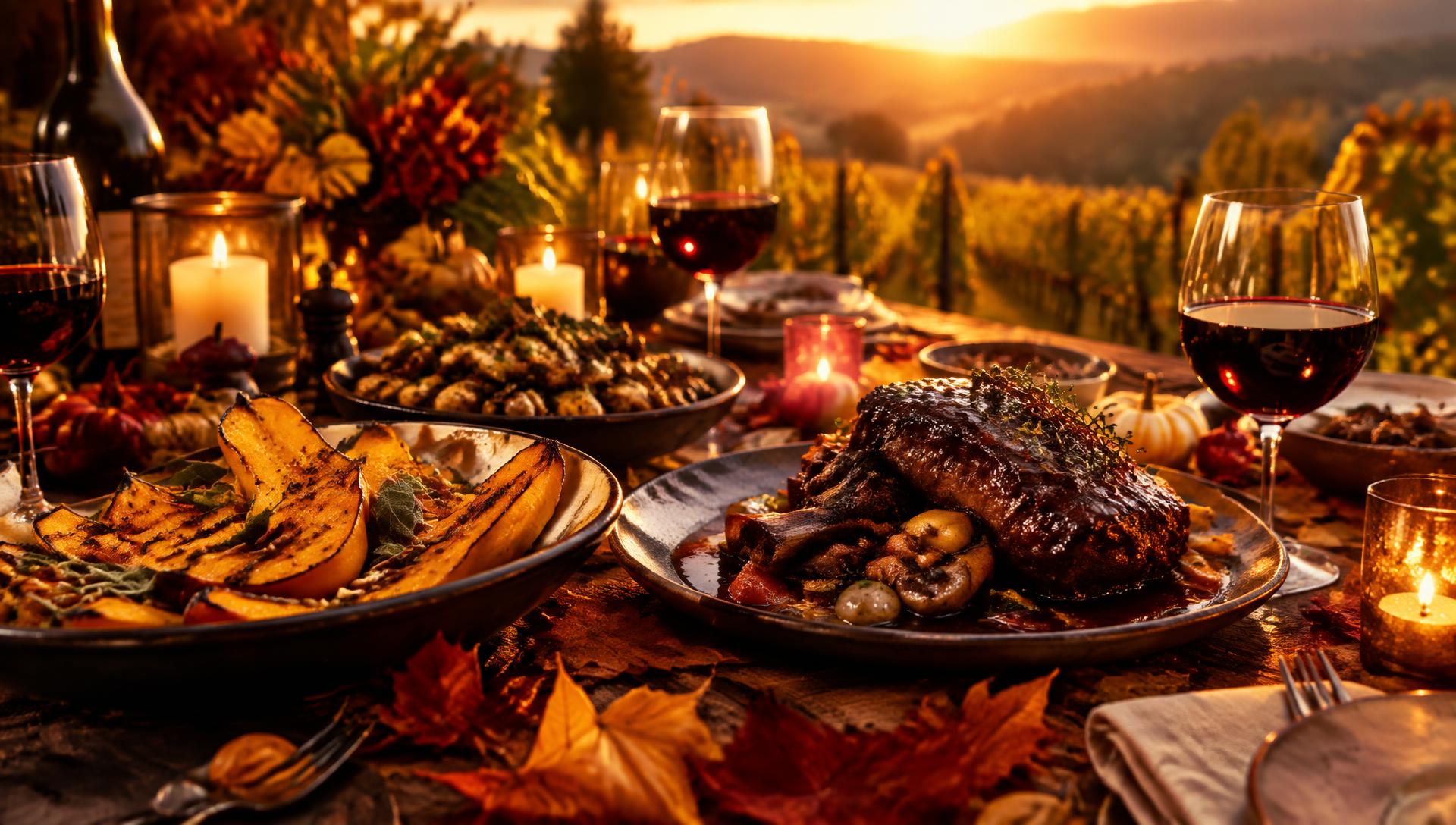
Autumn Pairings 2026: The Harvest Table
Squash, mushrooms, braise and roast birds — the wines that match the season's weight.
Something shifts in the kitchen the first week of September. The grill stops calling. The oven comes back on. Squash, mushrooms, apples and root vegetables start stacking up on the counter, and the wine that felt so right in July suddenly tastes thin against the food. Autumn is the season when pairing gets interesting again, because the dishes finally have the weight that wine was built for.
This is the harvest table playbook for 2026: the four foods that define the season, the wines that match them, and the temperature and glassware details that make the difference between a good pour and a great one.
The Squash Question: Sweetness Meets Structure
Butternut, acorn, delicata and pumpkin share a profile that trips up a lot of tables: they are sweet, dense and faintly nutty, and they carry whatever fat you cook them in — butter, brown butter, sage oil, coconut milk. A lean, mineral white can taste hollow next to all that. You have two directions.
The first is matching richness with richness. A lightly oaked Chardonnay, from Sonoma Coast to Mâcon, has the body to stand beside a squash risotto and enough acid to reset the palate. White Rhône blends — Marsanne and Roussanne from Crozes-Hermitage or California's Central Coast — bring beeswax and stone-fruit notes that love sage and roasted garlic.
The second is playing the sweetness instead of fighting it. A dry-ish Gewürztraminer from Alsace or the Finger Lakes echoes squash's sweetness with lychee and spice. A German or Washington Riesling with 8 to 15 grams of residual sugar turns a maple-glazed roast squash into something that tastes composed rather than cloying. This is also the move for squash soup with a swirl of cream.
Mushrooms: The Most Wine-Friendly Food on Earth
If you only learn one autumn pairing rule, make it this one: umami loves Pinot. Mushrooms share the same forest-floor chemistry as aged Pinot Noir, and the pairing is mutual — the wine tastes more savoury, the dish tastes more profound.
For a vegan mushroom bourguignon, the classic move is Burgundy itself: a village-level Gevrey or Savigny. Oregon Pinot from Willamette Valley does the same job with brighter fruit, and if you want value, a Mondeuse from Savoie or a Blaufränkisch from Austria delivers a similar earthy snap at half the price. Serve all of them around 14°C — cooler than you think.
Heartier mushroom dishes — a wild-mushroom pappardelle, a mi-cuit mushroom tart with taleggio — can take a step up in power. Aged Barolo and Brunello di Montalcino have the tannin to match a ragù built on dried porcini. Northern Rhône Syrah, with its olive tapenade and peppercorn edge, is the sleeper pick for mushrooms cooked with thyme and shallot.
The Braise: Where Autumn Reds Earn Their Keep
Short rib, oxtail, lamb shoulder, beef bourguignon — braises are the reason cellars exist. Three hours of slow cooking turns collagen into gelatin and builds a sauce with real structure, and that structure demands a red with tannin and dark fruit. Thin wines get flattened; oaky wines turn bitter against the caramelized edges.
The reliable lineup for braised short rib: Cabernet Sauvignon from Napa or Coonawarra for classic cassis-and-cedar match, left-bank Bordeaux when the braise includes mushrooms and thyme, Rioja Reserva for a more savoury, leathery take at a friendlier price, and Barossa Shiraz when the glaze tips toward sweetness or barbecue. Decant for thirty minutes and serve at 17°C.
A note on the sauce: if the braise is finished with something sweet — a fig glaze, a spoon of quince — pick a wine with its own ripe fruit and soft tannins. A Zinfandel or a warm-climate Grenache blend keeps pace where a leaner red would clash.
Roast Birds and the Bridge Whites
Herb-roast chicken is the great diplomat of the autumn table: it gets along with almost everything, which makes it the test case for your guest list. A white Burgundy or a quality California Chardonnay covers the traditionalists. An Oregon or Burgundian Pinot Noir covers the red drinkers and, honestly, is the better match for the crispy skin and thyme jus. If the table wants one bottle to rule them all, that Pinot is it.
For duck — and you should roast a duck this season — the pairing gets more specific. Duck breast with a cherry or port reduction wants Pinot Noir with ripe fruit: a Sonoma Coast, a Central Otago or a Chilean Pinot from Casablanca. Duck confit with white beans, being fattier and more savoury, opens the door to Madiran, Cahors or a Syrah.
Serving Temperatures: The Detail That Changes Everything
Autumn is when homes are warmest indoors — heating on, oven running, table full — and warm rooms push red wine past the point where it tastes balanced. Alcohol reads hotter, fruit turns to jam, and structure disappears.
The fix is simple. Pull your big reds down to 16–18°C, which usually means thirty minutes in the fridge before dinner. Light reds like Gamay sit at 13–14°C. Full whites pour at 10–12°C, not fridge-cold, or the oak and texture go mute. Keep a thermometer or just plan the timing; the improvement is immediate and guests notice even if they cannot name it.
The Value Line
Autumn pairing does not require rare bottles. If you want one shopping list that covers the whole season: a Mâcon-Villages or Sonoma-Cutrer-level Chardonnay for squash and birds, a village Beaujolais-Crus like Morgon or Fleurie for mushrooms and lighter nights, a Rioja Reserva or Côtes du Rhône Villages for weeknight braises, and one bottle-you-actually-remember Cabernet or Barolo for the night the short ribs come out. Four shelves, one season, no stress.
Let iQ Do the Math
Every pairing rule in this article is baked into the iQ Sommelier. Tell it what you are cooking — butternut squash lasagna, mushroom bourguignon, braised short rib with fig glaze — and it weighs acidity, body, spice and texture against your dish, your dietary needs and your region, then returns a short list with a budget-friendly twin for each bottle. Scan a label at the shop and it will tell you whether the bottle in your hand fits tonight's menu.