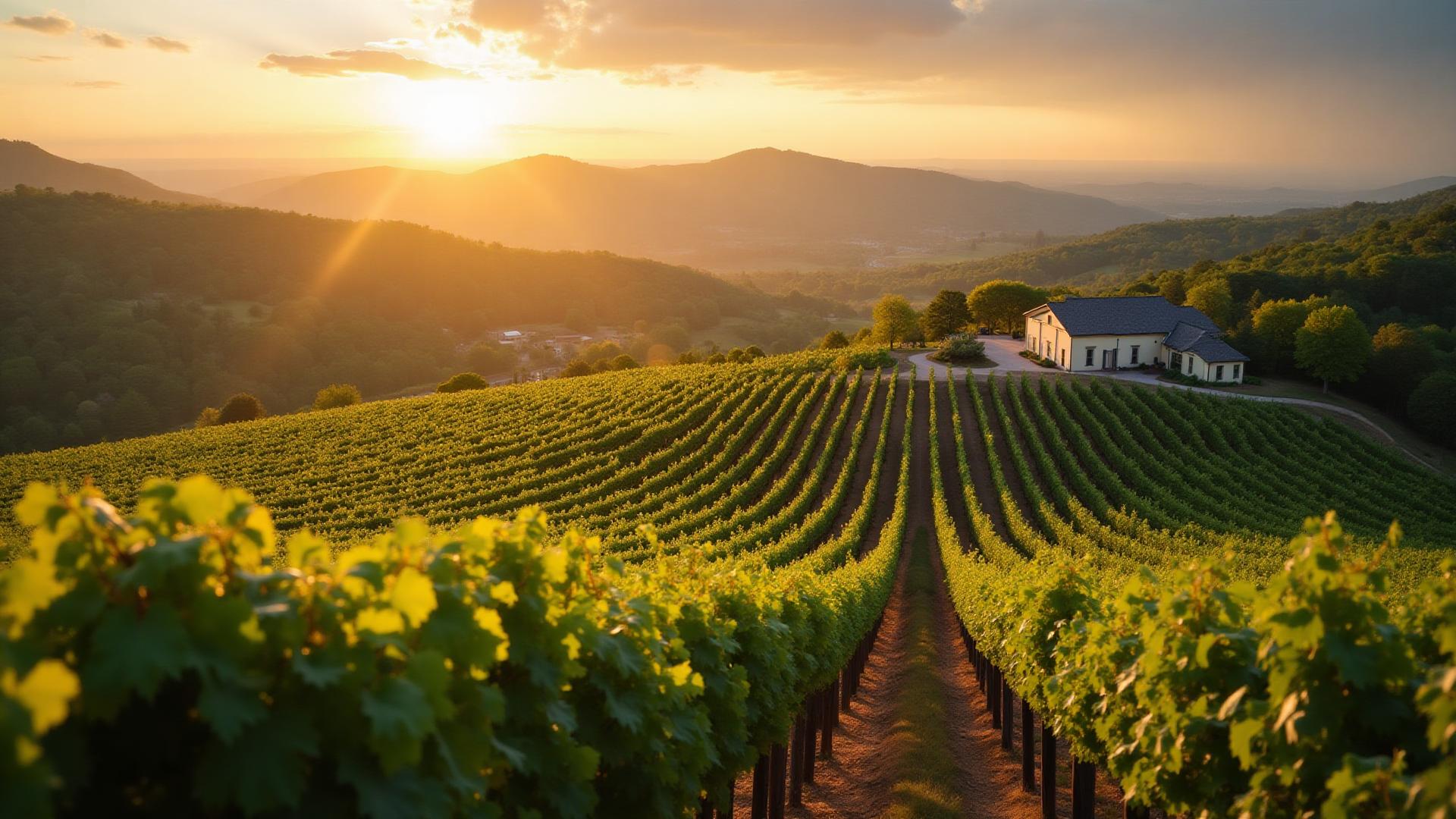
Small Vineyards, Big Wines: Artisan Producers to Watch
In an industry dominated by corporate giants producing millions of cases annually, there's a quiet revolution happening in garages, converted barns, and century-old cellars. Small vineyards—making fewer than 5,000 cases per year—are crafting some of the world's most sought-after, expressive, and terroir-driven wines. These aren't mass-market bottles. They're liquid stories, hand-harvested obsessions, and winemaker passion poured into glass.
Why Small Vineyards Matter:
- ✓ Terroir obsession: Every row, every vine receives individual attention
- ✓ Hand-harvesting: No mechanical pickers—only perfectly ripe clusters
- ✓ Experimentation: Freedom to innovate without corporate pressure
- ✓ Low intervention: Minimal additives, native yeasts, natural fermentation
- ✓ Personal connection: Meet the winemaker, not a marketing team
California Artisans: Sonoma & Beyond
1. Littorai (Sonoma Coast)
Winemaker: Ted Lemon
Production: ~4,000 cases/year
Specialty: Single-vineyard Pinot Noir & Chardonnay
Philosophy: "Let the vineyard speak"
Ted Lemon, the first American to earn a winemaking degree in Burgundy, returned to California with a singular mission: prove that Sonoma Coast could rival the Côte d'Or. Littorai's wines are pure, mineral-driven, and age-worthy—no new oak bombs, no overripe fruit.
Signature wine: Hirsch Vineyard Pinot Noir (Sonoma Coast)—silky tannins, red cherry, forest floor, coastal minerality. $120-180/bottle, but worth every penny.
Where to Buy:
- • Direct from winery (mailing list only)
- • Select wine shops (NYC, SF, LA)
- • Wine.com (limited allocation)
Tip: Join the mailing list. Littorai wines sell out in hours.
2. Ceritas (Santa Cruz Mountains)
Winemaker: John Raytek
Production: ~3,500 cases/year
Focus: Old-vine Chardonnay, cult-status Pinot Noir
Claim to fame: "California's answer to Chablis"
John Raytek sources from California's most storied old-vine vineyards—Peter Martin Ray, Charles Heintz, Porter-Bass—and crafts Chardonnays so pure, so focused, they make Burgundy lovers weep. No malolactic fermentation, no new oak. Just vine, soil, and winemaker intuition.
Must-try: Peter Martin Ray Chardonnay (Santa Cruz)—electric acidity, lemon curd, flint, oyster shell. $85-110. Pairs beautifully with raw oysters or ceviche.
Pro tip: Ceritas wines are allocation-only. Sign up now, wait 6-12 months. Worth it.
3. Wind Gap (Sonoma)
Winemaker: Pax Mahle
Production: ~2,500 cases/year
Style: Minimal intervention, native yeast, no fining/filtering
Vibe: "Natural wine for serious collectors"
Pax Mahle is a legend in the natural wine movement—but don't expect funky, cloudy bottles. His wines are pristine, precise, and deeply connected to place. He sources from Sonoma's coolest sites and ferments with indigenous yeasts for maximum terroir expression.
Signature: Trousseau Gris (Sonoma)—rare, aromatic, peachy-floral with saline finish. $45-60. One of California's most unique white wines.
4. Lieu Dit (Santa Ynez Valley)
Winemaker: Justin Willett
Production: ~4,000 cases/year
Focus: Rhône varieties (Grenache Blanc, Syrah, Mourvèdre)
Philosophy: "California terroir through a French lens"
Justin Willett fell in love with Châteauneuf-du-Pape and decided to recreate its magic in Santa Barbara County's limestone soils. Lieu Dit's wines are rich yet restrained, powerful yet elegant—proof that California can do Rhône varietals without the jam.
Standout: Grenache Blanc (Santa Ynez)—white peach, honeysuckle, wet stone. $40-55. Pairs perfectly with grilled seafood or roast chicken.
5. Scar of the Sea (Central Coast)
Winemaker: Mikey Giugni
Production: ~2,000 cases/year
Style: Coastal, minimal-intervention Pinot Noir & Chardonnay
Ethos: "Ocean influence in every sip"
Mikey Giugni sources from California's windiest, foggiest, saltiest vineyards—sites so marginal that big producers wouldn't touch them. The result? Wines with razor-sharp acidity, saline minerality, and the unmistakable taste of the Pacific.
Cult wine: Seven Lovely Ladies Pinot Noir (Santa Barbara)—cranberry, seaweed, brine, umami. $60-80. Pairs with oysters, sushi, or nothing at all.
European Icons: Old World, Small Scale
6. Domaine Huet (Loire Valley, France)
Winemaker: Noël Pinguet & Jean-Bernard Berthomé
Founded: 1928
Production: ~8,000 cases/year (still small for France)
Claim to fame: World's finest Chenin Blanc, biodynamic since 1990
Domaine Huet is the benchmark for Chenin Blanc. Three legendary vineyard sites—Le Haut-Lieu, Le Mont, Clos du Bourg—produce wines of staggering complexity: honey, quince, wet wool, petrol, limestone. They age for 50+ years.
Essential bottle: Le Mont Demi-Sec (Vouvray)—off-dry, balanced by piercing acidity. Pairs with foie gras, spicy Thai food, or aged Comté cheese. $50-80.
Huet's biodynamic practices (moon cycles, herbal preparations, no chemicals) sound mystical—but the wines prove it works.
7. Franz Hirtzberger (Wachau, Austria)
Winemaker: Franz Hirtzberger Jr.
Production: ~5,000 cases/year
Specialty: Riesling & Grüner Veltliner from terraced Danube vineyards
Reputation: "Austria's answer to DRC"
The Wachau's steep, terraced vineyards (some at 70% gradient) produce Austria's most age-worthy wines. Hirtzberger's Rieslings are laser-focused: citrus, stone, steel, and infinite length. They make Mosel Rieslings seem soft by comparison.
Iconic wine: Singerriedel Riesling Smaragd—bone-dry, electric acidity, apricot, flint. $60-90. Pairs with Wiener schnitzel or grilled trout.
8. Nikolaihof (Wachau, Austria)
Winemaker: Christine & Nikolaus Saahs
Founded: 1894
Production: ~4,000 cases/year
Historic claim: World's oldest biodynamic winery (Demeter-certified since 1971)
Nikolaihof is a time capsule. The winery, built in 1894, uses no pesticides, herbicides, or synthetic fertilizers—and hasn't for over 50 years. The Rieslings age in massive old oak casks for decades, developing haunting complexity.
Collector's wine: Im Weingebirge Riesling (Smaragd)—decades of aging potential, petrol, honey, crushed stone. $80-120. A bottle to save for 20 years.
Why Small Vineyards Produce Better Wine
What Big Wineries Do:
- ✗ Mechanical harvesting (cheaper, faster, less precise)
- ✗ Blend multiple vineyards (consistency over character)
- ✗ Heavy oak, additives, manipulation (to hit target flavor profile)
- ✗ Focus on volume, not quality
- ✗ Marketing budget > vineyard care
- ✗ Wines taste the same year after year (no vintage variation)
What Small Vineyards Do:
- ✓ Hand-harvest at perfect ripeness (labor-intensive, precise)
- ✓ Single-vineyard bottlings (terroir expression)
- ✓ Minimal intervention (native yeast, no fining/filtering)
- ✓ Quality obsession (every vine, every cluster matters)
- ✓ Winemaker is the marketer (personal connection)
- ✓ Vintage variation is celebrated (honesty over consistency)
How to Support Small Vineyards
5 Ways to Support Artisan Winemakers:
- 1
Join Mailing Lists (Allocation Wine Clubs)
Most small producers sell out before wines hit retail. Mailing list members get first access.
- 2
Buy Direct from the Winery
Cuts out distributor/retailer markup. Winemaker keeps more profit, invests in quality.
- 3
Visit the Cellar Door (Tasting Room)
Meet the winemaker, see the vineyard, taste barrel samples. Many offer library releases not sold elsewhere.
- 4
Support Independent Wine Shops
They champion small producers. Ask staff for recommendations—they often taste directly with winemakers.
- 5
Share on Social Media
Small wineries rely on word-of-mouth. Tag them, post bottles, write reviews. It matters.
Pair Small Vineyard Wines with Our iQ Sommelier
Get Pairing Suggestions for Boutique Wines
Own a rare bottle from Littorai, Ceritas, or Domaine Huet? Our iQ sommelier understands single-vineyard terroir, minimal intervention winemaking, and how to pair artisan wines with food. Get instant recommendations for your cellar gems.
The Future of Wine is Small
As climate change reshapes viticulture, as consumers demand transparency, as younger drinkers seek authenticity over status—small vineyards are leading the way.
They're farming organically (because they can't afford crop failure). They're experimenting with obscure varietals (because they're not beholden to shareholders). They're building direct relationships with customers (because distribution is too expensive).
The next time you reach for a wine, ask yourself: Do I want to drink a corporate product, or a winemaker's passion? The choice is in your glass.
Isabella Rossi is a wine journalist and sommelier specializing in small-production, terroir-driven wines. She has visited 200+ boutique wineries across California, France, Austria, and Italy, and writes for Wine & Spirits Magazine.