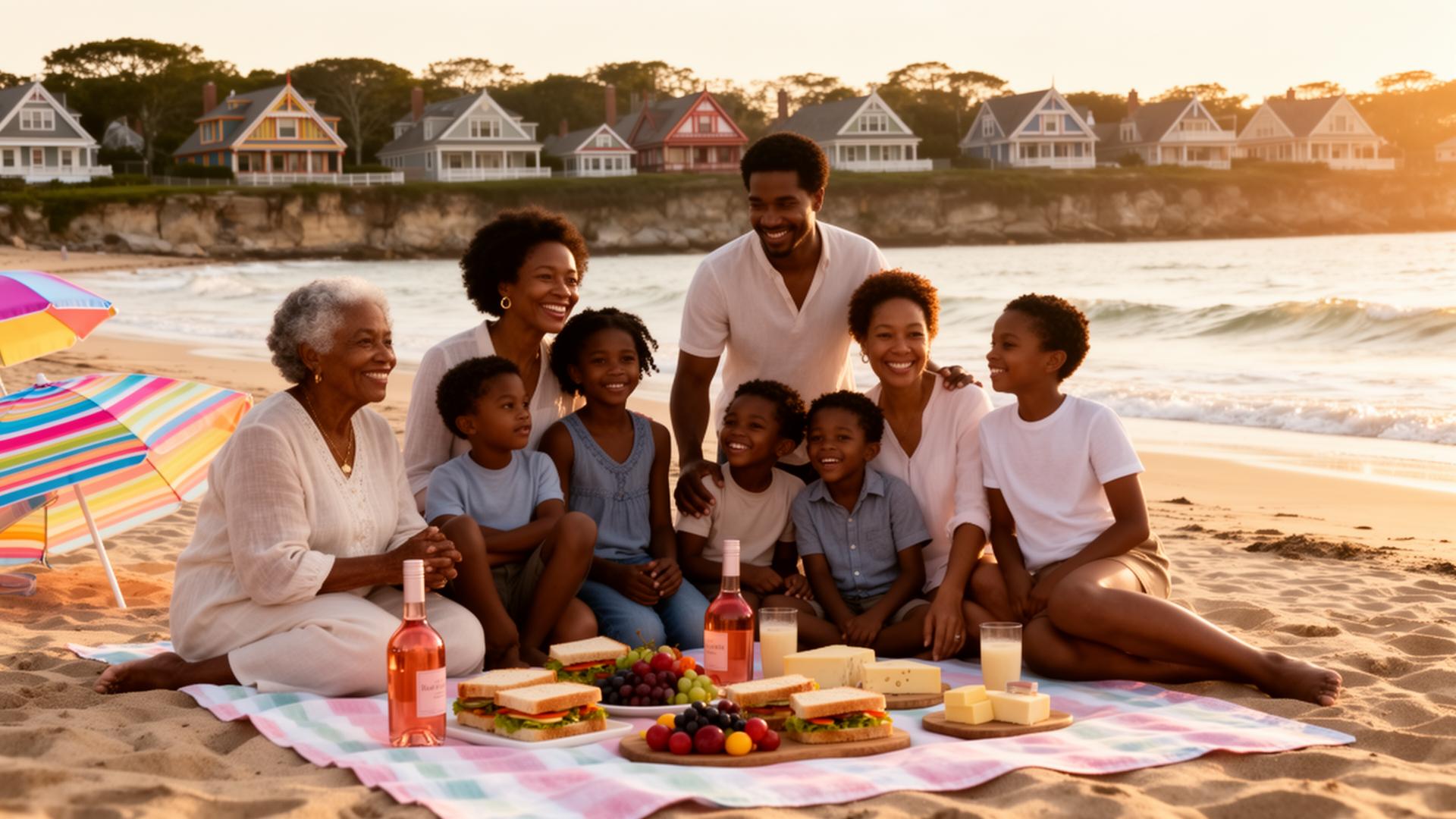
Martha's Vineyard & Black Culture: Oak Bluffs, Black-Owned Wineries & the Vineyard Table
A 130-year sanctuary of Black excellence on the Atlantic shore, paired with the Black-owned wineries and African American food traditions that define a Vineyard summer.
The ferry pulls into Oak Bluffs and the air shifts. There is the salt, of course, and the cedar shake of weathered cottages, and the laughter rolling off the porches. But there is also a kind of recognition: this is one of the oldest Black summer communities in the United States, a place where, for more than 130 years, Black families have built a life of dignity, pleasure and quiet magnificence on the shore. The wine on the porch table makes the same case the architecture does. Generational. Intentional. Joyful.
The Inkwell & the 130-Year Sanctuary
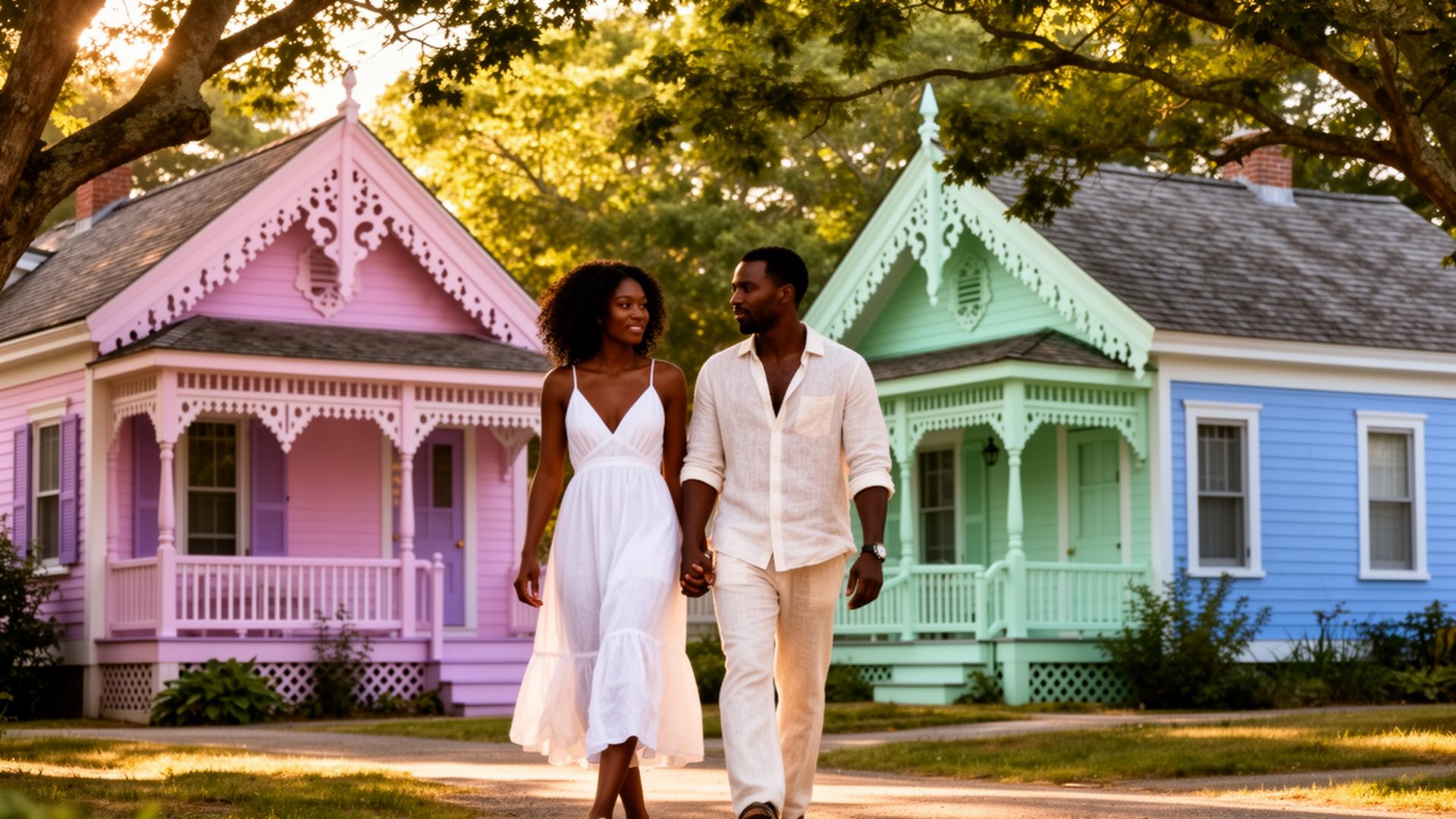
The story begins, in earnest, in 1903. Charles and Henrietta Shearer, both born into slavery, opened Shearer Cottage as one of the first guest houses owned and operated by African Americans in the country. At a moment when Black travelers were turned away almost everywhere, Shearer became a refuge, then a hub, then the seed of an entire summer community. Generations of Black artists, intellectuals, ministers and entrepreneurs — Adam Clayton Powell, Harry T. Burleigh, Dorothy West, Ethel Waters — built lives there.
The shoreline below took the name Inkwell Beach. The early-morning swimmers became the Polar Bears, a club still going every summer. The women of the community formed Cottagers Inc. in 1955, a civic organization that has been a backbone of Black life on the island for seven decades. Walk the African American Heritage Trail and you can trace the names — Highland Beach, Shearer, Powell, Bonaparte, West — that built one of the most enduring Black wealth and culture corridors in America.
Vineyard by the Numbers
- Shearer Cottage founded: 1903 (one of the first Black-owned guest houses in the U.S.)
- Cottagers Inc. founded: 1955
- Black summer community established: Late 1800s
- African American Heritage Trail sites: 30+ on the island
- Annual Polar Bears morning swim: Every summer dawn at the Inkwell
The Black Wine & Hospitality Economy
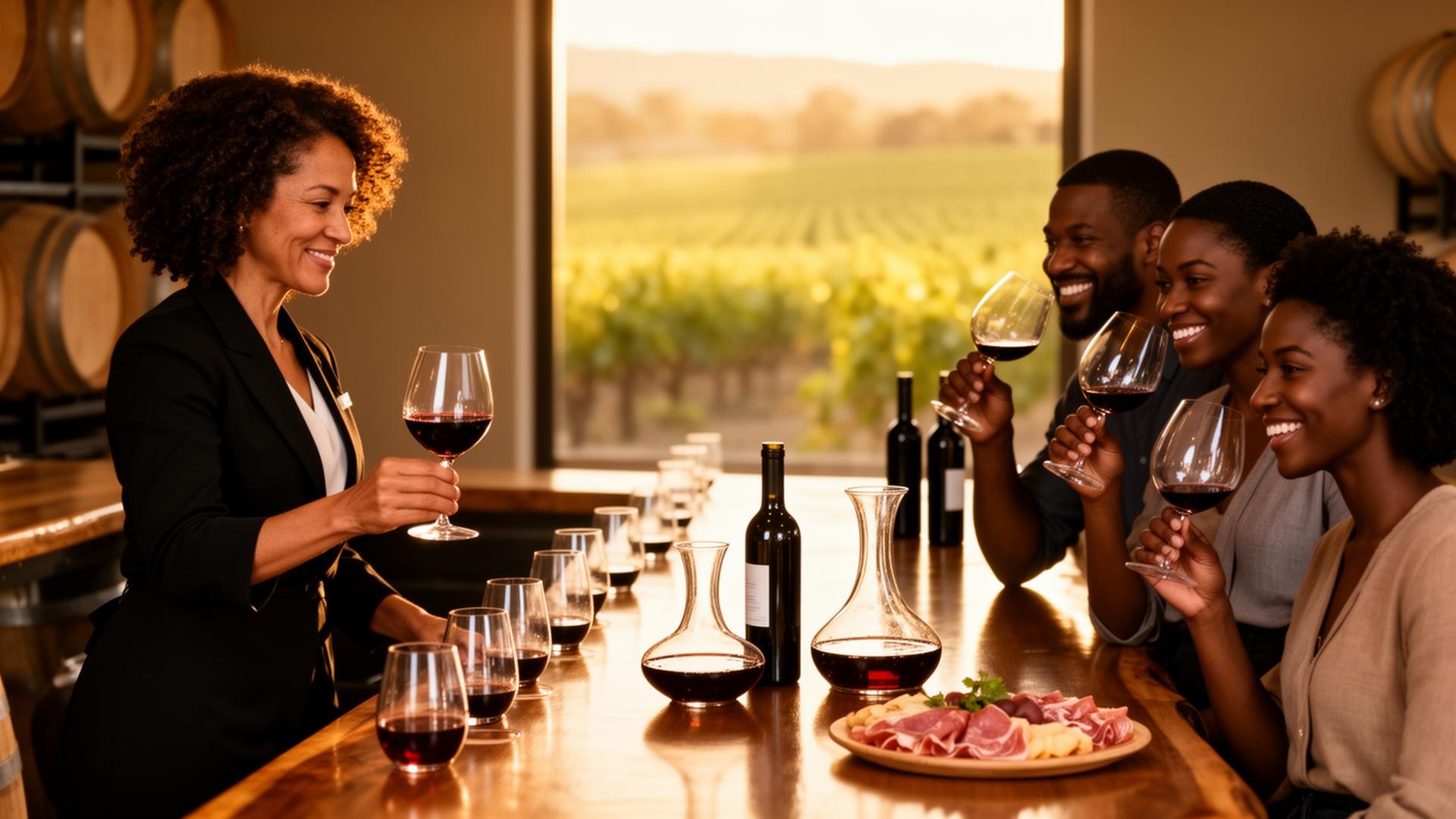
The Vineyard table has always been part of a larger economy. Today the bottles tell that story plainly. American wine is roughly 1 percent Black-owned, but that 1 percent is producing some of the most interesting wine in the country, and it has organized itself with the same generational discipline that built Oak Bluffs. These are the producers worth knowing, ordering, and stocking on the porch.
Black-Owned Wineries to Pour This Summer
- McBride Sisters Collection — Sisters Robin and Andréa McBride, the largest Black-owned wine company in the U.S. The "Black Girl Magic" line, the SHE CAN canned wines, and a beautifully made California sparkling rosé.
- Brown Estate — Napa Valley's first Black-owned winery, founded in 1980 by the Brown family. The "Chaos Theory" Zinfandel blend is the calling card; the Chardonnay and Cabernet are quietly brilliant.
- Maison Noir Wines — André Hueston Mack, former White House sommelier turned Oregon producer. "Other People's Pinot Noir" and "Love Drunk" Rosé are wine-list staples.
- Theopolis Vineyards — Theodora "Theo" Lee, a federal trial lawyer who quietly makes one of the country's most respected Petite Sirah and Pinot Noir programs from Yorkville Highlands, California.
- Charles Wine Company — Detroit-rooted, California-made. Approachable, food-friendly Chardonnay and red blends.
- Darjean Jones Wines — Founded by Dr. Stacy Jones, a sommelier and physician. Albariño and Cabernet Sauvignon with serious craft.
- La Fête du Rosé — Donae Burston's Provence rosé, made for warm-weather celebration.
- Maroon Wines — The Maroon family's premium Napa Cabernet and Chardonnay program.
- Abbey Creek Vineyard — Bertony Faustin, Oregon's first recorded Black winery owner, making expressive Willamette Pinot Noir.
A Vineyard Cookout, Pairing by Pairing
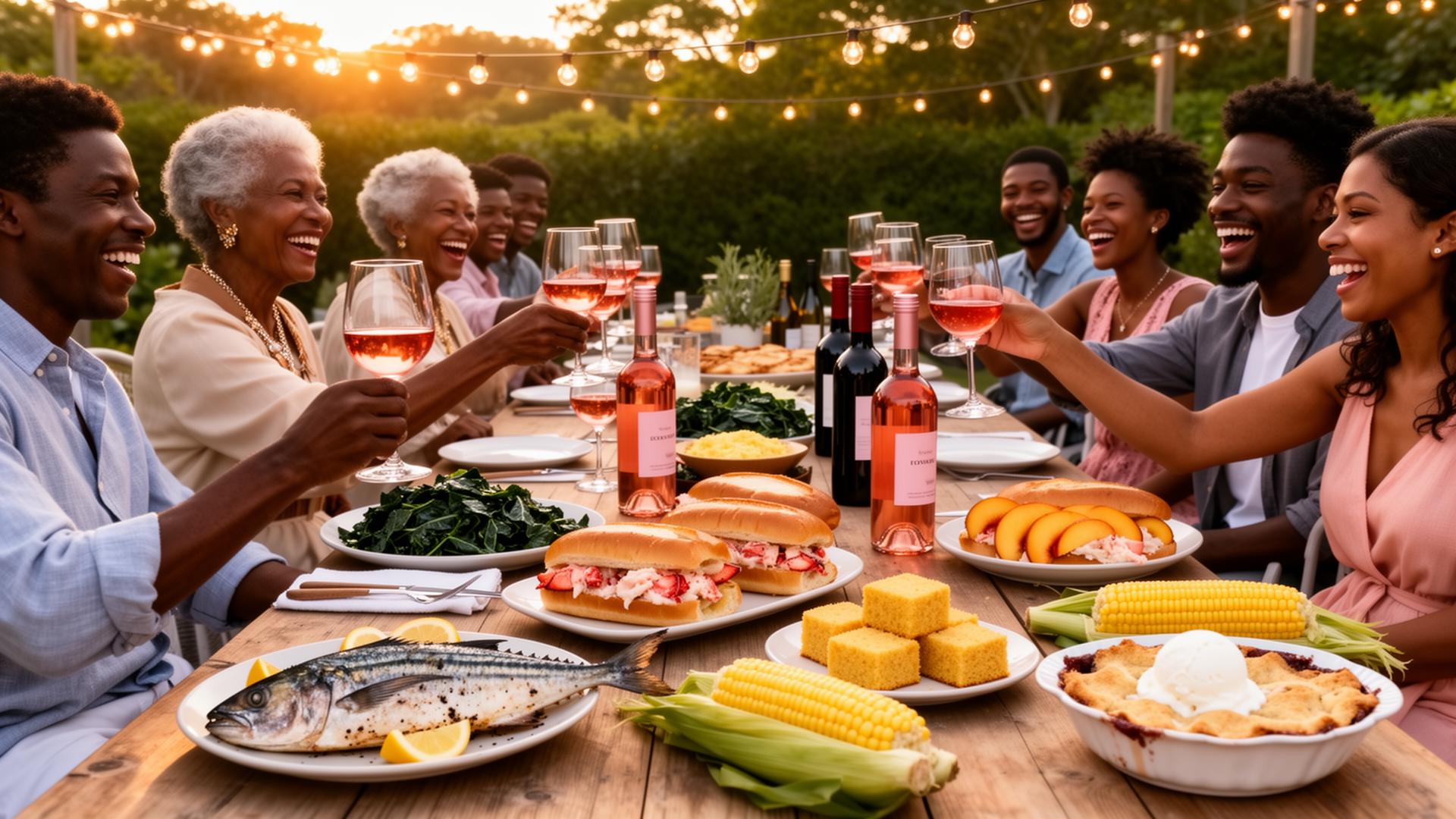
African American Vineyard cooking borrows from everywhere: Lowcountry, Gullah-Geechee, Creole, Southern, and the Caribbean diaspora that runs through every East Coast Black community. The result on a Saturday night porch is a table that earns the wine you put on it.
The Pairing Playbook
- Grilled bluefish or striped bass — McBride Sisters Sauvignon Blanc, Maison Noir "Love Drunk" Rosé, or Theopolis Petite Sirah Rosé. Acidity and saline lift cut through the oily fish; the rosés add a crushed-strawberry counterpoint.
- Lobster rolls (the buttery kind) — McBride Sisters Brut Rosé, a Charles Wine Co. Chardonnay, or Darjean Jones Albariño. Bubbles or bright stone-fruit acidity refresh the richness; saline minerality echoes the lobster.
- Smoked or grilled ribs with collards — Brown Estate "Chaos Theory" Zinfandel blend, Maison Noir "Other People's Pinot Noir," or Maroon Cabernet. Zinfandel's brambly fruit loves smoke; Pinot's silk and acidity tame the collards' iron and vinegar.
- Fried whiting or catfish — McBride Sisters Sparkling Rosé or Theopolis Rosé. Bubbles and salt are a universal truth; the rosé fruit handles a squeeze of hot sauce.
- Jerk chicken — Off-dry Riesling or McBride Sisters Sauvignon Blanc. Both tame Scotch bonnet heat without backing down from allspice.
- Macaroni and cheese, baked beans, cornbread — Maison Noir Pinot Noir, a chilled Cru Beaujolais, or Charles Wine Co. red blend. Soft tannin, bright acidity, no heavy oak.
- Peach cobbler & sweet potato pie — McBride Sisters Sparkling Rosé, a late-harvest Riesling, or a Tawny Port. Sweet wine for sweet dish; the bubbles refresh between bites.
A Weekend at the Black Vineyard Table
Friday Night: The Porch Pour
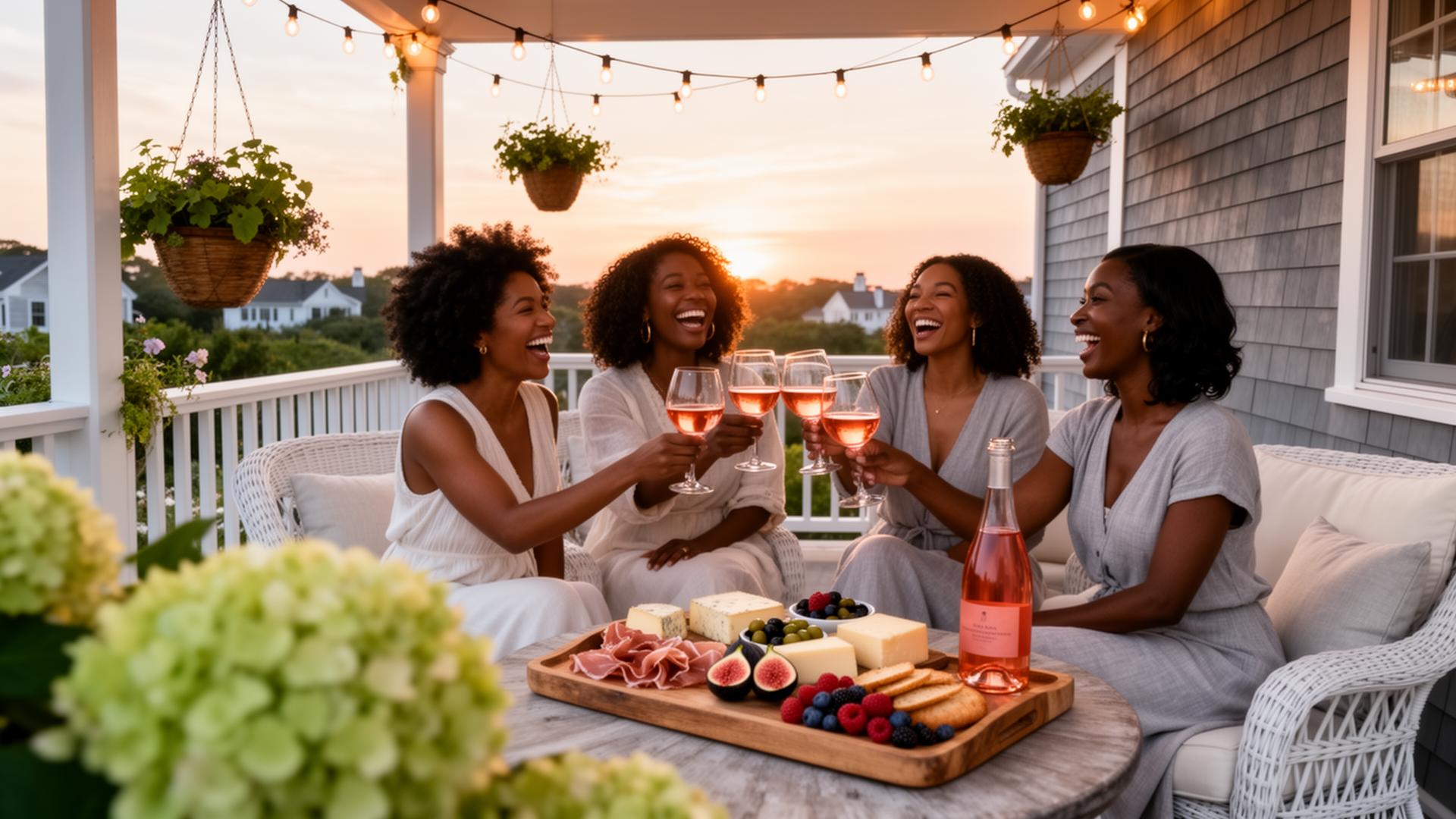
Roll off the ferry, stop for groceries, get on the porch. The first bottle of the weekend is almost always rosé. Open La Fête du Rosé or McBride Sisters Brut Rosé, lay out a board with local cheeses (Mermaid Farm chèvre is a Vineyard staple), figs, smoked bluefish pâté, fresh sourdough. The sun will set behind the hydrangeas. You will be in no hurry to eat dinner.
Saturday: Inkwell Morning, Cookout Evening
Walk to the Inkwell early — the Polar Bears will already be in. Spend the day on the sand. By six, the cookout is on. Grill bluefish or whole striped bass over charcoal, set out lobster rolls, collards stewed with smoked turkey, sautéed corn, hot cornbread, peach cobbler. Pour a flight: Maison Noir "Love Drunk" Rosé for the table, Brown Estate "Chaos Theory" for the ribs, McBride Sisters Sparkling Rosé with the cobbler.
Sunday: Brunch & the Long Goodbye
Sunday brunch is a sacred Vineyard ritual: shrimp and grits, fluffy biscuits, smoked salmon, fresh fruit, mimosas built on real sparkling rosé instead of cheap Prosecco. Pour McBride Sisters Brut Rosé straight, or split with fresh-squeezed orange juice (3-to-1, sparkling-heavy). End the meal with espresso, a long porch sit, and one more glass before the ferry.
Legacy at the Edge of the Sea
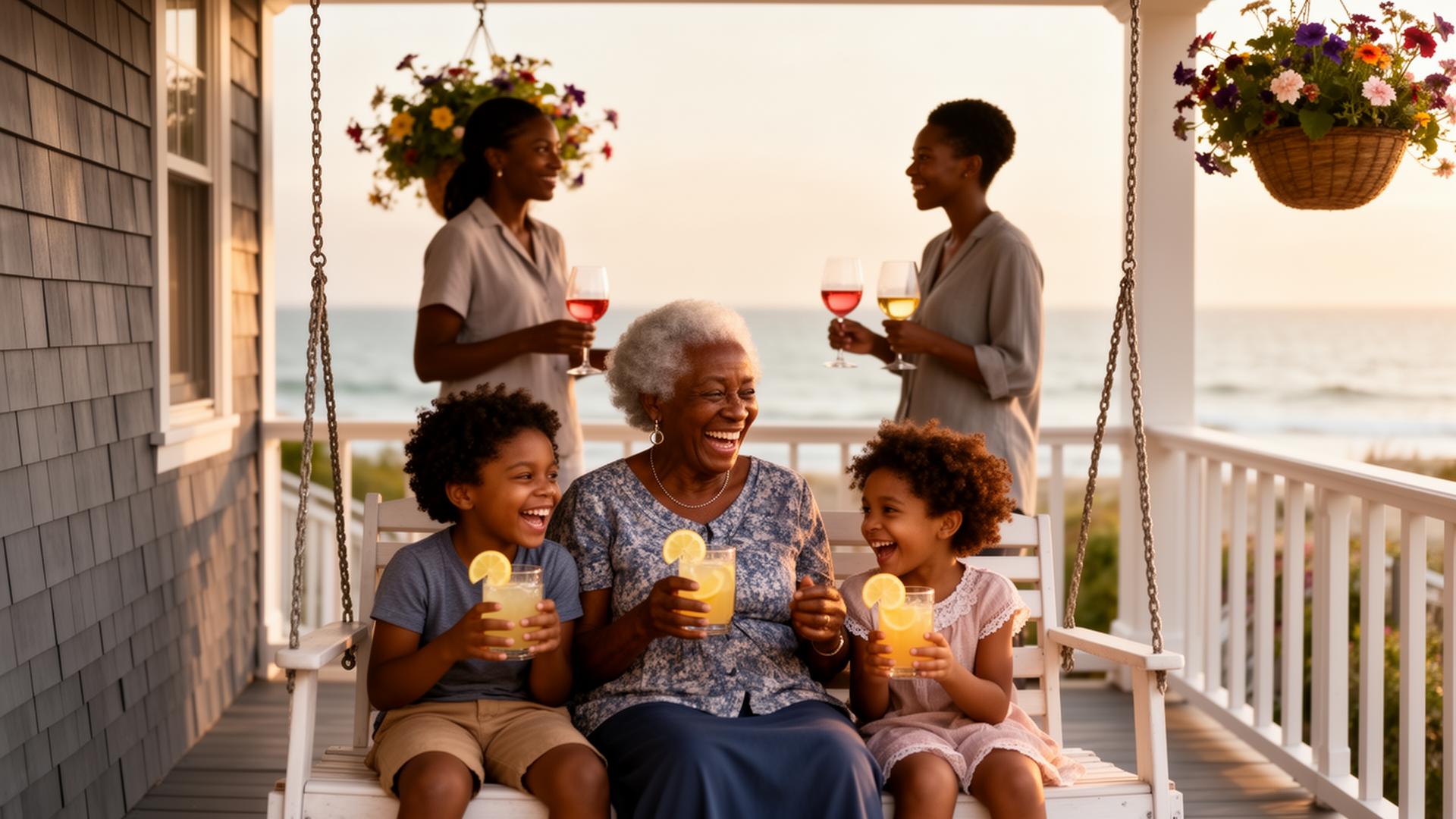
The reason the Vineyard endures as a Black place is simple: people kept showing up, kept investing, kept passing it down. Cottages stayed in families for four and five generations. The Cottagers raised money. Shearer hosted. The Polar Bears swam. The bottle on the porch became part of the inheritance, not a separate object. That is what makes the Black wine economy and the Vineyard belong on the same page — both are forms of generational hospitality, both are quiet acts of building, both are best enjoyed at golden hour with people you love.
Five Bottles for the Vineyard Porch
- McBride Sisters Brut Rosé (California) — the porch sparkler. Works from aperitif through cobbler.
- Maison Noir "Love Drunk" Rosé (Oregon) — the cookout's table wine. Pairs with everything off the grill.
- Brown Estate "Chaos Theory" (Napa) — Zinfandel-led blend built for ribs, smoked meats, summer fire.
- Theopolis Vineyards Pinot Noir (Yorkville Highlands) — silky, food-friendly, made by a federal trial lawyer who happens to be one of California's most respected winemakers.
- La Fête du Rosé (Provence) — pale, dry, joyful — the porch standard from sunset to last call.
Keep Reading
- Black-Owned Wineries: A Complete Guide — the producer-by-producer rundown.
- African American Cuisine & Wine Pairings — the dish-by-dish playbook.
- The Sunday Soul Table — building the weekly ritual.
- Juneteenth Celebration Wine Guide — bottles for the holiday.
- Black Winemaker Spotlight 2026 — the next generation.
- Caribbean & Soul Fusion — the diaspora at the table.
Pour a glass. Sit on a porch. Watch the light come off the water at the Inkwell. The Vineyard has been telling this story for 130 years. The bottle on the table just makes it audible.