Hanukkah & Kwanzaa Desserts: Celebrating Cultural Heritage Through Sweet Traditions
Two winter celebrations, rich in tradition and meaning, bring families together through food, community, and sweet commemorations of resilience and unity.
Introduction: Unity in Diversity
As winter's chill descends and families gather to celebrate, two distinct yet equally meaningful observances illuminate the season with light, hope, and delicious traditions. Hanukkah, the Jewish Festival of Lights commemorating the rededication of the Second Temple in Jerusalem, and Kwanzaa, the African American celebration honoring heritage, culture, and community values, both center around family, reflection, and—of course—exceptional desserts that carry deep cultural significance.
These celebrations share a common thread: they use food as a bridge between generations, passing down not just recipes but stories, values, and identity. The desserts we'll explore aren't merely sweet treats; they're edible history, each bite connecting us to ancestors, traditions, and the resilience of communities that have preserved their culinary heritage through centuries of change.
Hanukkah Traditions: Oil, Light, and Sweet Remembrance
Sufganiyot: The Jelly Doughnut of Celebration
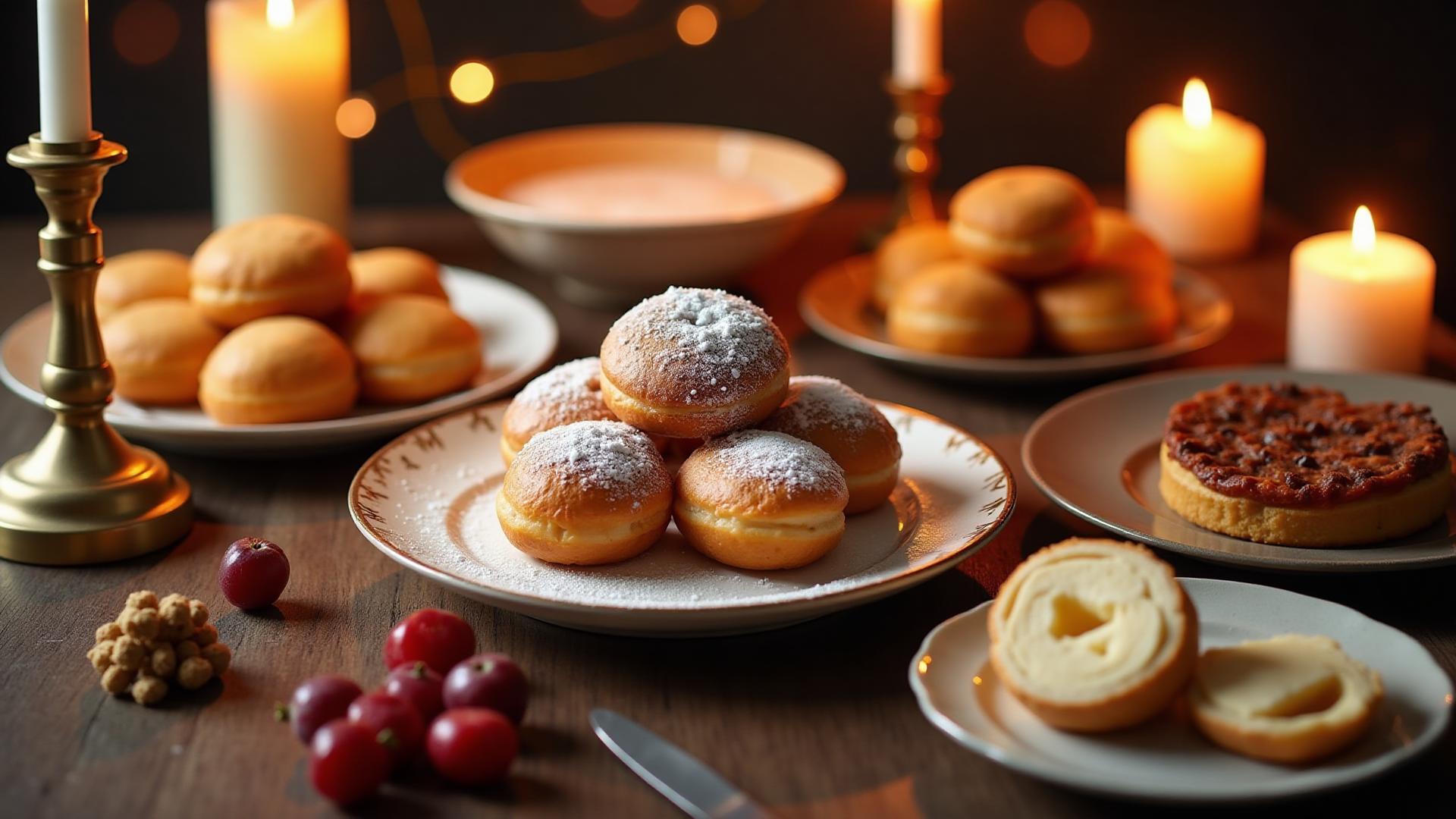
The crown jewel of Hanukkah desserts, sufganiyot are yeasted doughnuts fried in oil—a deliberate nod to the miracle of oil that burned for eight days in the Temple's menorah. Modern Israeli bakeries have elevated these pillowy spheres into an art form, offering innovative fillings beyond traditional strawberry jam: rich chocolate ganache, tangy lemon curd, salted caramel, even savory options during the eight-night celebration.
The technique requires patience: yeast dough must double in size, creating that perfect airy interior. The frying temperature (375°F/190°C) is critical—too hot and they brown before cooking through; too cool and they absorb excess oil. That golden exterior, dusted with powdered sugar, should shatter delicately to reveal soft, warm dough surrounding your chosen filling.
Wine Pairing: Moscato d'Asti
The light sparkle and peach-apricot notes of Moscato d'Asti cut through the fried richness while complementing fruit fillings. Its low alcohol (5.5%) ensures you can enjoy multiple courses without overwhelming your palate. For chocolate-filled sufganiyot, try a slightly sparkling Brachetto d'Acqui—its berry notes and gentle fizz work beautifully with cocoa.
Rugelach: Rolled Crescents of Heritage
These crescent-shaped pastries have Eastern European Jewish roots, brought to America by immigrants who adapted recipes to available ingredients. Traditional rugelach uses a cream cheese dough—a uniquely American innovation—rolled thin and spread with cinnamon-sugar, chopped nuts, jam, or chocolate before being rolled into crescents and baked until golden.
The beauty of rugelach lies in its versatility and the ritual of making them together. Many families gather for annual "rugelach parties," rolling dozens while sharing stories. The dough must stay cold; work quickly or chill between batches. Each rugelach should have distinct layers—not dense but flaky, with filling distributed evenly so every bite delivers that perfect ratio of pastry to sweet interior.
Wine Pairing: Late Harvest Riesling
The honey-drizzled sweetness and stone fruit characteristics of late harvest Riesling mirror rugelach's apricot or raspberry fillings. German Spätlese from the Mosel provides enough acidity to balance the cream cheese richness while honey and petrol notes add complexity. For chocolate rugelach, consider a tawny Port.
Chocolate Gelt Tart: Modern Tradition
Gelt (Yiddish for "money") refers to the chocolate coins traditionally given to children during Hanukkah, commemorating coins used to reward scholars. A contemporary chocolate gelt tart transforms this tradition into an elegant dessert: a crisp shortbread crust filled with dark chocolate ganache, topped with edible gold leaf and arranged chocolate coins.
Wine Pairing: Banyuls or Maury
French fortified wines from Roussillon, made from Grenache, offer cocoa and coffee notes that complement dark chocolate without overwhelming it. The oxidative aging adds hazelnut and dried fig nuances. Serve slightly chilled (60°F/15°C) to enhance the chocolate pairing.
Kwanzaa Celebrations: Roots, Unity, and Soul
Sweet Potato Pie: The Soul Food Classic
While pumpkin pie dominates Thanksgiving, sweet potato pie reigns during Kwanzaa and throughout African American culinary tradition. This isn't merely a substitute—it's a distinct creation with roots in West African cuisine, where yams held sacred significance. Enslaved Africans adapted their traditional yam-based dishes using American sweet potatoes, creating something entirely new.
The perfect sweet potato pie balances earthy sweetness with warming spices—cinnamon, nutmeg, and a whisper of ginger. Some recipes add a splash of bourbon or vanilla. The filling should be silky smooth, achieved by passing cooked sweet potatoes through a ricer or food mill before mixing. The crust—buttery, flaky, barely sweetened—provides textural contrast to the creamy interior.
Wine Pairing: Malmsey Madeira
The oxidized, nutty character of aged Malmsey Madeira—the sweetest style—complements sweet potato's earthiness while its bright acidity cuts through richness. Notes of caramel, brown sugar, and roasted nuts mirror the pie's flavor profile. At 10-15 years of age, you'll find incredible complexity.
Benne Wafers: Seeds of Heritage
Benne is the Bantu word for sesame seeds, brought to America by enslaved West Africans who recognized their value and managed to preserve them despite unimaginable circumstances. These thin, crispy wafers—somewhere between a cookie and a candy—feature toasted sesame seeds suspended in a caramelized sugar matrix, creating an addictive combination of nutty, sweet, and slightly salty.
Toasting the sesame seeds is non-negotiable; it awakens their oils and intensifies flavor. Watch them carefully—the line between perfectly toasted and burnt is thin. The sugar syrup must reach hard crack stage (300°F/149°C) for that signature snap. Many Charleston families guard their benne wafer recipes, passed down through generations, each with subtle variations in sweetness, thickness, and spice.
Wine Pairing: Sauternes or Tokaji
Noble rot dessert wines provide honeyed complexity that matches benne wafers' caramel notes while cutting through richness. Sauternes offers citrus and apricot; Tokaji brings orange marmalade and spice. Both have enough acidity to refresh between bites of these intensely sweet wafers.
Coconut Cake: Southern Majesty
The towering coconut cake—layers of tender yellow cake filled and frosted with fluffy coconut frosting, then covered entirely in shredded coconut—represents celebration, special occasions, and the labor of love required for exceptional desserts. This isn't weeknight baking; it's Sunday dinner, Christmas, Kwanzaa, the dessert you make when it matters.
Traditional recipes call for freshly grated coconut (though frozen works well), coconut milk in the batter for moisture, and a boiled frosting—also called seven-minute frosting—whipped to glossy peaks over a double boiler. The result is impossibly light, sweet but not cloying, with coconut's tropical character in every element.
Wine Pairing: Champagne or Crémant
The celebration deserves bubbles! Blanc de Blancs Champagne or Crémant de Loire (made from Chenin Blanc) offers crisp acidity and subtle fruit that cuts through frosting's sweetness. Brioche and almond notes in aged Champagne complement coconut's nuttiness. The effervescence cleanses your palate between forkfuls.
Beverage Pairings: Honoring All Traditions
Not every celebration includes alcohol, and both Hanukkah and Kwanzaa welcome diverse beverage approaches that respect various religious and personal choices.
Non-Alcoholic Options
- Spiced Apple Cider: Warm with cinnamon, cloves, star anise
- Hibiscus Tea: Tart, fruity, beautiful crimson color
- Ginger-Lime Sparkler: Fresh ginger juice, lime, sparkling water
- Hot Chocolate: Rich, dark chocolate with vanilla
Dessert Wine Essentials
- Temperature: Serve 50-55°F for most dessert wines
- Glassware: Smaller portions in appropriate glasses
- Timing: Pour dessert wine after serving dessert, not with
- Storage: Most keep 3-7 days refrigerated after opening
Conclusion: Tables That Unite
Food transcends mere sustenance during meaningful celebrations—it becomes memory, tradition, connection. The sufganiyot shared during Hanukkah carry the weight of miracles and perseverance. The sweet potato pie at a Kwanzaa karamu feast honors ancestors and celebrates community resilience. These desserts aren't just delicious; they're meaningful.
As we gather around tables this winter season, whether lighting the menorah or the kinara, whether celebrating Hanukkah, Kwanzaa, Christmas, or simply spending time with loved ones, let's remember that our desserts—and the care we put into creating them—strengthen the bonds that connect us to our heritage, our families, and our shared humanity.
Make These Traditions Yours
Whether you're continuing family traditions or starting new ones, these desserts welcome experimentation while honoring their roots. Adapt recipes to dietary needs, try modern twists, but always remember the stories and significance behind each sweet creation.