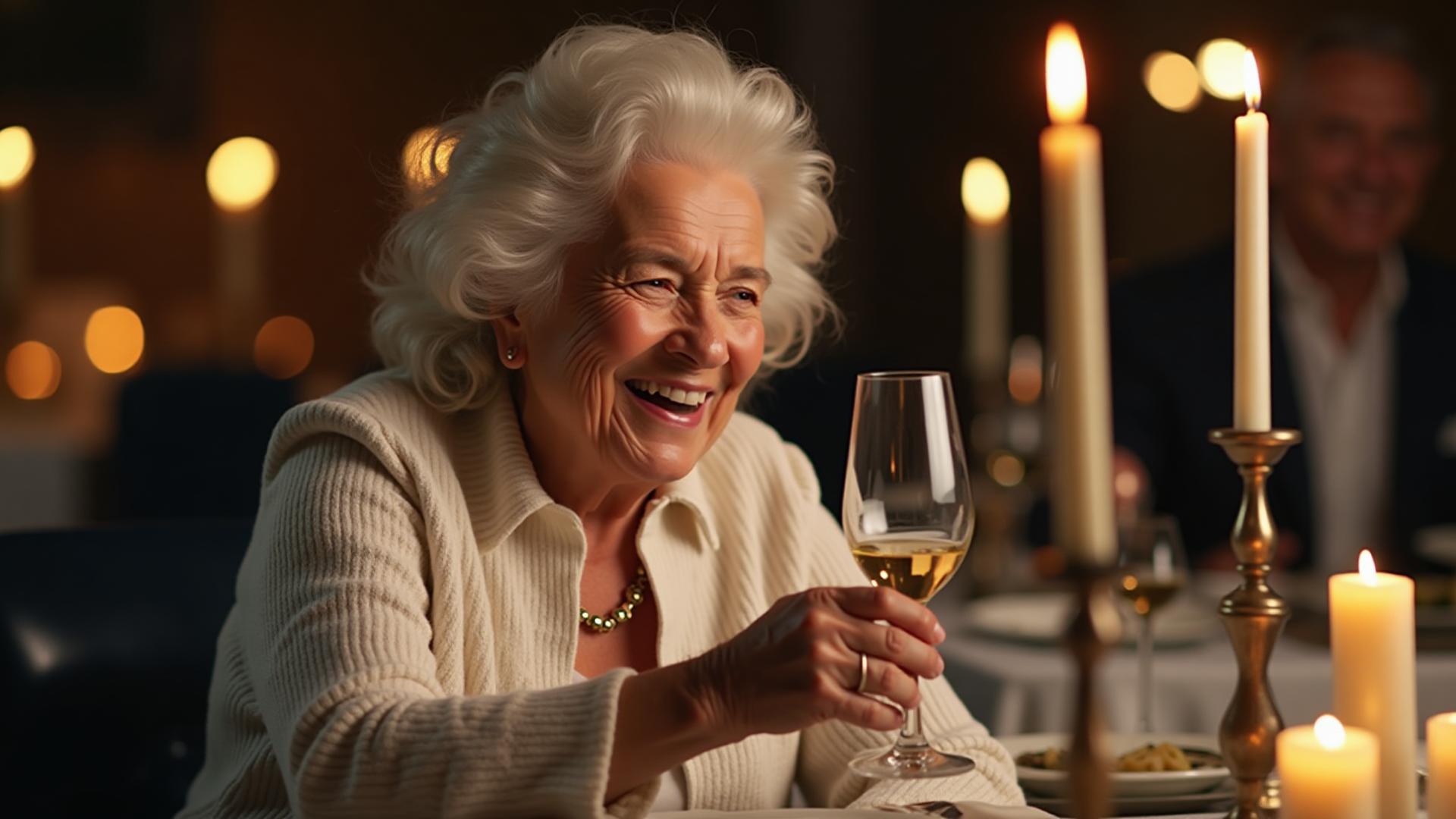
Centenarians & Wine: The Art of Living Well
Jeanne Calment, the world's oldest verified person at 122 years, drank a glass of fortified Banyuls wine every single day. Emma Morano, who lived to 117, never skipped her daily wine with lunch. These aren't anomalies—they're patterns. The world's oldest people often share a surprising habit: moderate, consistent wine consumption paired with meals, family, and joy.
Centenarian Wine Principles:
- ✓ Always with food, never alone or on empty stomach
- ✓ Quality over quantity—small pours, savored slowly
- ✓ Social drinking with family and friends
- ✓ Local, often homemade wines from familiar terroir
- ✓ Wine as ritual, not escape or intoxication
Jeanne Calment: 122 Years of Banyuls & Attitude
Jeanne Louise Calment (1875-1997) lived through three centuries, two world wars, and the invention of the automobile, airplane, and internet. When asked her secret to longevity, she replied with characteristic wit: "I've only ever had one wrinkle, and I'm sitting on it."
But beyond humor, Jeanne had a daily ritual: a glass of sweet Banyuls wine from Roussillon, France. Banyuls is a fortified red wine made from Grenache, aged oxidatively in barrels for years. It's rich in polyphenols, particularly resveratrol, and has a luscious, raisin-like sweetness.
Jeanne's Daily Wine Ritual:
- Wine: 5oz (150ml) of sweet Banyuls, 16% ABV
- Timing: After lunch, with a small piece of dark chocolate
- Context: Shared with her nephew or caretaker, never alone
- Duration: Sipped over 30+ minutes during conversation
- Frequency: Daily from age 60 to 122—62 consecutive years
Did the Banyuls make Jeanne immortal? Unlikely. But it was part of a lifestyle of pleasure, moderation, and social connection. She also:
- Ate olive oil-rich Mediterranean diet (vegetables, fish, fruits)
- Cycled until age 100 and walked daily
- Maintained sharp wit and sense of humor (stress reducer)
- Never smoked excessively (she quit at 117, joking "at my age, it's not worth it")
- Had strong family bonds and community ties
Jeanne's wine wasn't escape—it was celebration. It marked the transition from work to leisure, transformed lunch into an event, and connected her to French terroir and tradition.
Emma Morano: Italy's 117-Year Wine Tradition
Emma Morano (1899-2017), Italy's oldest citizen and the last living person born in the 1800s, attributed her longevity to three things: genetics, raw eggs, and wine with every meal. She drank a small glass of local red wine (likely Nebbiolo or Barbera from Piedmont) with lunch and dinner—always paired with food, never on an empty stomach.
Emma's philosophy was simple: "Wine is food." In Italian culture, wine isn't a beverage—it's part of the meal structure, like bread or olive oil. It aids digestion, enhances flavors, and slows down eating pace. Emma never drank to get drunk; she drank to live well.
Emma's Wine Rules:
- Always with food: Never a glass before or after—only during meals
- Local wines: From nearby Piedmont vineyards, often homemade by neighbors
- Small pours: 4-5oz (120-150ml) per meal, never more
- Red preferred: Rich in tannins and polyphenols for heart health
- Social context: Meals with family, conversation, no rush
- Daily consistency: Same routine for 100+ years—no binge drinking, no abstinence
Emma also ate a diet rich in eggs, vegetables, and olive oil. She avoided processed foods, never smoked, and maintained independence until her final year. Her wine habit wasn't isolation—it was integration into a holistic lifestyle.
Shigeaki Hinohara: Japan's 105-Year Sake & Wine Philosophy
Dr. Shigeaki Hinohara (1911-2017), Japan's pioneering physician and longevity icon, worked until age 105 and lectured until weeks before his death. While sake was his primary drink, he also enjoyed wine—always in moderation, always with purpose.
Hinohara's philosophy: "Life is about contribution, not duration." He drank wine (usually white or light reds) at social dinners, medical conferences, and celebrations—but never alone, never as a crutch. His approach:
- Alcohol as social lubricant: Wine facilitates conversation, reduces social anxiety
- Never for stress relief: If you need wine to relax, address the stress itself
- Quality over quantity: One glass of excellent wine beats three glasses of mediocre wine
- Mindful drinking: Notice the color, aroma, taste—don't just consume
- Skip it when unnecessary: No wine at solo dinners or when working late
Hinohara's message: Wine isn't medicine, but it can be part of a joyful, purposeful life when used wisely.
The French Paradox Revisited
In the 1990s, the French Paradox captivated the world: How did the French eat butter, cheese, and pâté yet have 40% lower heart disease rates than Americans? The answer everyone wanted: red wine.
But it wasn't just the wine. It was the entire cultural matrix:
What France Does Right:
- ✓ Meal structure: Lunch lasts 90+ minutes, not 15
- ✓ Portion control: Small servings, eaten slowly
- ✓ Walking culture: Daily errands on foot
- ✓ Social meals: Eating is communal, not solo
- ✓ Wine with food: Always paired, never alone
- ✓ Low stress: 5 weeks vacation, strong safety net
What France Avoids:
- ✗ Desk eating: Rare to eat at computer
- ✗ Fast food: McDonald's exists but isn't daily
- ✗ Binge drinking: Intoxication is shameful
- ✗ Isolation: Solo TV dinners uncommon
- ✗ Processed foods: Cook from scratch
- ✗ Rush culture: Meals are sacred time
When researchers compared French wine drinkers to American wine drinkers (same volume), the French still lived longer. The lifestyle, not just the wine, drove longevity.
Red Wine Polyphenols & Longevity Science
Let's address the elephant in the room: Does wine itself extend life, or is it correlation, not causation?
Resveratrol, found in red wine (especially Pinot Noir, Malbec, Cannonau/Grenache), activates sirtuins—proteins that regulate cellular aging. In animal studies, resveratrol extends lifespan by 20-30% in yeast, worms, and mice. In humans? The data is less clear.
The problem: You'd need to drink 100 bottles of wine daily to match the doses used in rodent studies. Resveratrol in wine is measured in milligrams; lab studies use grams.
But resveratrol isn't the only polyphenol in wine. Red wines also contain:
- Quercetin: Anti-inflammatory, protects blood vessels
- Catechins: Antioxidants that reduce oxidative stress
- Anthocyanins: Give red wine its color, improve vascular function
- Tannins: May improve gut microbiome diversity
The real magic may be synergy: Polyphenols + moderate alcohol + meal pacing + social connection = cumulative cardiovascular benefit. Isolating one compound misses the forest for the trees.
Practical Longevity Guidelines for Wine Lovers
Marcus Stone's Centenarian Wine Rules:
Never drink on an empty stomach
Alcohol spikes blood sugar and disrupts digestion when consumed solo. Always pair with food.
Limit to 1-2 glasses daily, maximum
Men: 10oz (2 glasses). Women: 5oz (1 glass). More isn't better—it's worse.
Choose red wines when possible
Higher polyphenol content. Best: Cannonau (Grenache), Pinot Noir, Malbec, Nebbiolo.
Drink socially, not in isolation
Isolation is deadlier than moderate alcohol. Share wine with family, friends, community.
Take 2 alcohol-free days per week
Your liver needs rest. Centenarians often skip wine when eating alone or traveling.
Avoid binge drinking entirely
One bottle in one night negates any health benefits. Moderation is daily, not averaged over weeks.
Pair with Mediterranean-style meals
Vegetables, fish, legumes, olive oil. Not processed foods or excessive red meat.
Savor slowly, with intention
Wine is meditation. Notice color, aroma, taste. Don't gulp—appreciate.
The Truth About Wine & Longevity
Here's what we know for certain:
- Moderate drinkers live longer than heavy drinkers OR abstainers (J-curve in epidemiological studies)
- Wine drinkers have lower cardiovascular disease rates than beer or spirits drinkers (when volume is equal)
- Centenarians overwhelmingly drink wine with meals, not before/after (context matters)
- Social drinking reduces stress and isolation, both of which are major killers
- Mediterranean cultures with daily wine have longest lifespans (Sardinia, Ikaria, Southern France)
What we don't know:
- Whether wine causes longevity or is just correlated with healthy lifestyles
- Which specific compounds (resveratrol, tannins, alcohol itself) matter most
- Whether resveratrol supplements offer the same benefits as whole wine
The safest conclusion: Wine can be part of a longevity-promoting lifestyle, but it's not a magic bullet. Jeanne Calment's Banyuls didn't make her immortal—her genetics, diet, activity, attitude, and social bonds did. The wine was one beautiful thread in a rich tapestry.
Pair Your Meals Like a Centenarian
Get iQ-Enhanced Longevity Wine Pairings
Our iQ sommelier understands Mediterranean cuisine, health-conscious drinking, and centenarian principles. Get instant wine recommendations for your specific meal, dietary needs, and budget—based on the wisdom of the world's longest-living cultures.
Final Thoughts
Jeanne Calment didn't drink Banyuls to live to 122. She drank it because she enjoyed life. Emma Morano didn't pour wine with lunch to hit a longevity target. She did it because that's how Italians eat.
The lesson isn't "drink wine to live forever." It's "live joyfully, moderately, socially—and wine can be part of that joy."
So here's to 100 years (or more)—with a glass in hand, food on the plate, and people you love around the table. Santé. Salute. Kampai. Cheers to the good life.
The WINEVERSEiQ™ Editorial Team includes wine experts, health researchers, and longevity specialists who have studied wine consumption patterns across Blue Zones and centenarian communities worldwide.