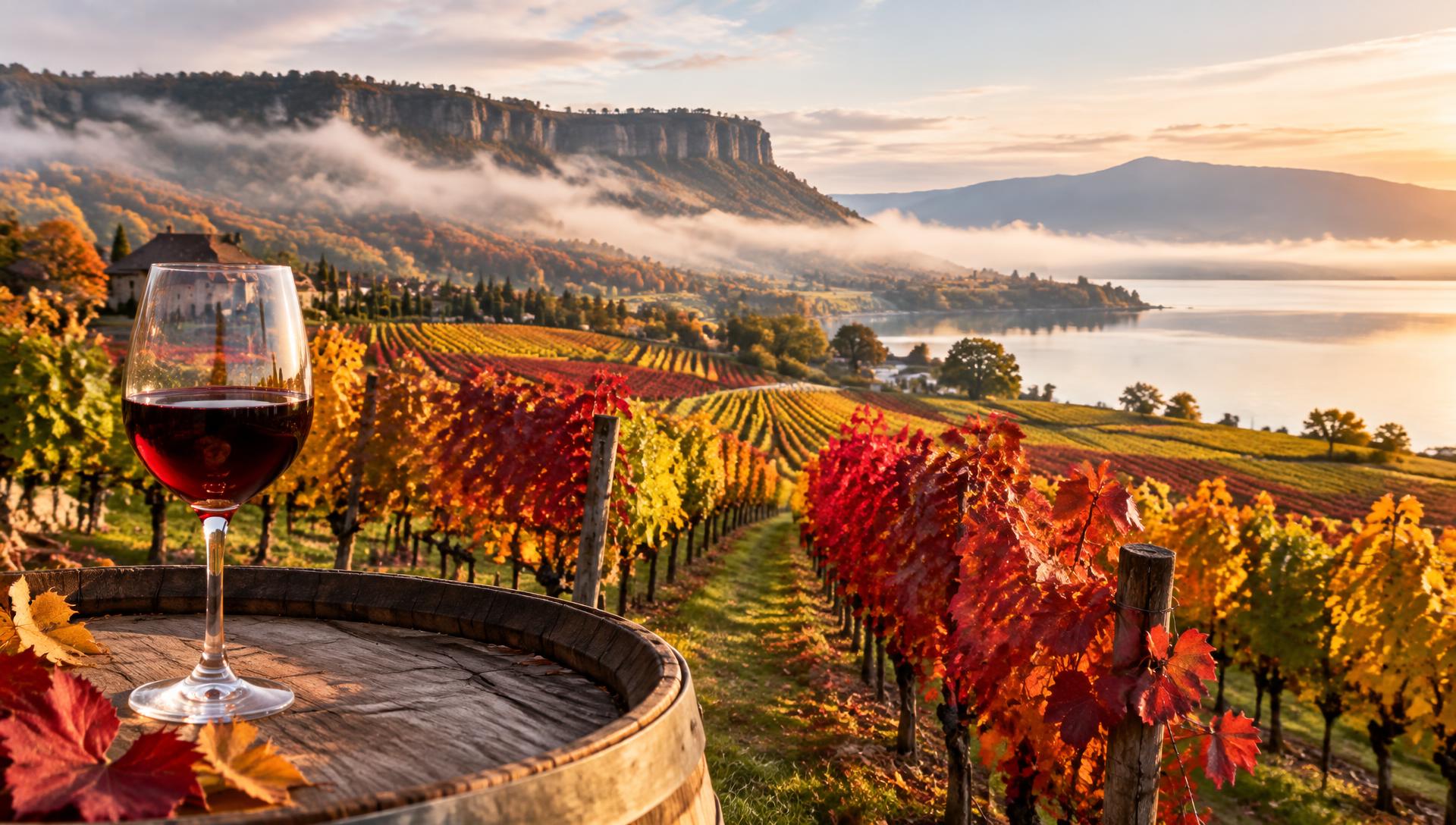
Canada's Autumn Cellar 2026
Okanagan reds, County Pinot, harvest nets on the vine and the road to icewine season.
Autumn is when Canadian wine makes its best case. The tourist crowds are gone from Niagara-on-the-Lake and the Okanagan, the vineyards turn colour in a way that competes with any in the world, and the wines on the shelf — savoury, structured, cool-climate — finally match the food of the season. If you have been meaning to take Canadian wine seriously, this is the month to do it.
Here is the 2026 cellar: what to buy from the three regions that matter most right now, what to cook alongside them, and a preview of the icewine harvest that begins when the temperature really drops.
The Okanagan: Canada's Red Wine Region
British Columbia's Okanagan Valley runs from semi-desert at Osoyoos to alpine lake country near Vernon, and its southern half is the only place in Canada where Bordelais grapes ripen reliably. The autumn shelf is where the region shines: Meritage blends (the Canadian name for Bordeaux-style reds) from Mission Hill, CedarCreek and Nk'Mip, with cedar, dark cherry and a distinct sagebrush note from the desert air.
Pinot Noir is the region's quiet ace, especially from the cooler middle and north Okanagan. CedarCreek, Meyer and Tantalus make versions with real acidity and forest-floor character that behave exactly like good Oregon Pinot at the table. For value, look at Poplar Grove's Cannon of Gamay or a Syrah from Culmina — the northern Rhône does not have a monopoly on peppercorn.
Pairing-wise, the Okanagan reds are built for roast meats and mushrooms. A Meritage beside a braised short rib is a genuinely world-class match, and it is a bottle most guests have never had, which never hurts.
Prince Edward County: The Cool-Climate Purist
Ontario's County, on limestone soils jutting into Lake Ontario, is the coldest serious wine region in the country, and that is its entire identity. The wines are lean, savoury and mineral — sometimes demanding, never generic. Norman Hardie's unfiltered Chardonnay and Pinot Noir are the reference points; Closson Chase brings a riper, more textural take, and Grange of Prince Edward covers the value end.
These are wines for the autumn table in the truest sense: the County Pinot with wild mushroom anything is one of the great Canadian pairings, and the Chardonnay, with its struck-match and orchard-fruit profile, is superb beside roast chicken or a squash velouté. Serve the Pinots at 14°C and give the Chardonnays an hour of air if you can.
One practical note: County production is small and much of it sells direct or through the Ontario market. If you are outside Canada, the estates ship, and the discovery is worth the effort.
Niagara: Gamay, Riesling and the Harvest Nets
By October, Niagara's vineyards are dressed for the season in a second sense: the netting goes on. The grapes destined for icewine — mostly Vidal, some Riesling and Cabernet Franc — stay on the vine for months yet, but the fresh harvest is already in. What reaches the shelves now is the region's everyday excellence: Gamay from Cave Spring, Henry of Pelham and Malivoire, bright and juicy at 13°C; Riesling from Cave Spring and Vineland, with the lime-and-limestone profile that made the region's reputation; and the estate Chardonnays that quietly outperform their price.
Niagara Gamay is the autumn sleeper. Chilled slightly, it handles charcuterie, roast turkey, glazed carrots and a Tuesday chili with equal ease, and it costs a fraction of what the grape commands in Beaujolais.
The Canadian Thanksgiving Table (October 12)
Canadian Thanksgiving lands three weeks before the American one, which means you get the full harvest-table dress rehearsal — turkey, stuffing, cranberry, root vegetables, pumpkin pie — while the local harvest is literally arriving. The bottle plan:
The one red for the whole table: County or Okanagan Pinot Noir. It bridges the cranberry's tartness, the stuffing's herbs and the dark-meat richness without tannin friction. The white: Niagara or Okanagan Chardonnay, full enough for gravy, fresh enough for the sides. The finish: a late-harvest Riesling or, for the showstopper, last winter's icewine beside the pumpkin and butter tarts — a small pour goes a long way at 10 to 11 percent sugar.
Icelandic Cold, Canadian Wine: The Icewine Preview
Canada makes more icewine than the rest of the world combined, and the 2026 harvest will be picked, as always, on frozen nights between roughly December and February, at minus eight Celsius or colder. The grapes are pressed while still frozen, so the water stays behind as ice and what emerges is nectar: intensely apricot and honeyed, electric with acid, and priced accordingly.
The bottles on shelves this autumn are from the 2025 pick, and they are at a lovely stage. Inniskillin, Pillitteri and Cave Spring are reliable names; look for Vidal for classic richness or Cabernet Franc icewine if you want the strawberry-and-spice version. Serve in small glasses at 8°C after dinner — or alongside a blue cheese, where it is close to magic.
Find the Canadian Bottle
The iQ Sommelier knows the Canadian regions and will steer you to the right bottle for whatever is on your stove — Okanagan red for the braise, County Pinot for the mushrooms, Riesling for the takeout night. Scan or search, and let it build the list.