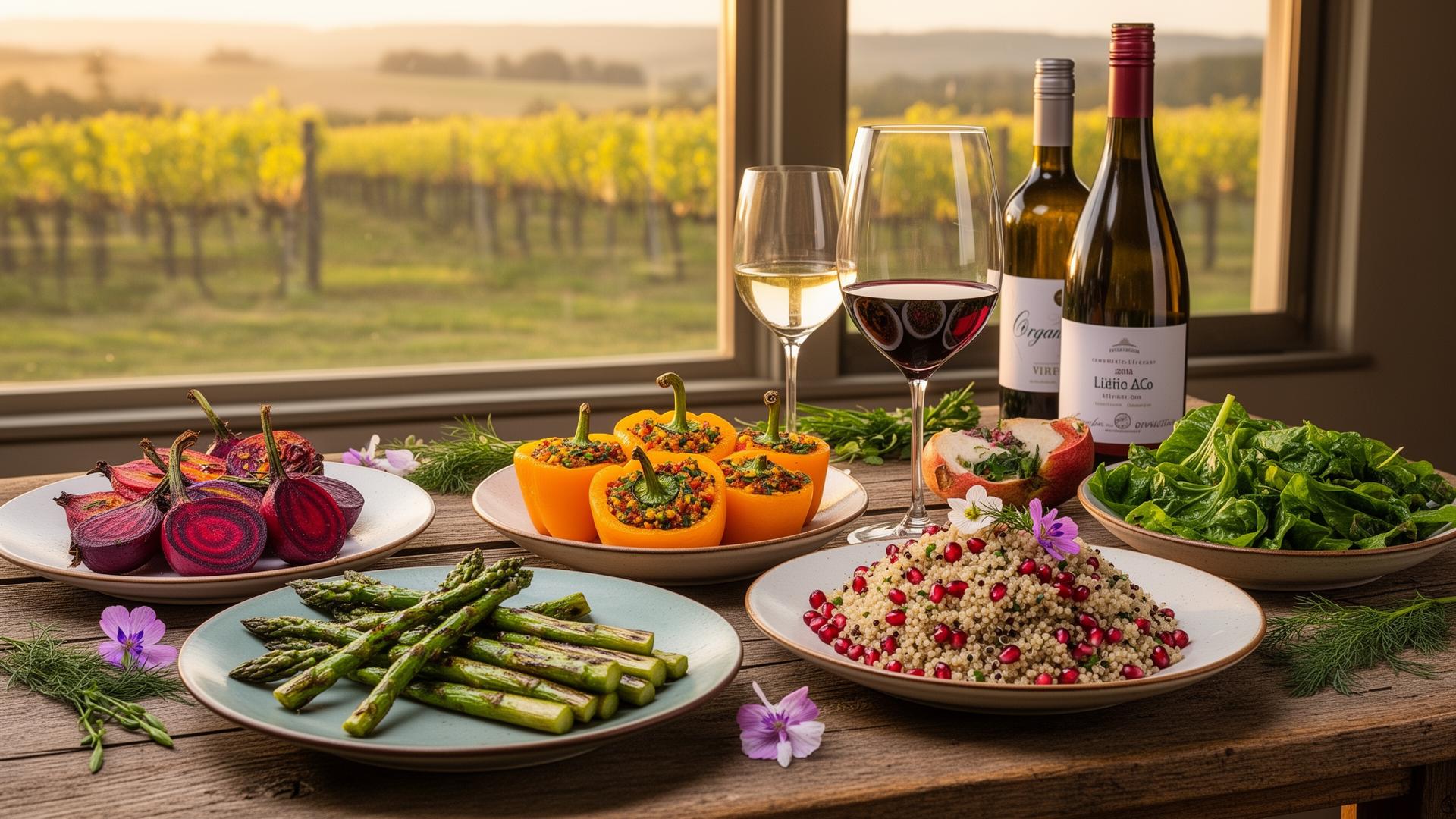
The Art of Pairing Vegan Wines
Vegan wines aren't just "regular wines without the fining agents." Learn how texture, acidity, and plant-based fats change the rules—and unlock pairings that sing.
Beyond the Label: What Makes Wine Vegan?
The vegan wine revolution isn't just about ethics—it's reshaping how we think about food pairings. Traditional winemaking often uses animal-derived fining agents like egg whites, isinglass (fish bladder), or casein (milk protein) to clarify wine. Vegan wines skip these entirely, relying on bentonite clay, activated charcoal, or simply time and gravity.
But here's where it gets interesting: unfined wines retain more texture, body, and aromatic complexity. That slight cloudiness? It's packed with flavor compounds that interact differently with plant-based dishes.
"Vegan wines have a textural honesty that mirrors plant-based cooking—there's nothing to hide behind, so both the wine and the dish need to shine on their own merits."
The Umami Challenge: Pairing with Plant Proteins
Plant-based proteins like mushrooms, lentils, and fermented tofu are umami-rich but lack the fat marbling of meat. This changes everything. Where a Cabernet might overpower a lentil loaf, a vegan Pinot Noir with silky tannins and earthy notes creates harmony.
Key Pairing Principles:
- Match weight, not tradition: A hearty Mushroom Wellington pairs beautifully with medium-bodied reds like vegan Merlot or Grenache—not the heavy Bordeaux you'd serve with beef.
- Embrace acidity: Vegan dishes often feature vinegar, citrus, or fermented elements. Crisp, high-acid whites like vegan Sauvignon Blanc or organic Riesling cut through richness without clashing.
- Consider texture over tannin: Plant-based fats (tahini, coconut milk, avocado) coat the palate differently than butter. Look for wines with rounded mouthfeel—think unoaked Chardonnay or Natural Orange Wine.
Five Perfect Vegan Pairings
1. Thai Basil Tofu + Off-Dry Vegan Riesling
The sweet-heat balance in Thai cuisine finds its match in a German Riesling Kabinett. The wine's residual sugar tames the chili, while its acidity refreshes between bites.
2. Cauliflower Truffle Risotto + Vegan Chardonnay
Creamy, earthy, and umami-forward—this dish needs a wine with body. A vegan Chardonnay (oak-free or lightly oaked) mirrors the risotto's texture while adding citrus brightness.
3. Mediterranean Lentil Salad + Organic Rosé
Herbaceous, tangy, and light—Provence rosé's minerality and red fruit notes complement olives, tomatoes, and lemon without overwhelming delicate greens.
4. Vegan Cheese Board + Natural Orange Wine
The funk of aged cashew cheese or cultured almond brie pairs unexpectedly well with skin-contact wines. Their oxidative notes and amber hue create a rustic, earthy harmony.
5. Dark Chocolate Avocado Mousse + Organic Port
Rich, velvety, and just sweet enough—a vegan Port-style wine (made without animal clarification) brings dried fruit and spice to balance cacao intensity.
The Certification Maze: How to Shop Smart
Look for these labels when shopping:
- Certified Vegan: No animal products in production
- Organic: No synthetic pesticides (often vegan-friendly)
- Biodynamic: Holistic farming practices (typically avoid animal fining)
- "Unfined/Unfiltered": Usually vegan by default
Not all vegan wines are labeled—many small producers simply don't use animal products but haven't sought certification. When in doubt, ask your wine shop or check databases like Barnivore.
The Future of Vegan Wine Pairing
As plant-based cuisine becomes more sophisticated—think Michelin-starred vegan tasting menus—sommeliers are rethinking classic pairing rules. The rise of vegan wines isn't just a trend; it's a return to minimal-intervention winemaking that lets terroir and technique shine.
The real art? Forgetting about "vegan" versus "traditional" and simply asking: Does this wine make this dish taste better? When the answer is yes, nothing else matters.