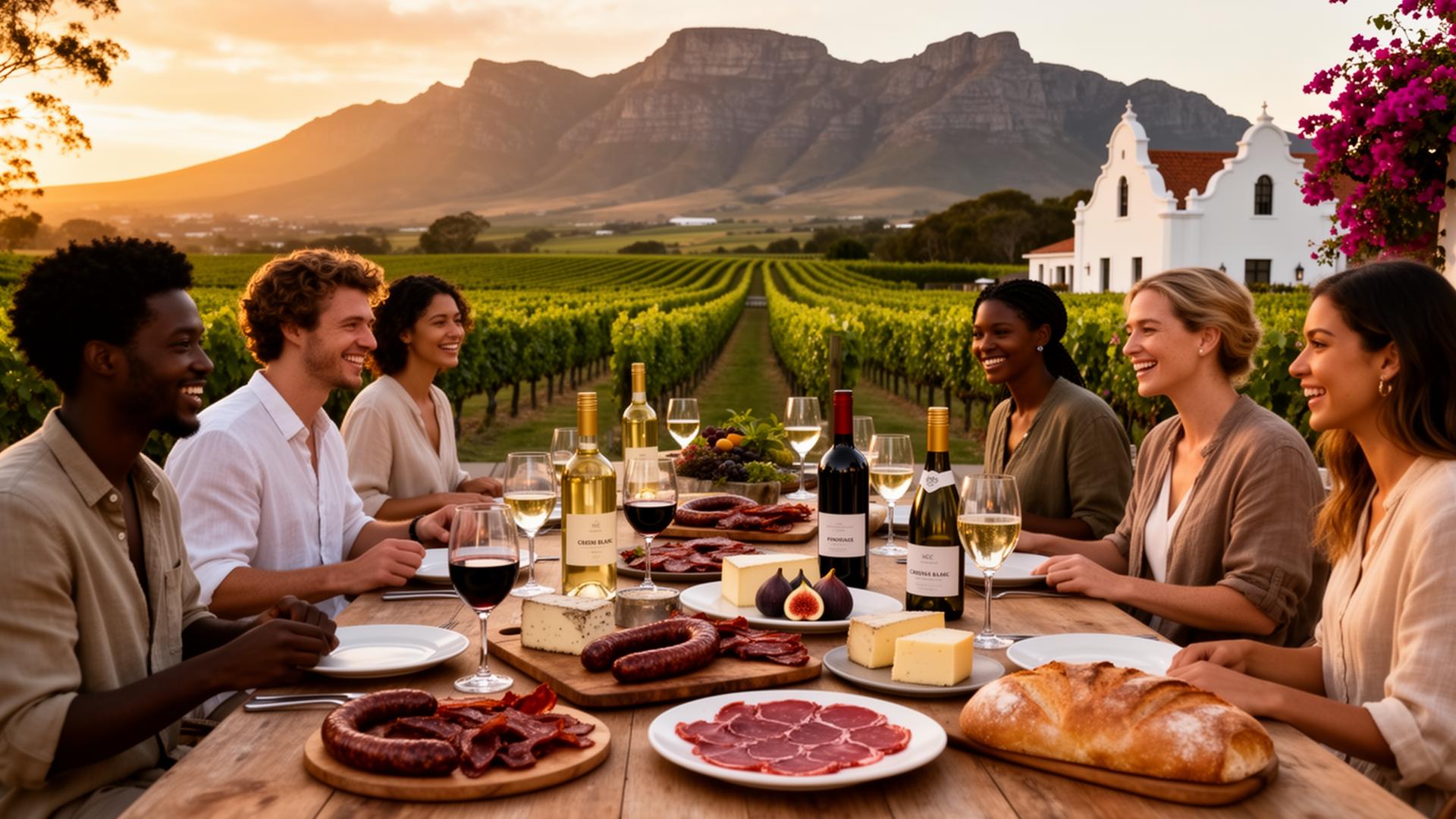
Stellenbosch & the Cape Winelands: A South African Wine Guide
Old-vine Chenin Blanc, modern Pinotage, MCC sparkling and Bordeaux-style Cabernet — under granite mountains and 300-year-old Cape Dutch gables.
South Africa is the most underrated wine country on earth. The vines were planted in 1655. The first Cape Dutch estates were turning out serious wine before California existed. And right now — with a generation of post-apartheid winemakers reshaping the entire industry — the Cape Winelands are producing some of the most exciting bottles in the world, at prices that have not yet caught up with the quality.
Granite, Ocean, Mountain
Stellenbosch sits in a natural amphitheater of granite and sandstone mountains, 50 kilometers east of Cape Town. The decomposed granite soils drain perfectly. Two oceans — the cold Atlantic on one side, the warmer Indian on the other — funnel cooling breezes through the valleys every afternoon. The combination produces wines with both ripeness and freshness — and the latitude (roughly 34° south) is the mirror image of California's Paso Robles.
Beyond Stellenbosch itself, the broader Cape Winelands include Franschhoek (French Huguenot heritage, MCC sparkling specialists), Paarl (warm-climate reds, Shiraz), Constantia (cool-climate Sauvignon Blanc on Cape Town's doorstep), Hemel-en-Aarde near Walker Bay (Pinot Noir country), and Swartland (the new-wave heart of South African wine).
Chenin Blanc: South Africa's Greatest Wine
South Africa has more Chenin Blanc than the entire Loire Valley, and the best of it — particularly old-vine bush-vine Chenin from Swartland and Stellenbosch — ranks among the great white wines of the world. Honeyed but dry, textured, mineral, capable of decades in the cellar. Producers to know:
- Mullineux & Leeu (Swartland) — single-vineyard Chenin that drinks like Grand Cru Vouvray.
- Sadie Family — Eben Sadie's "Palladius" white blend is one of South Africa's iconic wines.
- Alheit Vineyards — heritage Chenin from old vines across the Cape.
- Ken Forrester — the Stellenbosch Chenin benchmark for everyday drinking and "FMC" for serious bottles.
- Raats Family — focused Chenin from decomposed granite.
Pinotage: The Comeback Story
Bred in 1925 by crossing Pinot Noir with Cinsaut, Pinotage spent decades unfairly maligned for burnt-rubber and acetone notes. That era is over. Modern Pinotage from Kanonkop, Beyerskloof, Spier "21 Gables", Lievland and Diemersdal shows ripe black fruit, smoky complexity, soft tannins and serious ageing potential. Pair it with anything off the braai (South African barbecue): boerewors, lamb chops, ostrich, or game.
Stellenbosch Cabernet & Bordeaux Blends
Stellenbosch Cabernet Sauvignon is one of the world's best-kept secrets. Structured, blackcurrant-driven, with the savory tobacco-leaf complexity of mature Bordeaux but at half the price. Look for Kanonkop "Paul Sauer" (the country's flagship red blend), Rust en Vrede, Meerlust "Rubicon", Vergelegen, and Thelema.
MCC: Champagne Quality at Half the Price
Méthode Cap Classique is South Africa's traditional-method sparkling wine, and the best examples genuinely rival mid-tier Champagne. Graham Beck is the largest and most consistent (their Brut NV is a global benchmark). Silverthorn, Le Lude, Colmant (Franschhoek), and Pongrácz are the other names to seek out.
Syrah, Pinot Noir & the New Wave
The Swartland Revolution generation — Adi Badenhorst, Eben Sadie, Chris Mullineux — has redefined South African Syrah toward elegant, perfumed, granitic styles closer to Northern Rhône than Australia. From Hemel-en-Aarde, Hamilton Russell, Crystallum, Ataraxia and Storm Wines are making serious cool-climate Pinot Noir.
Visiting the Cape Winelands
Base yourself in Stellenbosch town or Franschhoek — both walkable, both packed with restaurants. Top estate visits: Babylonstoren (gardens, food, cellar), Boschendal, Tokara, Delaire Graff, Kanonkop, Mullineux Family Wines (Swartland), and the iconic Cape Dutch gables of Vergelegen. The Franschhoek Wine Tram is the relaxed way to taste across multiple estates in one day.
The Braai Pairing Playbook
- Boerewors + Pinotage or Cinsaut
- Lamb chops + Stellenbosch Cabernet or Syrah
- Bobotie + off-dry Chenin Blanc or Pinotage
- Biltong & droëwors + Pinotage or aged red blend
- Snoek (smoked or grilled) + Chenin Blanc or Sauvignon Blanc
- Cape Malay curry + off-dry Chenin or Gewürztraminer
- Malva pudding + Vin de Constance (the legendary Cape dessert wine)
The Cape Winelands by the Numbers
- First vines planted: 1655 (Cape Town)
- Wineries: 530+ across the Western Cape
- Signature grapes: Chenin Blanc, Cabernet Sauvignon, Syrah, Pinotage
- Top regions: Stellenbosch, Swartland, Hemel-en-Aarde, Constantia
- Latitude: 33–34° south (mirror of Paso Robles)
Five South African Bottles to Try First
- Mullineux Old Vines White — Swartland Chenin-led blend, world-class.
- Kanonkop "Paul Sauer" — South Africa's flagship Bordeaux-style red.
- Beyerskloof Pinotage Reserve — modern Pinotage at its best.
- Graham Beck Brut NV — the MCC benchmark for everyday sparkling.
- Hamilton Russell Pinot Noir — cool-climate Hemel-en-Aarde at its finest.
South Africa is no longer the wine world's well-kept secret. The Cape Winelands belong on the same shortlist as Burgundy, Tuscany and Napa — and right now, before the rest of the world catches up, the bottles are still spectacular value. Pour a Mullineux Chenin under a Cape Dutch gable and the case makes itself.