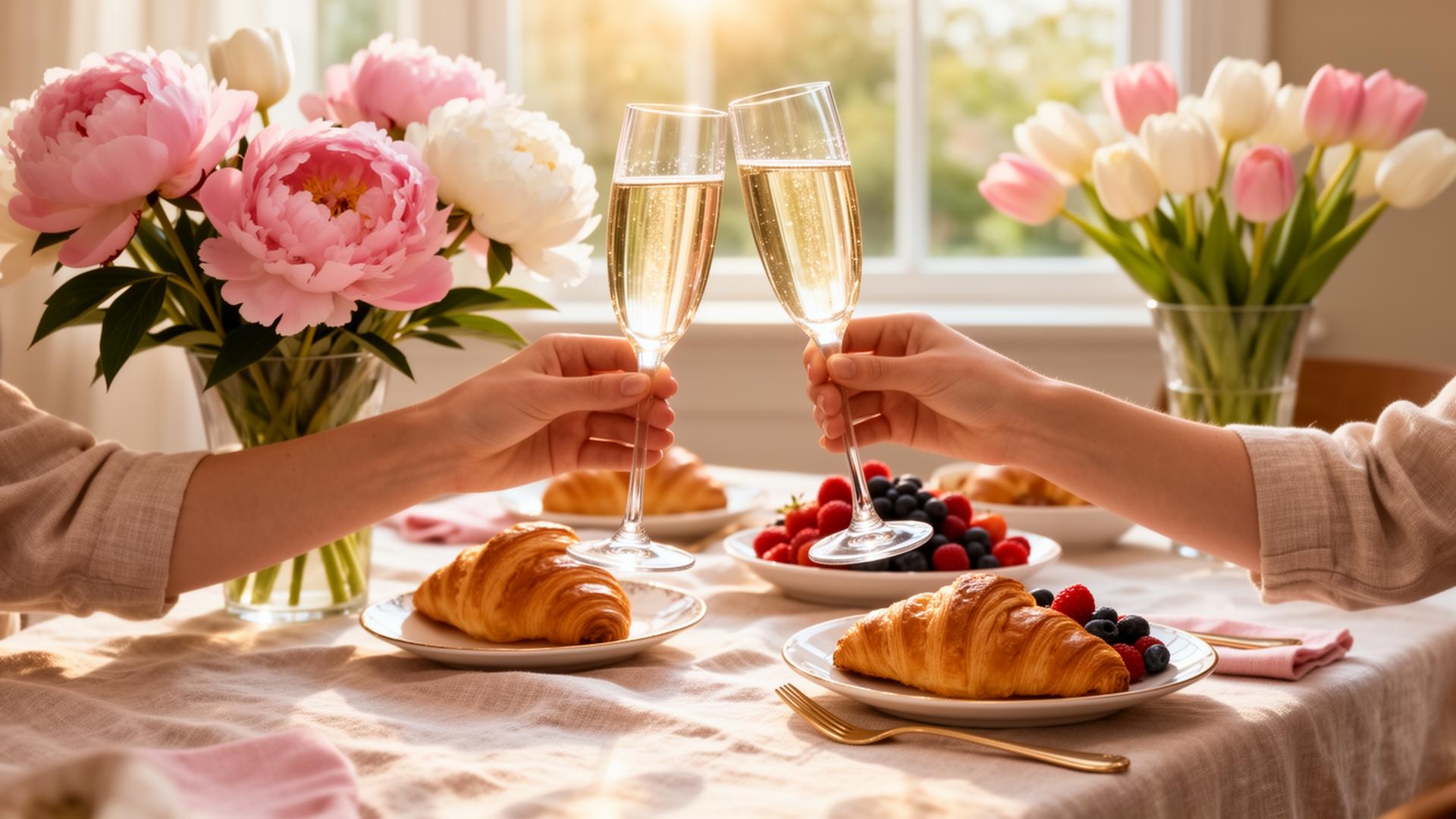
Mother's Day Brunch Wine Pairings 2026
Skip the supermarket Prosecco. Here is how to build a Mother's Day brunch that actually tastes like the love you mean to put into it.
Mother's Day brunch is one of the great pairing puzzles. The menu sprawls — eggs and pastries and smoked salmon and fruit and cheese and probably pancakes — and the only thing tying it together is butter, salt, and the occasional drizzle of maple. The wine has to do a lot of work. Choose well and you create the kind of meal she actually remembers. Choose lazily and you serve flat mimosas next to room-temperature lox.
Why Brunch Belongs to Bubbles
Sparkling wine is brunch's not-so-secret weapon. The bubbles physically scrub fat and richness off your palate between bites of hollandaise, butter, and cheese. The high acidity of well-made sparkling wine handles citrus, vinegar, and pickled garnishes without flinching. And let's be honest — there is a small ritual joy to popping a cork before noon.
But "sparkling" is a wide category, and the cheap end of it is where most brunches go wrong. Industrial Prosecco, bargain-bin sparkling, and the bottles labeled "champagne" in scare quotes will all collapse against an egg dish. Spend a little more, and the entire meal lifts.
The Brunch Bubble Hierarchy
- Splurge: Non-vintage Champagne (Pol Roger, Bollinger, Pierre Péters)
- Sweet spot: Crémant de Bourgogne or Crémant d'Alsace ($25-$40)
- Smart value: Quality Cava de Guarda Superior or English sparkling wine
- Skip: $8 grocery-store Prosecco — save it for cooking
Champagne and What It Loves
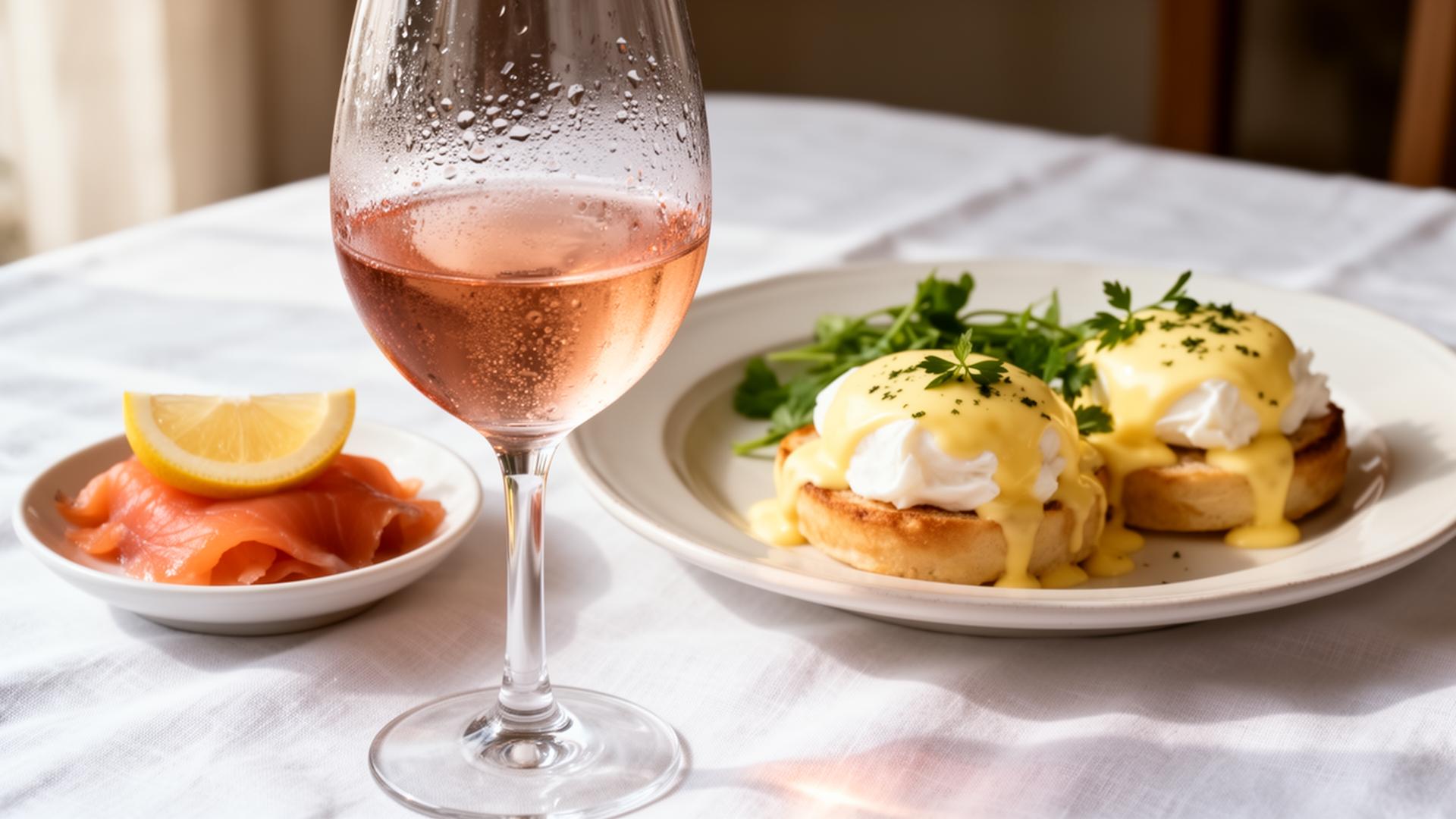
A non-vintage Brut Champagne is the closest thing brunch has to a universal donor. Its toasty autolytic notes (think fresh-baked bread crust) bridge perfectly with eggs, pastries, and cured fish. The high acid keeps everything feeling crisp.
- Champagne + smoked salmon — The signature pairing. Salt, smoke, fat, bubbles. Perfect.
- Champagne + eggs Benedict — Acid cuts hollandaise; bubbles refresh the palate.
- Champagne + caviar or trout roe — The most decadent two minutes of the day.
- Champagne + buttery pastries — Croissants, palmiers, kouign-amann. Trust this.
Rosé: The Mother's Day Power Move
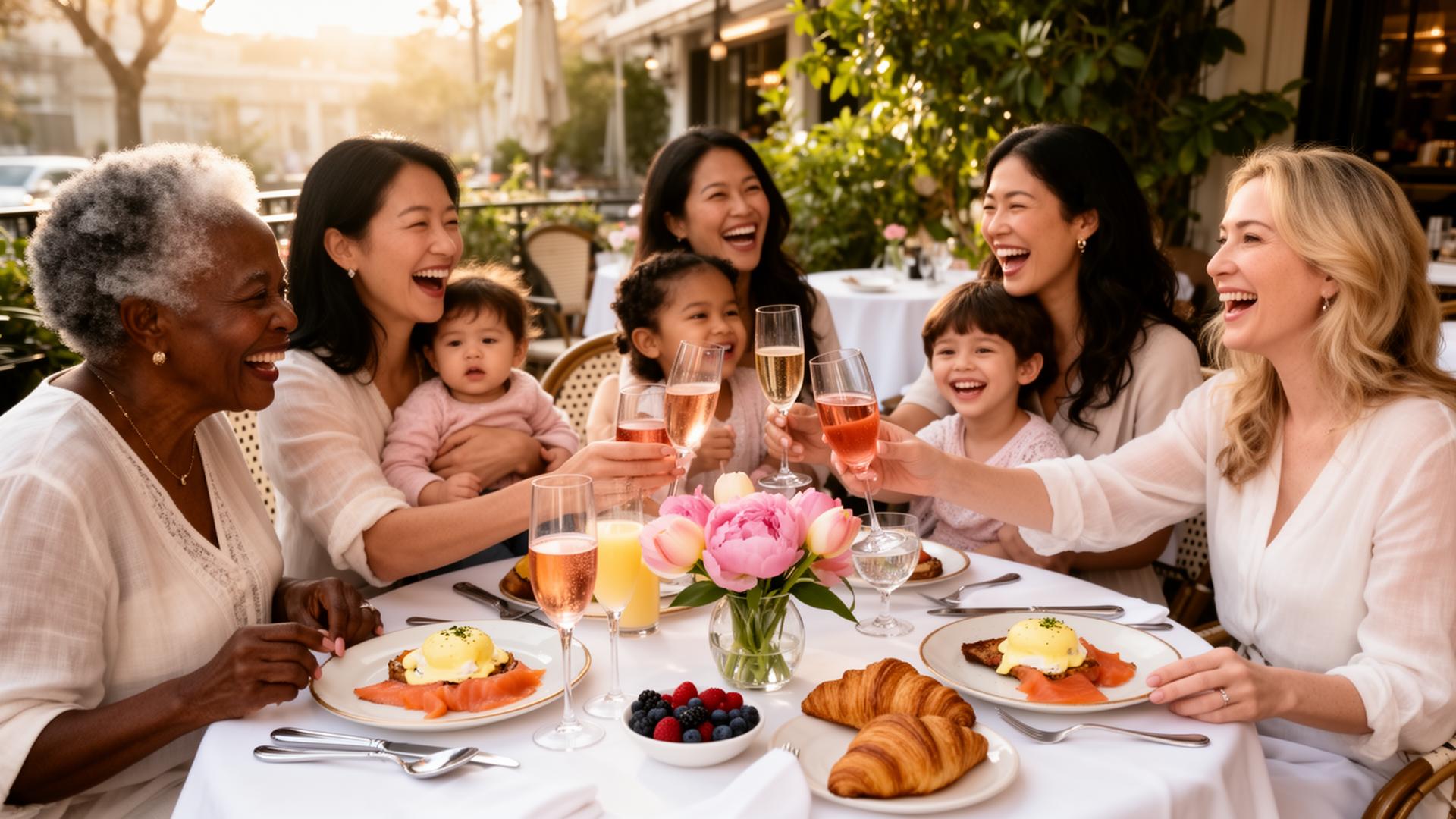
If she does not love bubbles, pour pale Provence rosé. It is the most photogenic wine for a flower-laden brunch table and it pairs with almost every brunch dish you can think of. The cool-toned strawberry, watermelon, and blood-orange notes complement everything from quiche to fruit salad.
- Bottles to seek: Domaines Ott, Whispering Angel, Triennes, Domaine Tempier (for splurges)
- Serve: Properly chilled (45°F), in a generous wine glass — not a flute
- Pairs with: Quiche Lorraine, smoked trout, charcuterie, fresh berries, almond cake
Still Whites for the Brunch Table
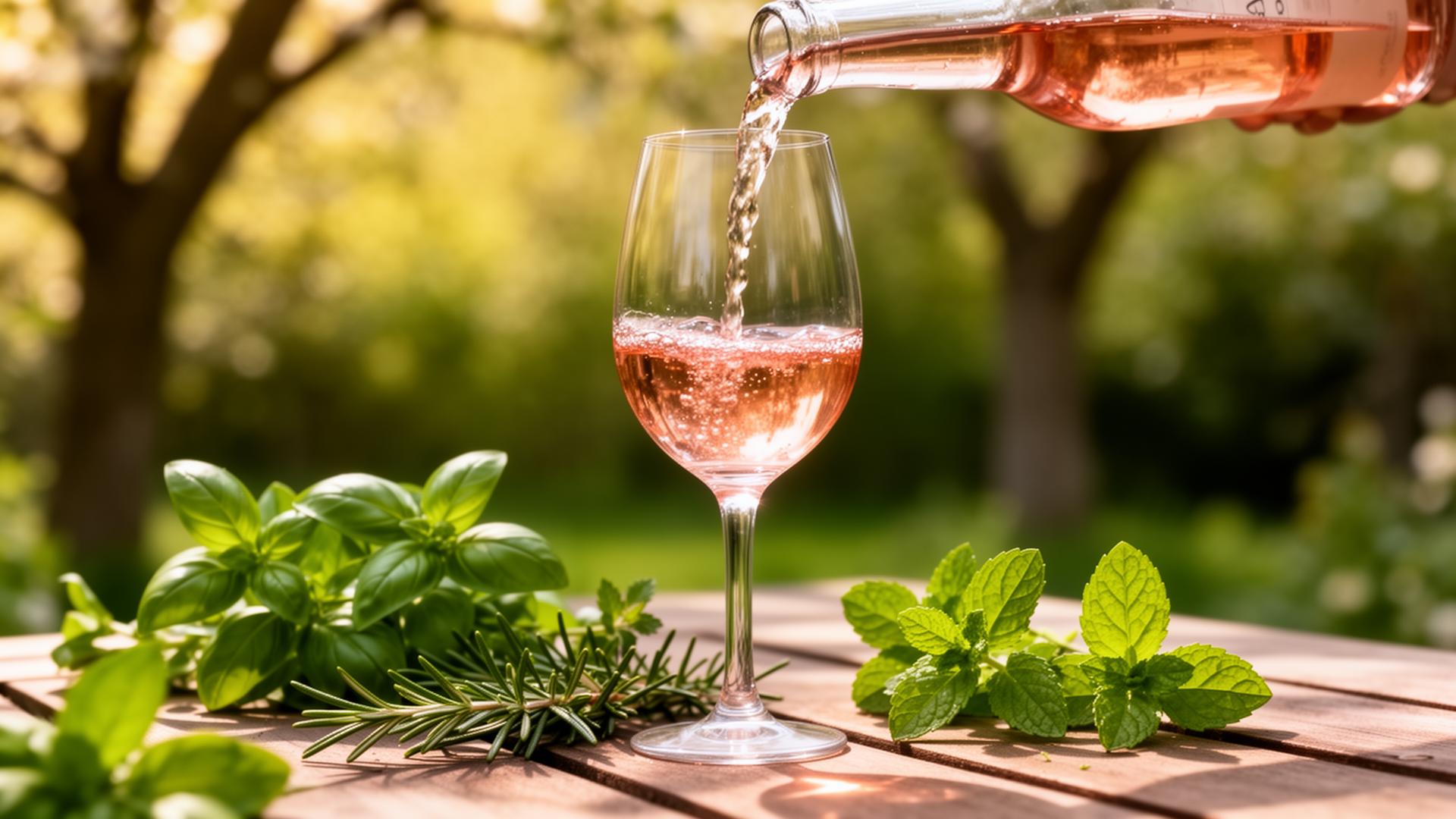
Bubbles are not the only answer. Several still whites shine bright on a brunch table — and offer better pairings for specific dishes than sparkling wine does.
Dry Riesling (Mosel or Alsace)
Off-dry Riesling is the unsung hero of brunch. Its touch of sweetness handles spice (think shakshuka or chorizo hash) and its racing acidity refreshes everything else. The Alsace style is leaner and more savory; the Mosel style is more delicate and floral.
Chenin Blanc (Loire Valley or South Africa)
Quince, apple, beeswax, and bright acidity. Chenin is one of the most food-friendly whites on the planet and it loves egg dishes, soft cheeses, and pastries. Vouvray (sec or demi-sec) is the classic; Savennières is the sommelier's choice.
Sancerre (Loire Valley)
If smoked salmon is on the menu, Sancerre belongs there too. Its flinty, citrus-driven precision is built for cured fish and goat cheese. It also handles spring vegetable dishes (asparagus quiche, pea risotto) better than almost any other wine.
Building a Better Mimosa
The mimosa is brunch's most-abused cocktail. Done right, it is a delight. Done wrong (which is most of the time), it is sweet, flat, and a waste of the wine.
The Three-Rule Mimosa
- Quality bubbles. Brut Cava de Guarda or Crémant. Never cheap Prosecco.
- Fresh juice only. Squeeze your own oranges that morning. Worth it.
- 3-to-1 wine to juice. The sparkling should dominate. Add the juice last to keep the bubbles lively.
Beyond the classic: blood orange juice creates a stunning visual; grapefruit juice ("Grand Mimosa") delivers more complexity for adult palates; passionfruit nectar makes it feel like vacation.
A Pairing Cheat Sheet by Dish
- Eggs Benedict / florentine: Champagne, Crémant, or Cava
- Quiche Lorraine: Provence rosé or white Burgundy
- Smoked salmon platter: Champagne, Sancerre, or dry Riesling
- Avocado toast with poached egg: Albariño or Grüner Veltliner
- Shakshuka: Off-dry Riesling or light rosé
- French toast / pancakes / waffles: Demi-sec Champagne or Moscato d'Asti (low alcohol, lightly sweet)
- Charcuterie & cheese board: Beaujolais or Provence rosé
- Fresh fruit & yogurt: Moscato d'Asti or off-dry Riesling
- Almond cake / pastries: Champagne or Vouvray demi-sec
Non-Alcoholic Options That Actually Work
For mothers who do not drink, the non-alcoholic wine category has finally become brunch-worthy. Look for French Bloom Le Blanc (a non-alcoholic sparkling that legitimately impresses), Acid League proxy wines, or Töst for a sparkling alternative. Skip the dealcoholized supermarket bottles — most still taste like sad grape juice.
Setting the Table Right
The wine is half of it. The other half is presentation:
- Chill properly. Sparkling: 38-42°F. Whites: 45-50°F. Rosé: 45°F. Take them out of the freezer 5 minutes before serving — frozen wine has no aroma.
- Use real glassware. A proper wine glass, even an inexpensive one, makes the wine taste meaningfully better than a tumbler does.
- Open the bubbles last. Pop the cork right as guests arrive at the table so the first pour is at peak liveliness.
- One bottle per two people. A safe brunch ratio that allows for two glasses each.
The Heart of It
Mother's Day brunch is not about technical perfection. It is about giving someone you love a slow morning at a beautiful table with food and wine that tasted like you actually thought about her. Choose one good bottle of bubbles, one beautiful rosé, and one well-made still white. Pour generously. Sit longer than you planned. That is the whole recipe.