Caribbean Grape Wines & Pairings: A Tropical Vineyard Story
The emerging vineyards of the islands, the imports that fill every beach bar fridge, and the bottles that actually belong with jerk, curry goat, oxtail and escovitch.
The Caribbean is not the first place anyone names when talking about grape wine. Sugar cane, rum and a deep non-grape tradition of sorrel and sour-sop have always told the louder story. But there is a small, serious and rapidly improving grape-wine scene in the islands — and there is a much larger story about which wines the islands actually pour and why. This guide covers both.
Can Grapes Even Grow in the Tropics?
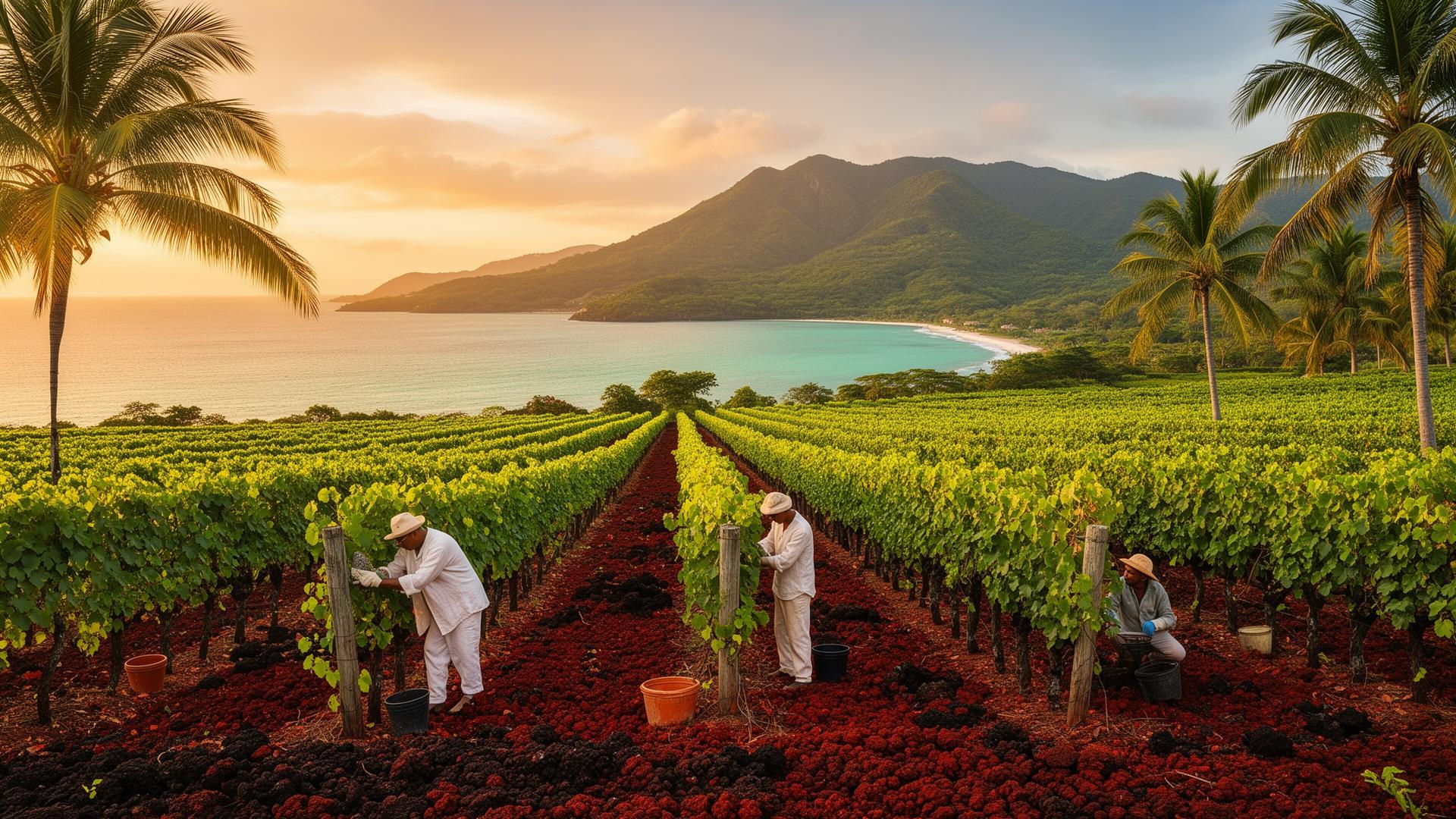
Yes, but it takes work. Classic European vines need a dormant winter. The Caribbean has none. So tropical growers use a technique called double pruning — they force the vine to flower and fruit twice a year by pruning aggressively, and they pick at sunrise to preserve acidity. The wines are leaner than people expect, often with bright citrus notes and a savory, almost saline finish.
Heat-tolerant varieties dominate. Isabella and the Criolla family (Listán Prieto, Mission, País) are common, along with Tempranillo, Syrah, Verdejo and Moscato. The category is closer in spirit to high-altitude wines of the Andes or southern India than to anything in Bordeaux.
Tropical Wine Principle
In the tropics, acidity is the whole game. Without a cold winter to slow the vine, the work happens at the press — early picking, short macerations, cool fermentation, and a finished wine built to serve cold.
The Caribbean Wineries to Know
Ocoa Bay (Dominican Republic)
The most ambitious project in the region. Ocoa Bay sits on the south coast near Azua, where mountain shade and ocean breezes drop nighttime temperatures enough to let grapes rest. They work with Syrah, Tempranillo, Sauvignon Blanc and Moscato, and bottle a credible dry rosé that holds up to ceviche and grilled snapper.
Soroa (Cuba)
A small project in Pinar del Río focused on table wines for the domestic and tourist market. The wines are modest, but the very existence of Cuban grape wine — produced under sanctions, with limited equipment — is a story.
Small Producers in Jamaica, Puerto Rico & Barbados
A handful of estate experiments are producing tiny lots of hybrid wines, mostly for local restaurants and tasting rooms. Don't expect to find them on retail shelves outside their home islands — but if you see one on a wine list in Kingston, San Juan or Bridgetown, order it.
What the Islands Actually Pour
The honest answer is that most wine drunk in the Caribbean is imported. The market reflects the food: bold, fruit-forward reds for stews and barbecue, crisp whites and sparkling for seafood and heat. Six bottles dominate.
Chilean Carmenère & Argentine Malbec
Together, the workhorses of Caribbean wine lists. Carmenère's plum and bell-pepper notes match jerk and curry brilliantly; Malbec's ripe blackberry handles oxtail, stewed pork and grilled steak. Both arrive at sensible prices and survive tropical shipping without sulking.
Spanish Rioja
Reserva-level Rioja is the celebration red of the Spanish Caribbean — Cuba, Puerto Rico, Dominican Republic. The vanilla, leather and dried-cherry profile pairs with pepperpot, ropa vieja and roast pork. Crianza for weeknight, Reserva for Sunday.
Portuguese Vinho Verde
Slightly fizzy, 9 to 11% alcohol, lemon-lime and saline — practically engineered for tropical heat and fried fish. Keep three in the fridge at all times.
Prosecco & Cava
Sparkling does double duty at every beach club and hotel bar in the region. Prosecco for sweetness and fruit, Cava for drier, more food-friendly pours.
Provence & Spanish Rosado
Pale dry rosé is the second house white. It runs from boat decks in St. Barth's to brunch tables in Cartagena, and it pairs with almost everything the Caribbean kitchen sends out.
Pairings: Island Classics, Grape Wine Edition
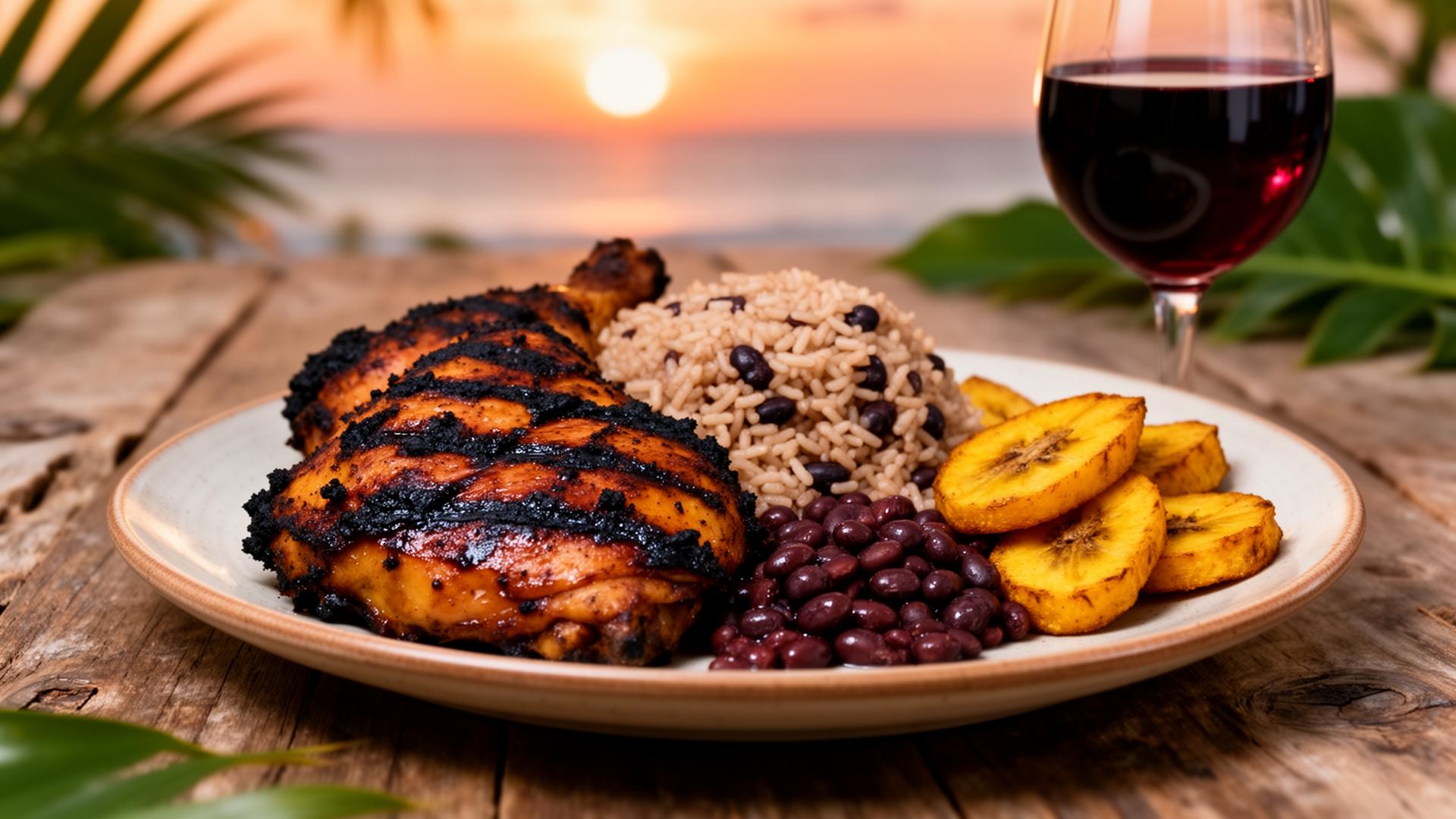
Jerk Chicken or Jerk Pork → Argentine Malbec or Off-Dry Riesling
Allspice, Scotch bonnet and smoke need ripe fruit to push back against the heat. Mendoza Malbec (Catena, Achaval-Ferrer) is the default. When the jerk is properly fiery, switch to a Mosel Kabinett Riesling — the touch of residual sugar tames the burn.
Curry Goat or Curry Chicken → Southern Rhône GSM or Garnacha
Warm spice, braised meat, ginger and Scotch bonnet. Côtes du Rhône or Spanish Garnacha (Borsao, Las Rocas) is the pairing. Off-dry Gewürztraminer if you prefer a white.
Oxtail → Chilean Carmenère or California Zinfandel
Slow-braised, slightly sweet, deeply savory. Carmenère's herbal lift cuts the richness. Old-vine Zinfandel (Ridge, Bedrock) matches it pound for pound.
Escovitch Fish → Albariño or Vinho Verde
Pickled, peppery, sharp. The wine needs to be saline and bone dry. Spanish Albariño (Pazo de Señorans) or a serious Vinho Verde (Soalheiro) does it.
Conch Fritters & Saltfish Patties → Sparkling Rosé or Cava
Fried, salty, hand-food. Bubbles cut through everything. Cava Brut is the budget hero; a Cremant rosé is the upgrade.
Pepperpot (Guyanese / Eastern Caribbean) → Aged Rioja Reserva
Cassareep, clove, cinnamon, slow-cooked beef. This is the Sunday dish, and it deserves a Sunday wine. Rioja Reserva (López de Heredia, La Rioja Alta) is the match.
Rice and Peas → Côtes du Rhône or Beaujolais Cru
Coconut milk, kidney beans, thyme. Medium-bodied, lightly chilled red is the move. Beaujolais Cru (Morgon, Fleurie) at 55°F is brilliant alongside.
Rum Cake or Coconut Flan → Tawny Port or PX Sherry
Sweet, dense, caramel-driven dessert. A 10-Year Tawny Port (Graham's, Taylor Fladgate) or Pedro Ximénez Sherry matches the sweetness and adds dried-fruit complexity.
The Non-Grape Tradition
Sorrel, sour-sop, ginger, tamarind and cashew wines have a much older Caribbean lineage than any vineyard. We cover them in depth in our companion guide — Caribbean Non-Grape Wines: Sorrel, Sour-Sop & The Island Cellar.
Serving Temperature Is Everything
In Caribbean heat, the standard European service temperatures fail. Whites and rosés want to come out of the fridge at 45°F and warm up in the glass. Reds want a real 30 to 45 minutes in the fridge before pouring — not the lukewarm "room temperature" of a Kingston afternoon. The wines you think are too cold are almost always exactly right.
Your Caribbean Cellar Checklist
- 2 bottles of Argentine Malbec (jerk and grill duty)
- 2 bottles of Chilean Carmenère (oxtail, curry, stewed pork)
- 1 bottle of Rioja Crianza or Reserva (pepperpot, ropa vieja)
- 3 bottles of Vinho Verde (fried fish, fritters, heat)
- 2 bottles of Albariño (escovitch, ceviche, conch salad)
- 1 bottle of Cava Brut or Prosecco (welcome pour)
- 1 bottle of Provence rosé (everything else)
- 1 bottle of Tawny Port (rum cake, sweet endings)
The Caribbean isn't trying to be Bordeaux. It's a wine culture built on heat, spice, salt and shared plates — and the bottles that belong on its tables are the ones that respect all four.
Related Reading
Caribbean Non-Grape Wines
Sorrel, sour-sop, ginger and the older island cellar tradition.
Latin American Wines: A Continental Guide
Malbec, Carmenère, Tannat and the wines neighboring the islands.
Wine with Jerk
A deeper dive into the spice-and-heat pairing puzzle.
Wine with Curry
From mild to fiery, the bottles that hold up.